Weave types, pattern range, country-by-country strengths, and why importers, designers and hospitality buyers ship direct from a natural-rattan factory in Gia Lai, Vietnam.
The sourcing question every rattan buyer asks
Natural rattan mesh — known in the trade as cane webbing, rattan webbing, pre-woven cane or rattan roll — has moved from a niche restoration material to a mainstream design element. It now appears on cabinet doors, chair backs, headboards, ceilings, partitions and pendant lamps across residential and commercial interiors worldwide. Demand for natural and sustainable furniture components has driven steady growth in the segment.
For importers, wholesalers, interior designers and hospitality procurement teams, the practical question is not whether to buy rattan mesh, but where to buy it. Two countries dominate the conversation: Indonesia, the historic heart of the world’s raw rattan supply, and Vietnam, a fast-rising manufacturing hub with craftsmanship depth and preferential trade access. This guide compares the two honestly, then explains what changes when you order direct from the factory instead of through a trading intermediary.
What cane webbing actually is
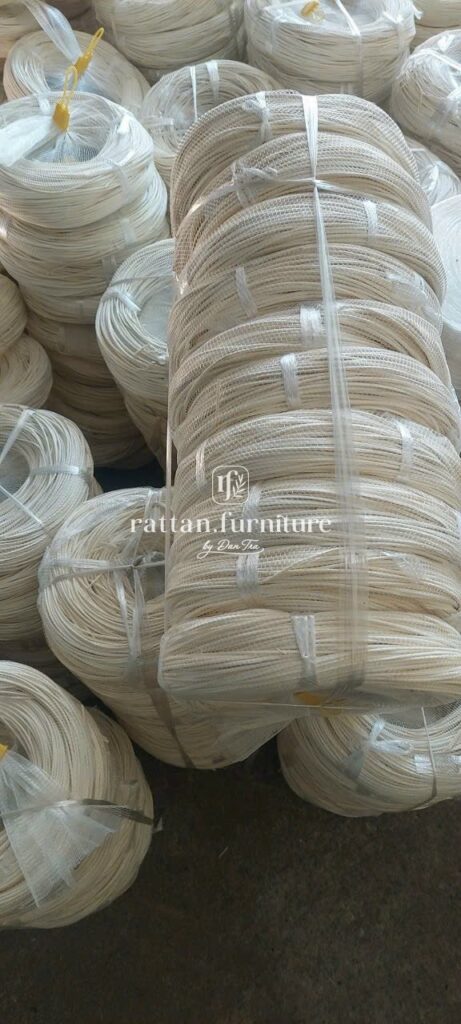
Rattan is a climbing palm that grows in the tropical forests of Southeast Asia. Unlike bamboo, which is hollow, rattan has a solid stem, which makes it stronger and well suited to furniture. Its outer bark (peel) is prized for weaving because of its natural flexibility, strength and smooth surface.
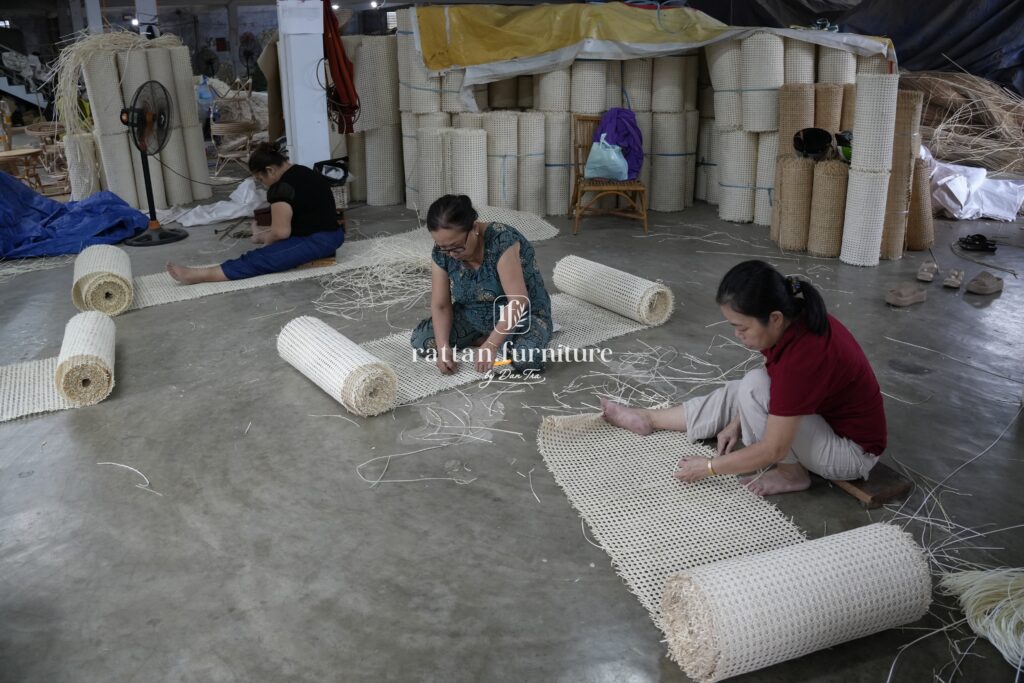
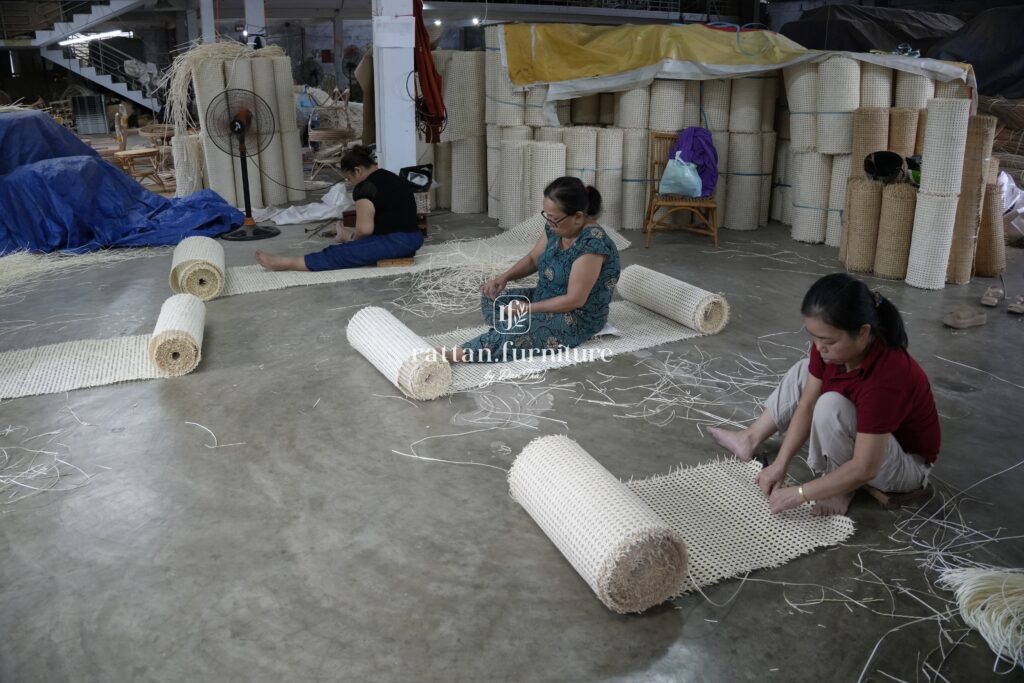
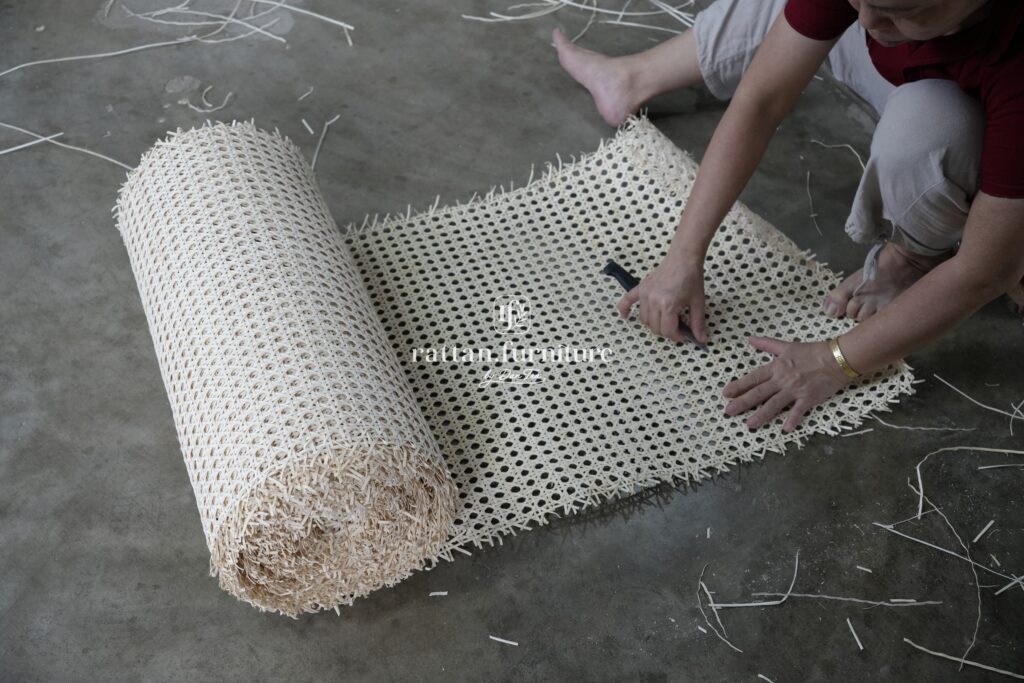
Cane webbing is a pre-woven sheet made from that outer bark — or, for some patterns, from the rattan core — split into strands of consistent width and woven into a repeating geometric pattern. It is sold in rolls, cut to length, and installed into routed frames or channels. The terms cane webbing, rattan webbing, pre-woven cane and cane mesh all describe the same product; buyers in different markets simply use different names.
One clarification worth making up front for buyers: natural rattan cane webbing is an indoor and covered-space material. It performs beautifully in living rooms, cabinetry, hospitality interiors, ceilings and sheltered verandas — but it is not built for open outdoor or poolside exposure. Any supplier who tells you otherwise about a natural (non-synthetic) product is overselling. Being clear about this from the start protects your project and your end-client relationship.
Pattern range: the vocabulary buyers need
“How diverse is the range?” usually comes down to two variables: the weave pattern and the mesh size. A capable factory can produce all of the common patterns, in multiple mesh gauges, in natural, semi-bleached or bleached finishes. Here is the working vocabulary.
| Weave | Also called | Look & best use |
| Open mesh (hexagonal) | Octagonal, star, six-way, open weave | The classic, most recognisable pattern — hollow hexagon/octagon holes. Light, breathable. Chair backs, cabinet doors, decorative panels. |
| Radio weave (square) | Square mesh, box weave, 1×1 | A clean grid of small squares crossing at right angles. Structured, architectural, mid-century modern. Cabinet doors, headboards, sideboards. |
| Close weave | Closed weave, matting | Tightly woven, no see-through gaps. Opaque, refined, durable. Used where you want cane texture but total visual privacy. |
| Herringbone | — | Diagonal, directional pattern. Decorative, higher-end interiors and partitions. |
Mesh size and finish
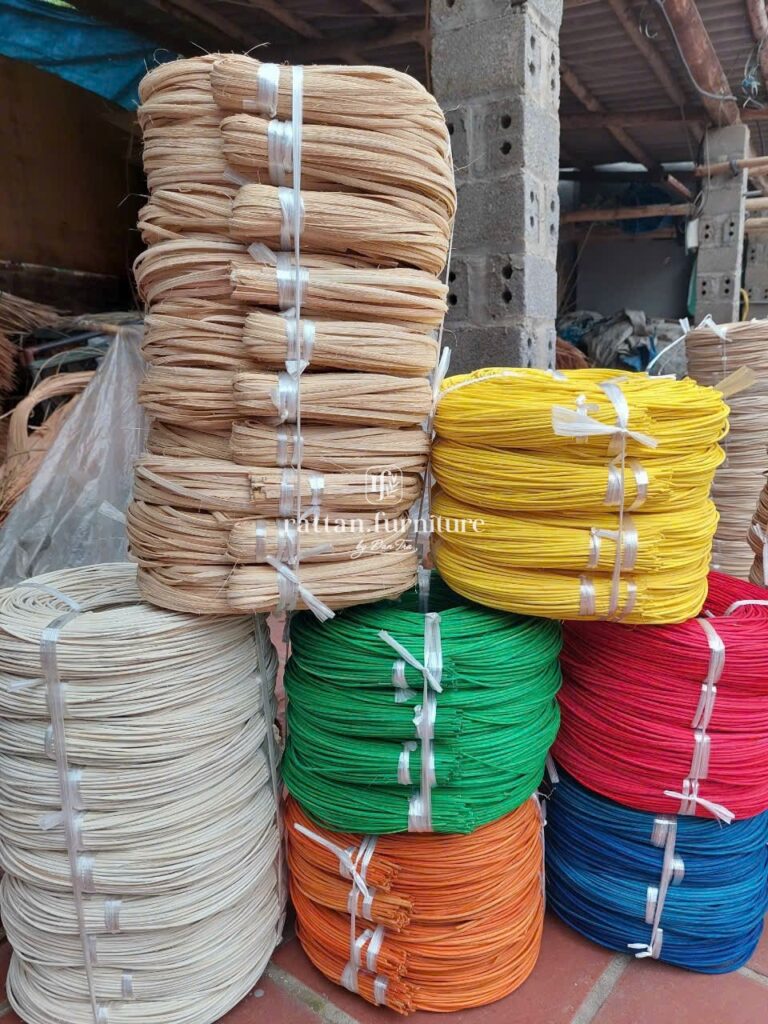
Within the open-weave family, mesh gauge changes the whole character of a piece. Common gauges run from a fine 3/8″ mesh (tighter, more delicate — good for smaller doors and refined frames), through the workhorse 1/2″ standard, up to 5/8″, 3/4″ and a 1″ jumbo for bolder, more casual looks. Roll widths are typically offered from around 18″ to 48″ (roughly 45–100 cm) and cut to the length you need.
Finish is the third lever. Natural (unbleached) keeps rattan’s warm honey tone; semi-bleached lifts it lighter; fully bleached gives the pale, near-white look popular in Scandinavian and coastal interiors, and also takes dye well. Bleaching is a treatment applied only to natural cane — it is one of the clearest signals that you are buying real rattan rather than paper or PE imitation.
Where the material comes from: Indonesia and Vietnam
Indonesia — the raw-material giant
Indonesia is, by a wide margin, the world’s largest source of raw rattan. Industry and academic sources estimate the country supplies roughly 80% of the world’s raw rattan, and it holds an enormous species base — over 300 rattan species, of which only a fraction are commercially traded. Its premium canes, including large-diameter Manau from forests in Kalimantan and Sulawesi, have a long-standing reputation for strength and quality.
The defining feature of Indonesia’s market, though, is policy. Since a 2011–2012 government decree, Indonesia has banned the export of raw and semi-processed rattan, specifically to keep the material at home and push its own furniture industry up the value chain. For a buyer this has two consequences: first, sourcing Indonesian raw material or plain webbing for your own production is restricted at source; and second, while the ban strengthened parts of the domestic furniture sector, observers note the industry has been held back by limited design innovation and older processing methods.
Vietnam — craftsmanship, agility and trade access
Vietnam entered this market later and from a different angle. It is recognised as an emerging rattan and bamboo producer with a deep artisan tradition — around 3 million people work across the country’s craft villages — and it competes on craftsmanship, design flexibility and price rather than on raw-material volume alone. Vietnam holds roughly 3.4% of the global bamboo-and-rattan market by ITC figures, and its bamboo-and-rattan exports have grown strongly, with a large share going to the EU and US.
Vietnam’s biggest structural advantage is trade access. Through the EU–Vietnam Free Trade Agreement (EVFTA), tariffs on the large majority of wood and furniture lines into the EU have been cut, with the phase-out reaching effectively 0% on most lines by 2025–2026. Vietnam layers further agreements on top — UKVFTA (UK), VKFTA (Korea), CPTPP and RCEP (Japan, Australia and the wider Asia-Pacific). Indonesia has no comparable free-trade agreement with the EU, which gives Vietnamese-made rattan a genuine landed-cost edge into Europe.
Vietnam vs Indonesia: head-to-head
| Factor | Indonesia | Vietnam |
| Raw-material scale | World’s largest — ~80% of raw rattan; deep species base | Smaller raw base; competes on skill and design, not volume |
| Raw material / webbing for export | Restricted — raw & semi-processed export banned since 2011–12 | Openly exported; raw material and finished goods both available |
| Craftsmanship & design agility | Strong heritage; often noted for slower design innovation | Deep artisan base; fast, flexible, buyer-driven custom design |
| EU trade access | No EU FTA | EVFTA — tariffs to ~0% on most lines by 2025–26 |
| Other FTAs | Fewer preferential deals into key markets | UKVFTA, VKFTA, CPTPP, RCEP |
| Typical MOQ flexibility | Often geared to large domestic factories | Low / flexible MOQ available from direct factories |
| Best fit for | Buyers wanting Indonesian-origin premium cane | Buyers wanting design agility, low MOQ and FTA-advantaged EU access |
What’s the same — and what’s genuinely different
Where the two are alike
- Same core material and patterns. Both countries weave the same open-mesh, radio, close and herringbone patterns, in the same mesh gauges and finishes. A hexagonal open weave from either origin is the same product family.
- Same end uses. Furniture, cabinetry, ceilings, partitions, lighting and décor — the applications don’t change by country.
- Same sustainability story. Natural rattan is a fast-growing, renewable, low-processing material in demand from ecoconscious buyers in both the EU and US.
Where they diverge
- Access to the material itself. Indonesia keeps its raw rattan at home by law; Vietnam will sell you raw material, construction material and finished product — even combined in one order.
- Route to the EU. Vietnam’s FTA network, led by EVFTA, is the single clearest commercial difference for European buyers. Indonesia has no equivalent EU deal.
- Order flexibility. Vietnam’s direct factories are structured for lower MOQs and buyer-set quantities; much of Indonesia’s capacity is built around large runs.
- Design responsiveness. Vietnam’s craft-village depth translates into faster custom pattern, size and finish work — useful for designers and hospitality FF&E projects with specific briefs.
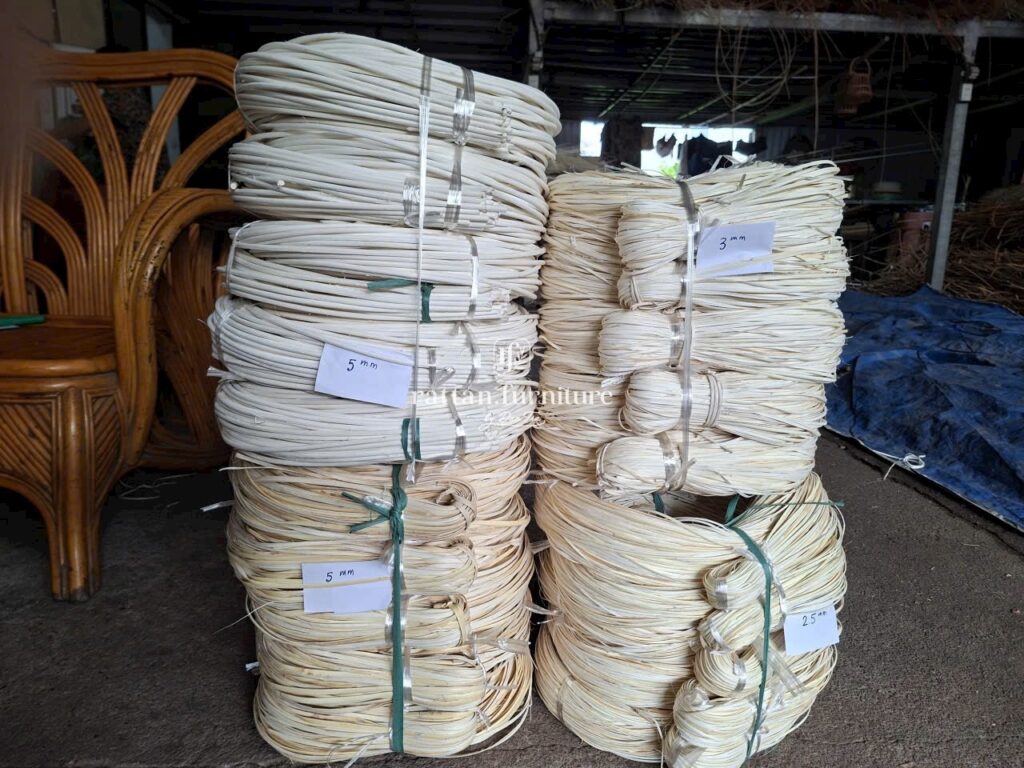
Why buy direct from the factory — Rattan.Furniture by Dan Tra
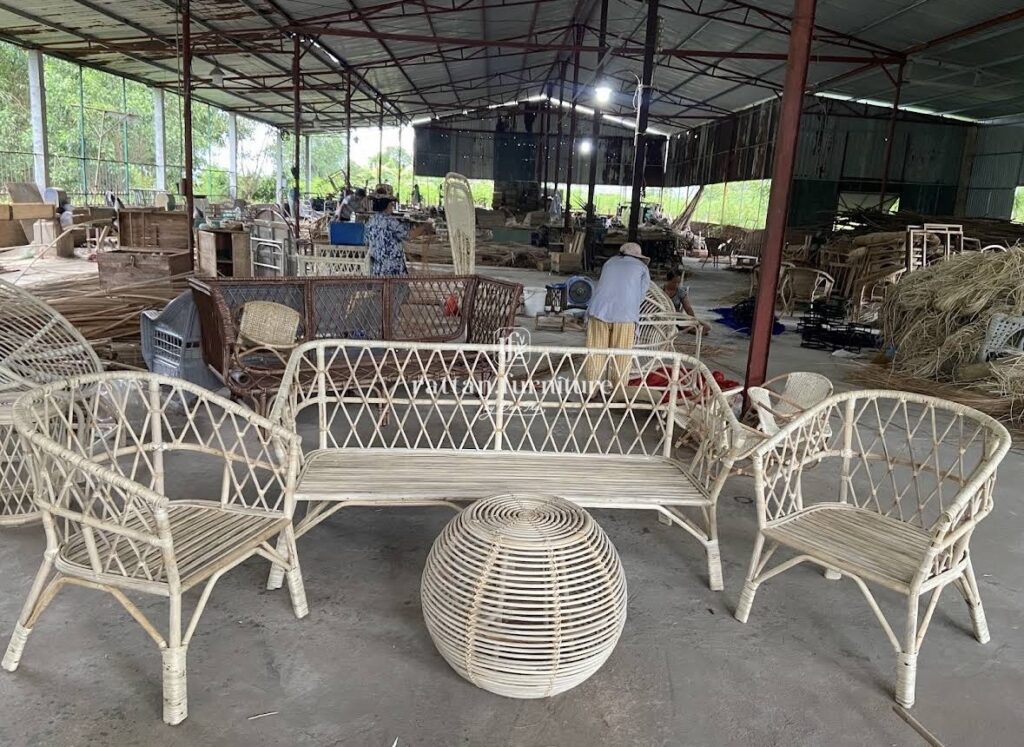
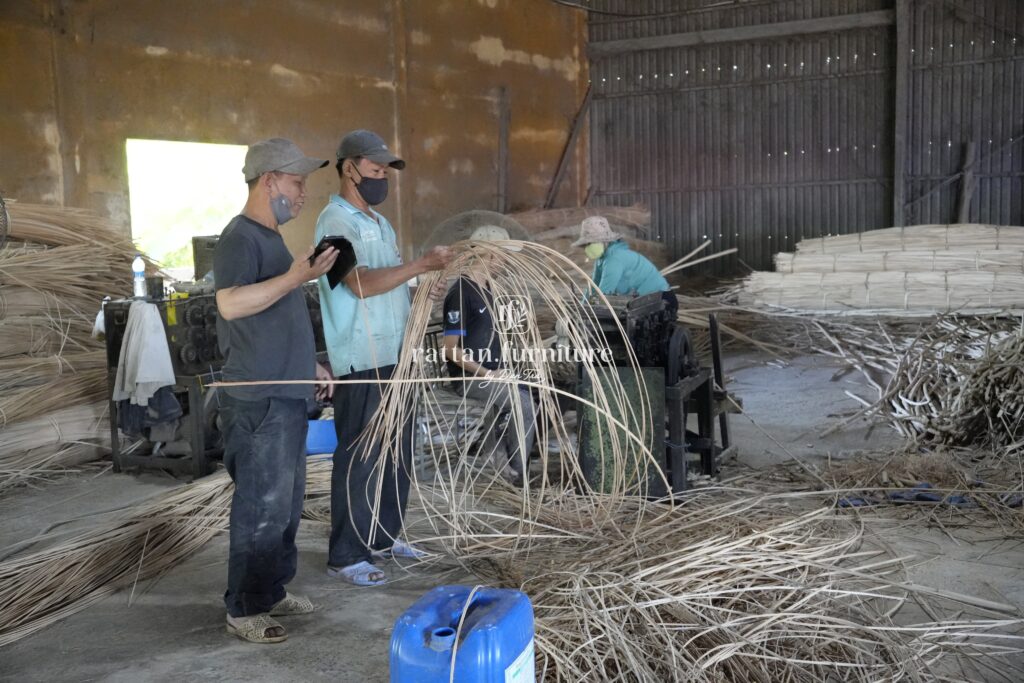
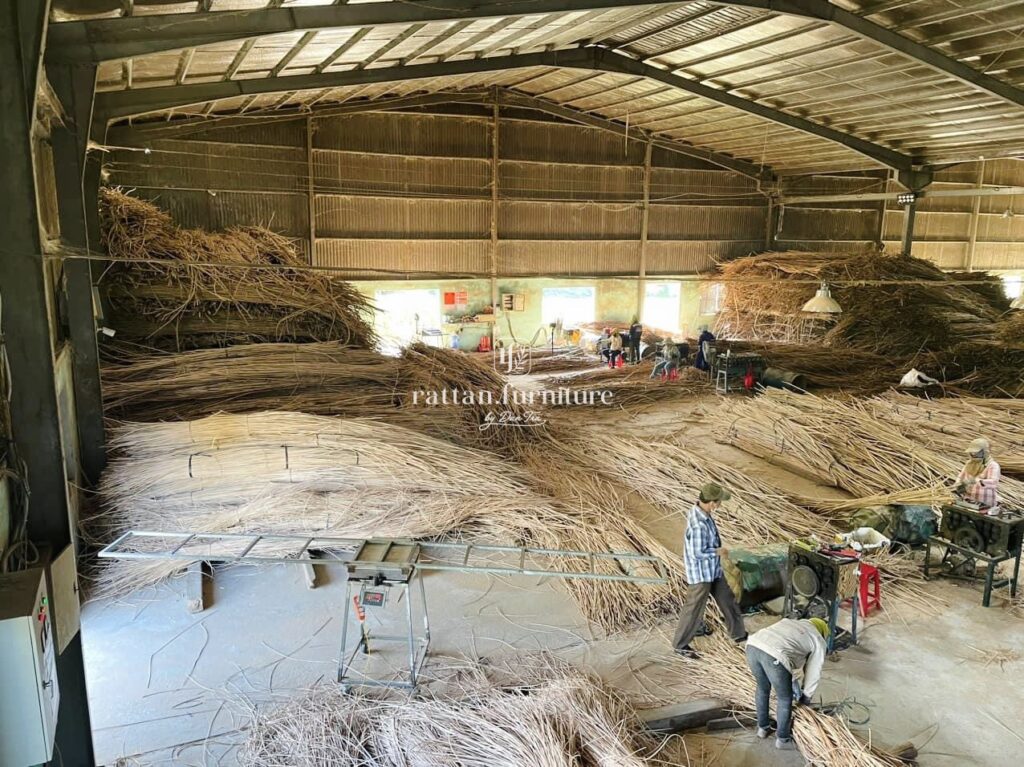
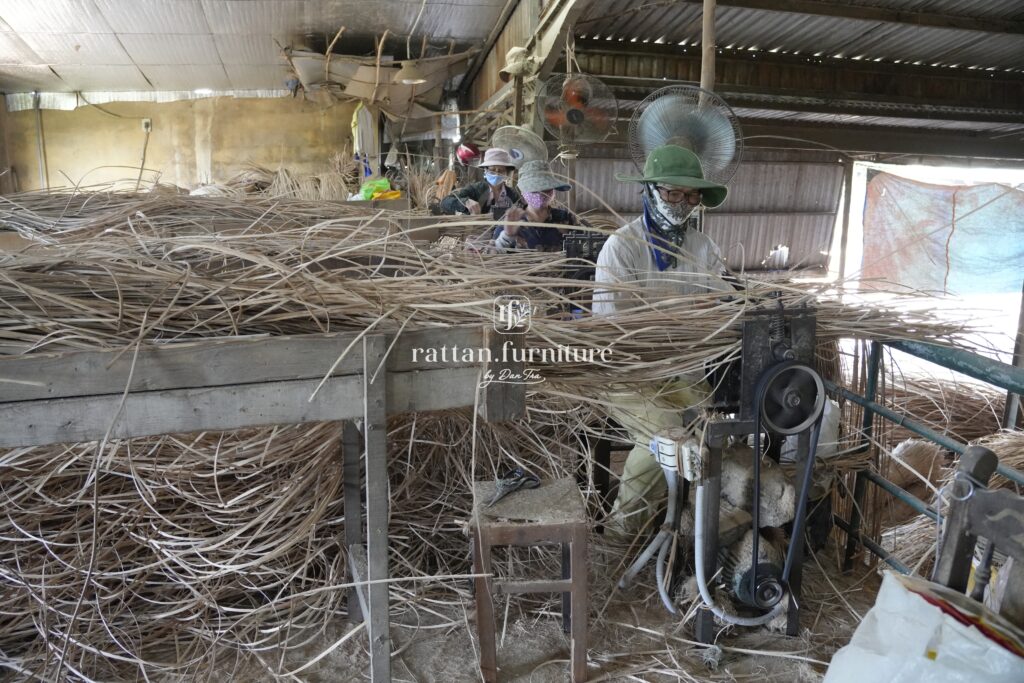
Choosing a country is only half the decision. The other half is choosing between a trading intermediary and a direct manufacturer. Rattan.Furniture by Dan Tra is a direct natural-rattan factory — not a trading company — founded in 2014 and operating a single joint-venture production facility of 5.4 hectares (54,000 m²) in Gia Lai province, Vietnam. The workforce is 965 people, of whom 765 are skilled rattan-weaving artisans. Here is what buying direct changes.
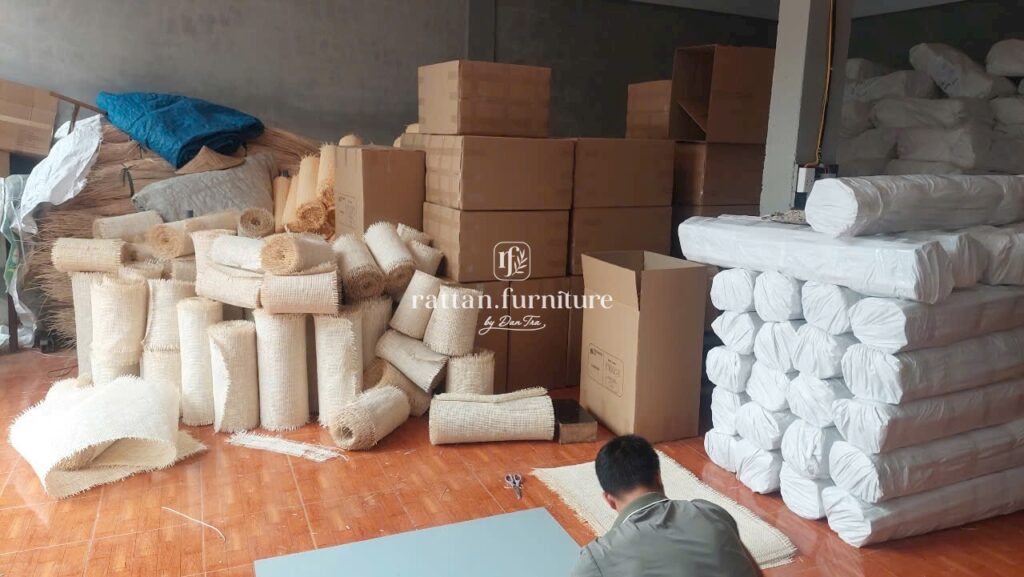
1. One factory, one accountable source
With a direct manufacturer there is no layer between your specification and the weaving floor. You talk to the people who cut, weave, dry and pack the material. That shortens the traceability chain and removes the intermediary margin — the price you negotiate is the factory price.
2. Pure natural rattan — and honest about its limits
The factory works in natural rattan only — no synthetic PE rattan, no substitute materials. That focus is a quality signal, and it comes with proactive honesty: natural rattan is for indoor and covered/sheltered spaces, not open outdoor or poolside use. For a professional buyer, a supplier who states this plainly is protecting your project rather than chasing a sale.
3. Low, flexible MOQ
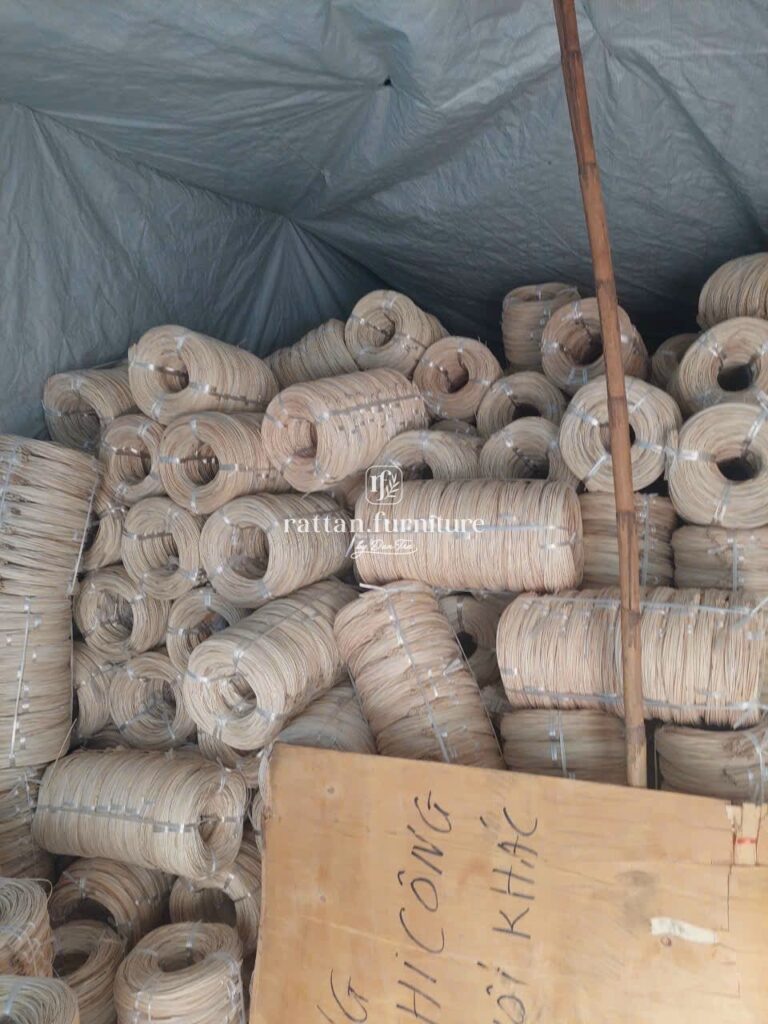
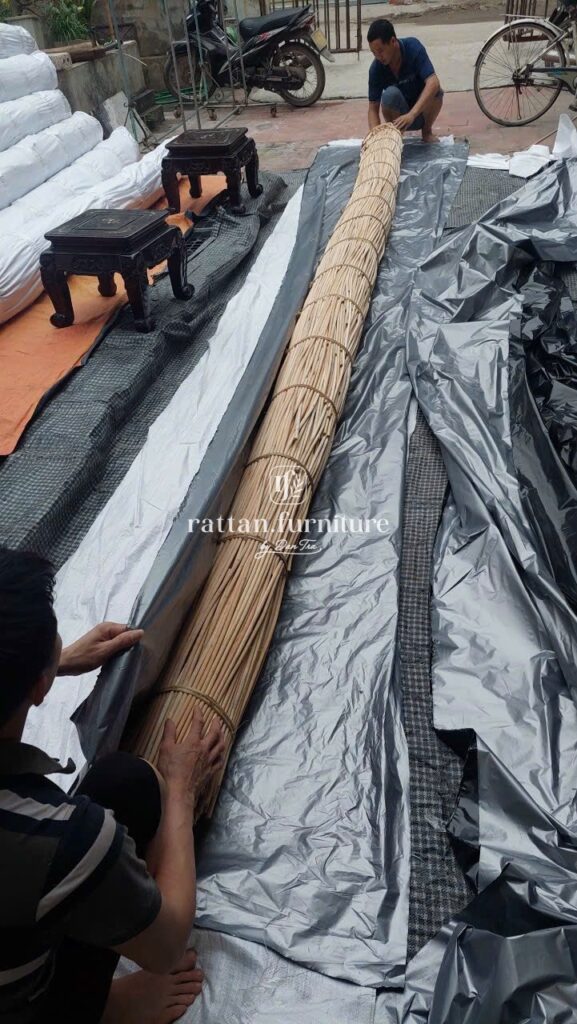
Direct-factory status allows buyer-set quantities. Cane webbing is available from 20 rolls at 15 m length, with flexible MOQs across categories — practical for boutique projects, sample runs and phased hospitality rollouts, not just container-scale retail orders.
4. Raw material and finished goods in one shipment
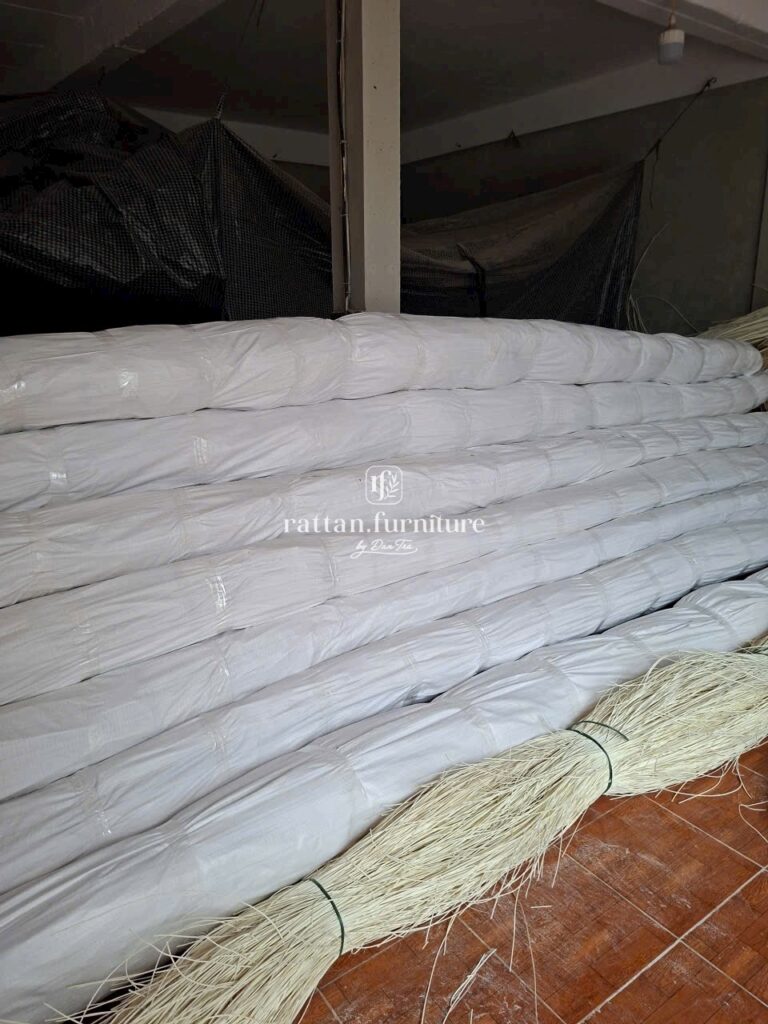
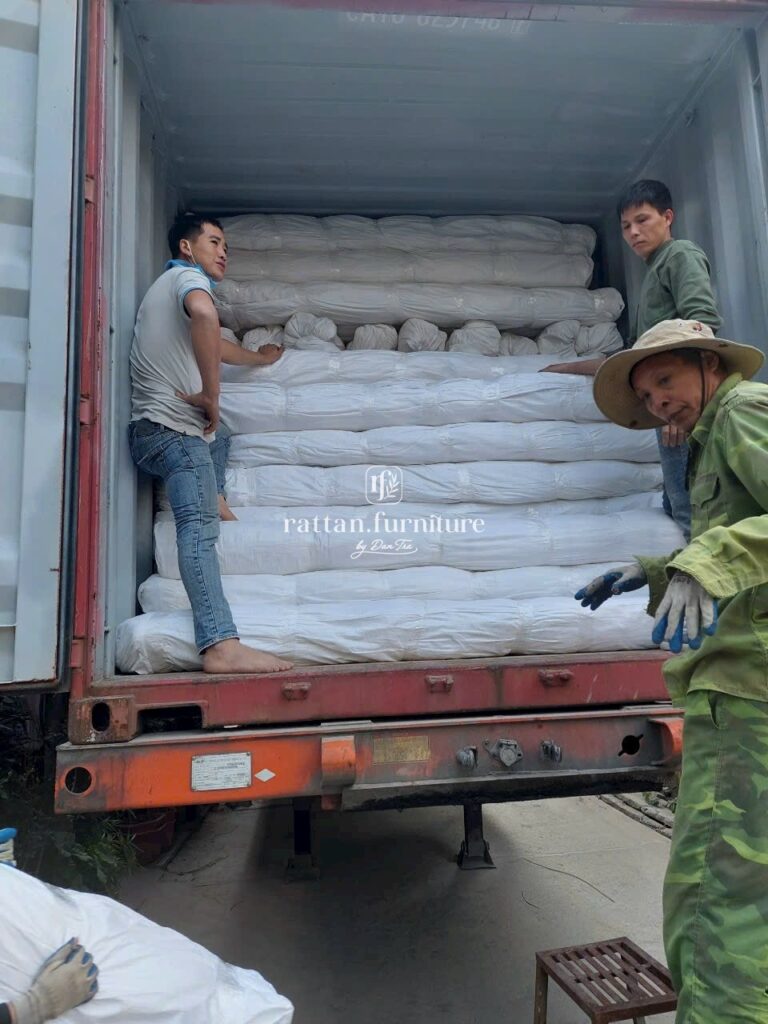
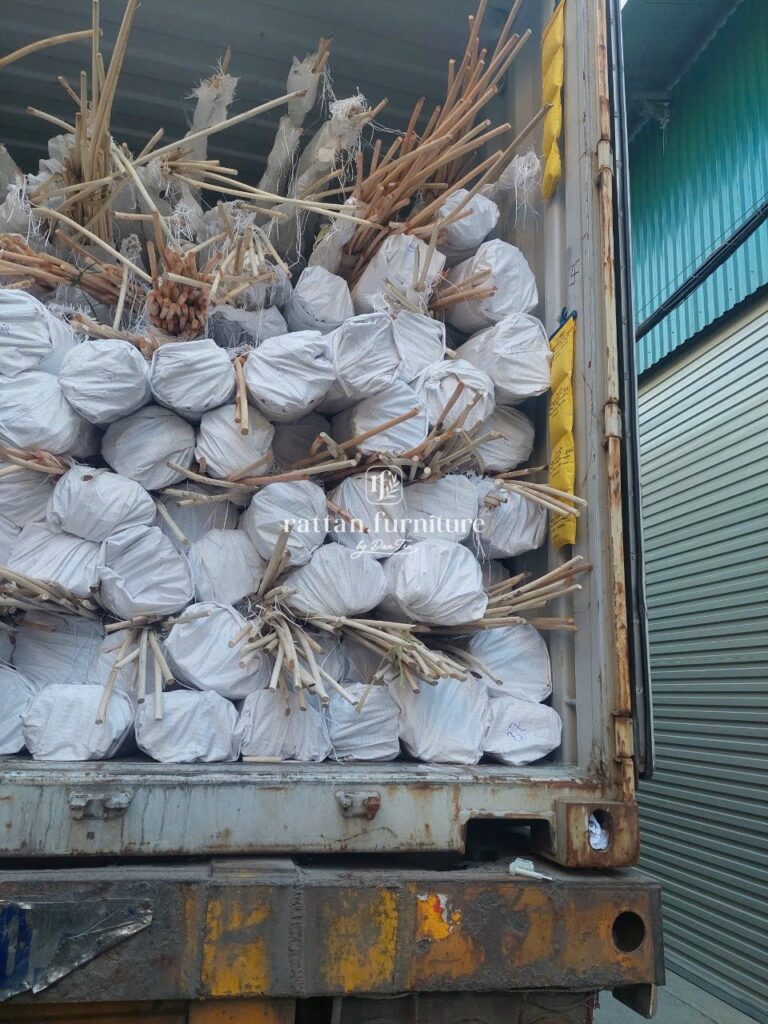
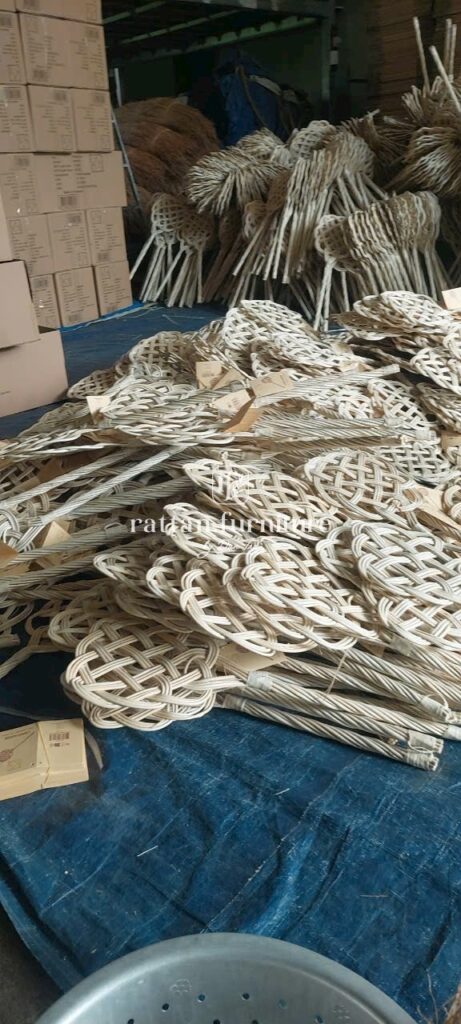
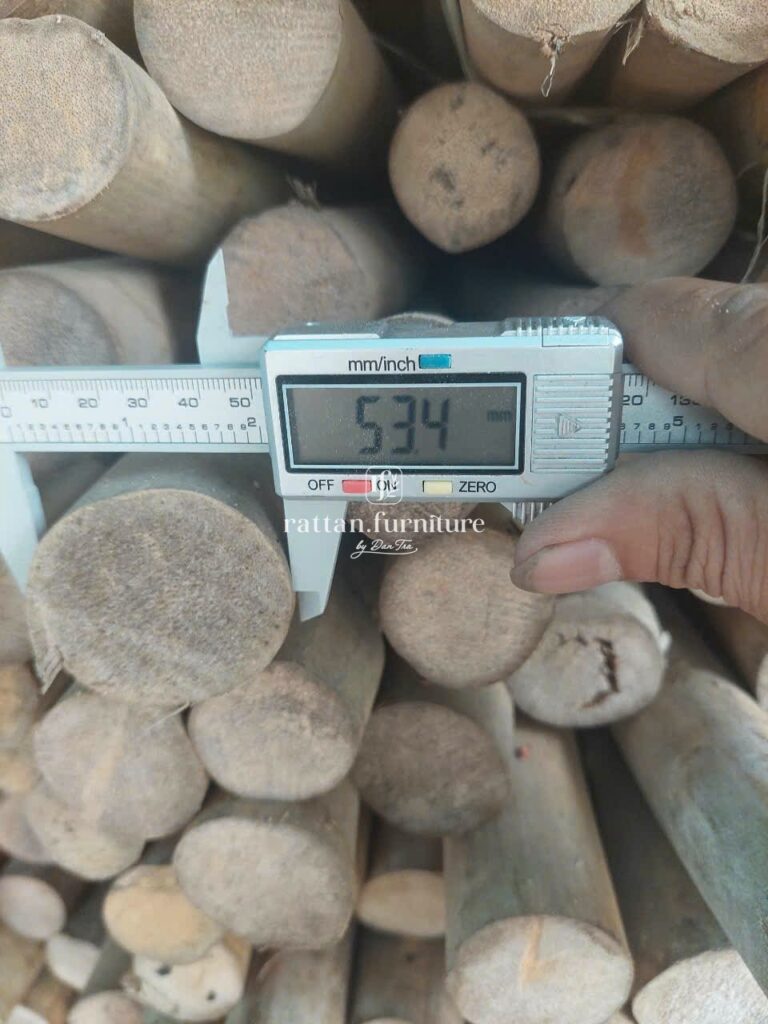
This is a genuinely uncommon advantage. A single order can combine raw rattan material (poles, core, cane webbing) with construction material and finished products, in the quantities you set, consolidated into one FOB shipment. Because Indonesia restricts raw-material export outright, this flexibility is difficult to replicate there.
5. FTA-advantaged access to Europe and key markets
Shipping from Vietnam means your goods can qualify for preferential origin under EVFTA, UKVFTA, VKFTA, CPTPP and RCEP, depending on your destination. Full export documentation is handled in-house — phytosanitary certificate, HS-code classification and Certificate of Origin under the relevant agreement — with goods shipped FOB from Cat Lai Port, Ho Chi Minh City.
6. Controlled drying and per-batch quality
Moisture is the enemy of any woven rattan product in transit. The factory uses moisture-controlled drying plus per-batch moisture testing before packing, alongside confirmed processing methods including flame bending and sun-drying. This is about arrival condition — mesh that reaches your warehouse ready to install, not warped or spotted.
7. A short, verifiable supply chain
Rattan is harvested from licensed forest zones, processed and woven in one facility, and shipped under the factory’s own name. For buyers navigating EU sustainability expectations — traceability, clean production, transparent labour — a short, single-site chain is far easier to document than a multi-hop trading route. (Note: pure natural rattan products fall outside the current commodity scope of the EU Deforestation Regulation, EUDR, though buyers should confirm the position for their exact product.)
The bottom line for buyers
Indonesia remains the raw-material powerhouse of the rattan world, and for buyers who specifically want Indonesian-origin premium cane, it is the source. But its export ban, large-order orientation and slower design cycle make it a harder fit for buyers who need agility.
Vietnam competes on the things that matter most to importers, designers and hospitality procurement teams: genuine craftsmanship, fast custom design, low and flexible MOQs, a short traceable supply chain, and preferential FTA access — above all into the EU, where Indonesia has no equivalent deal. Add a direct-factory relationship, and you remove the intermediary margin while gaining the rare ability to combine raw material and finished goods in a single FOB shipment.
That combination — pure natural rattan, low MOQ and FTA-advantaged origin, straight from the weaving floor — is the case for sourcing your cane webbing and rattan furniture direct from Rattan.Furniture by Dan Tra.