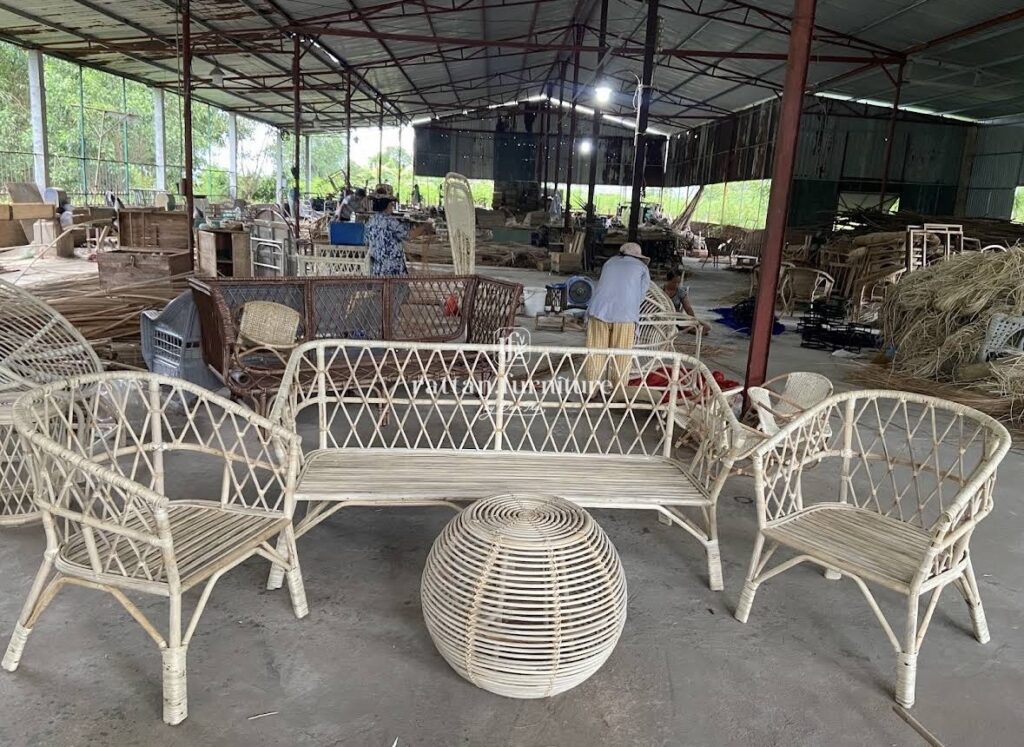
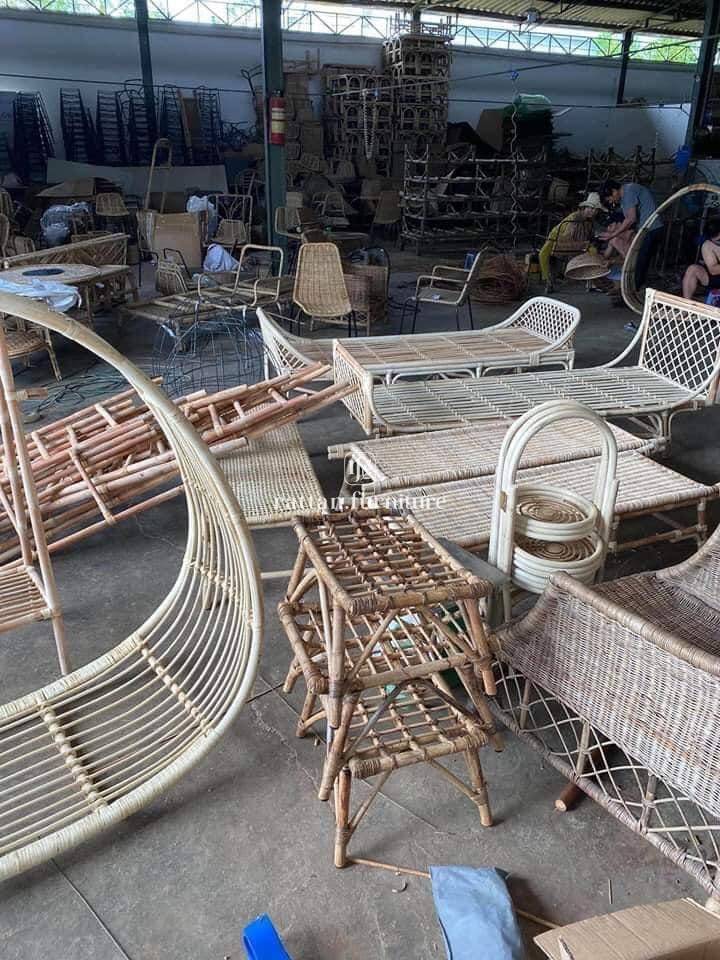
If you have ever browsed woven furniture listings, you have probably seen the words “rattan” and “wicker” used as if they mean the same thing. They do not. This single point of confusion is one of the most common — and most expensive — mistakes in furniture sourcing, and it trips up experienced buyers as often as new ones. Getting it right changes how you brief a supplier, what you actually receive in the container, and whether the product survives in the setting your customer puts it in.
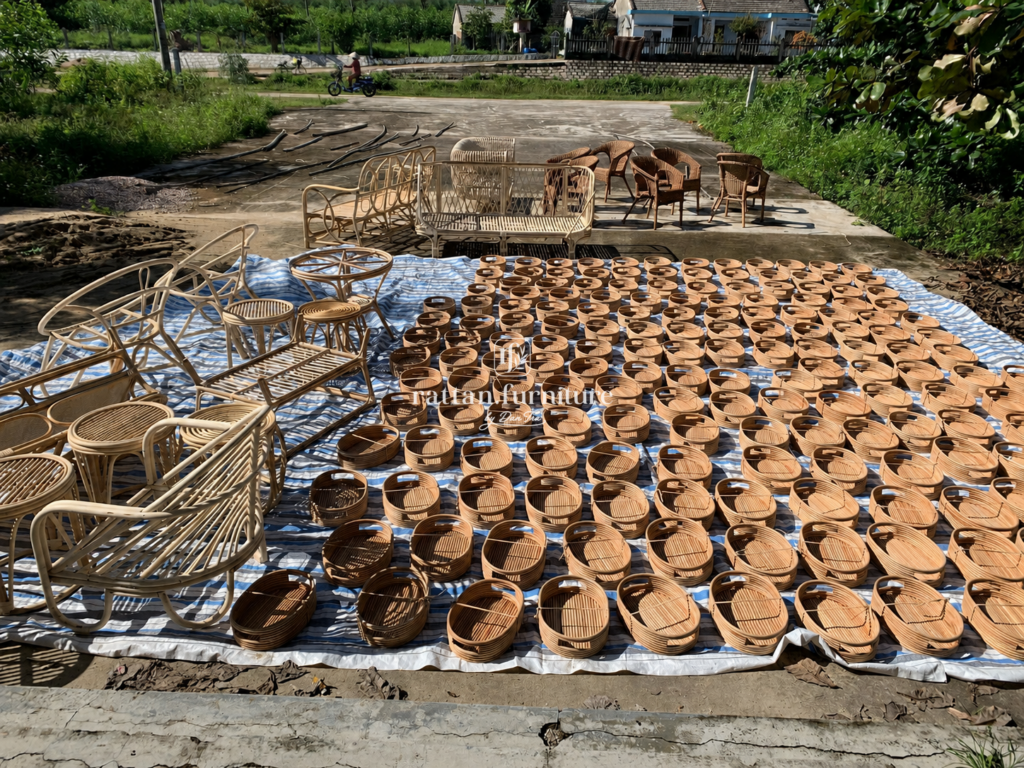
Here is the distinction in one line: rattan is a raw material. Wicker is a weaving technique. You can weave (wicker) using rattan — but you can also wicker with willow, bamboo, seagrass, paper cord, or synthetic plastic. “Wicker” tells you how something was made, not what it is made of.

What rattan actually is
Rattan is a climbing palm that grows naturally across the tropical forests of Southeast Asia. Vietnam, Indonesia and the Philippines are among the world’s most significant sources. Unlike bamboo, which is hollow, natural rattan has a solid core — which is exactly why it can be bent, jointed and used as a genuine structural frame in chairs, sofas and tables, not only as decoration.
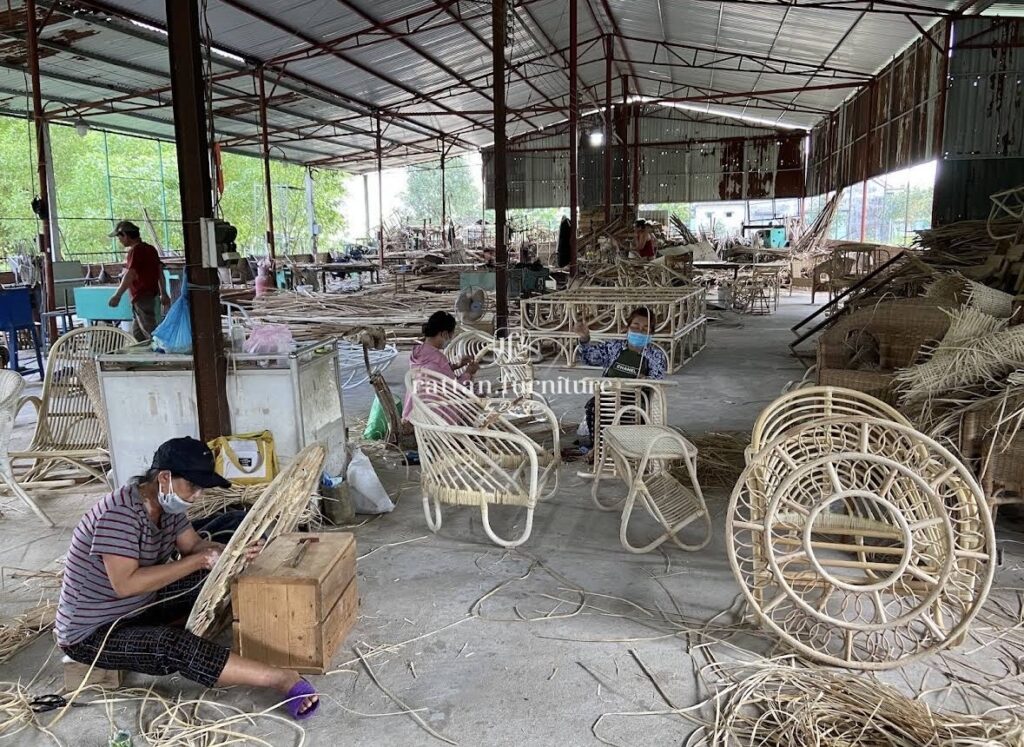
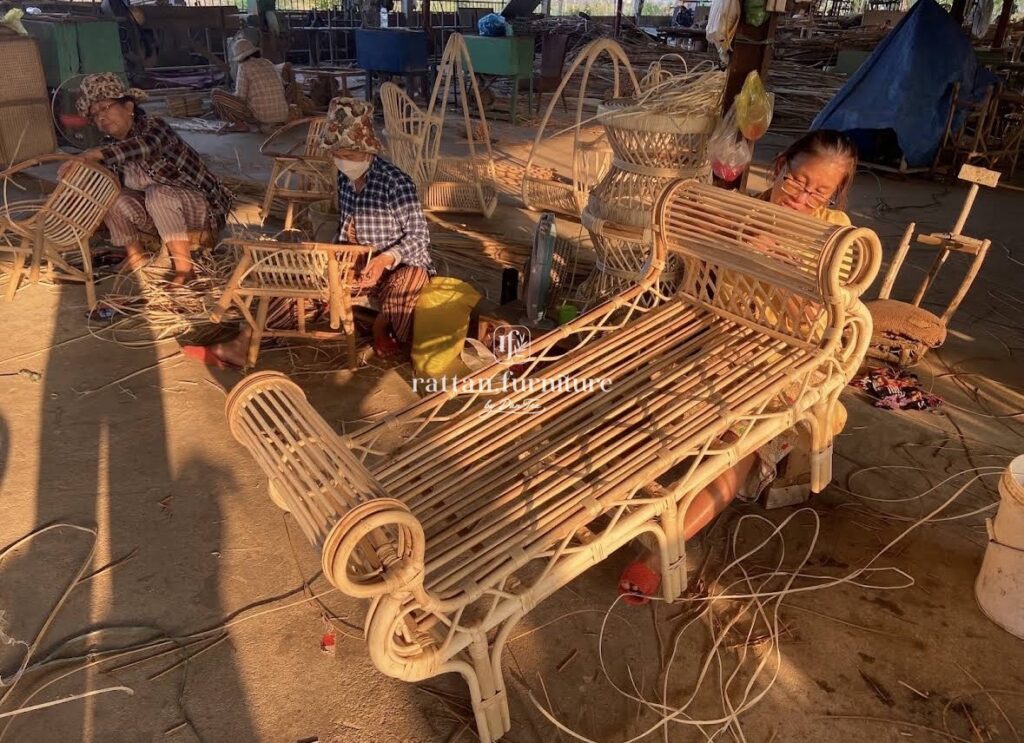
When a product is described as “natural rattan” in the strict sense, rattan itself is the primary structural or decorative material — the pole forms the frame, and the finer rattan skin or core is woven across it. This is the traditional craft that has defined the material for generations.

What “wicker” actually means
Wicker is not a plant and not a material — it is the process of weaving pliable strands over a frame. Because it is a technique, the same woven look can be produced from completely different inputs:
- Natural fibres: rattan skin/core, willow, bamboo, seagrass, water hyacinth, paper rope.
- Synthetic fibre: extruded plastic strand, usually polyethylene (PE), engineered to imitate the woven rattan look.
So “wicker furniture” and “rattan furniture” are not competing categories. A piece can be rattan and wicker at the same time (rattan woven by hand), or wicker but not rattan at all (PE plastic woven over an aluminium frame). This is the crux of the confusion — and where buyers get burned.
The distinction that matters most in B2B: natural rattan vs synthetic (PE) rattan
For an importer or a decor company, the highest-stakes version of this question is not “rattan or wicker” — it is “natural rattan or synthetic rattan.” They look similar in a product photo and behave completely differently in real life:
| Aspect | Natural rattan | Synthetic (PE / poly) rattan |
| What it is | Real plant material (climbing palm) | Extruded plastic strand, usually polyethylene |
| Frame | Rattan pole, often with hardwood | Aluminium or steel, plastic woven over it |
| Best use | Indoor & covered spaces | Open outdoor, poolside, full weather |
| Look & feel | Warm, organic, slight variation piece to piece | Uniform, engineered, repeatable |
| Sustainability | Renewable natural fibre | Petroleum-based plastic |
| Weather resistance | Low — not for open outdoor | High — designed for the elements |
Neither is “better” in the abstract — they solve different problems. A resort furnishing an open pool deck needs synthetic. A boutique hotel lobby, a spa, a café interior or a residential living room wants the genuine warmth and texture of natural rattan. The mistake is ordering one when the project needs the other.
Why this matters for your order — honestly
The reason we spell this out is simple: natural rattan is not suitable for open outdoor, poolside or full-weather exposure, and any supplier who tells you otherwise is setting you up for returns. Natural rattan is at its best indoors or in covered spaces — lobbies, spas, cafés, dining rooms, bedrooms, covered terraces. Framing appropriate use honestly is not a limitation; it is what protects your reputation with your own customer.
When you brief a supplier, be explicit about three things and you will avoid almost every common dispute: (1) natural or synthetic; (2) the exact end-use environment (indoor / covered / open outdoor); and (3) whether rattan is structural or only a decorative surface over another frame.
Where Rattan.Furniture sits
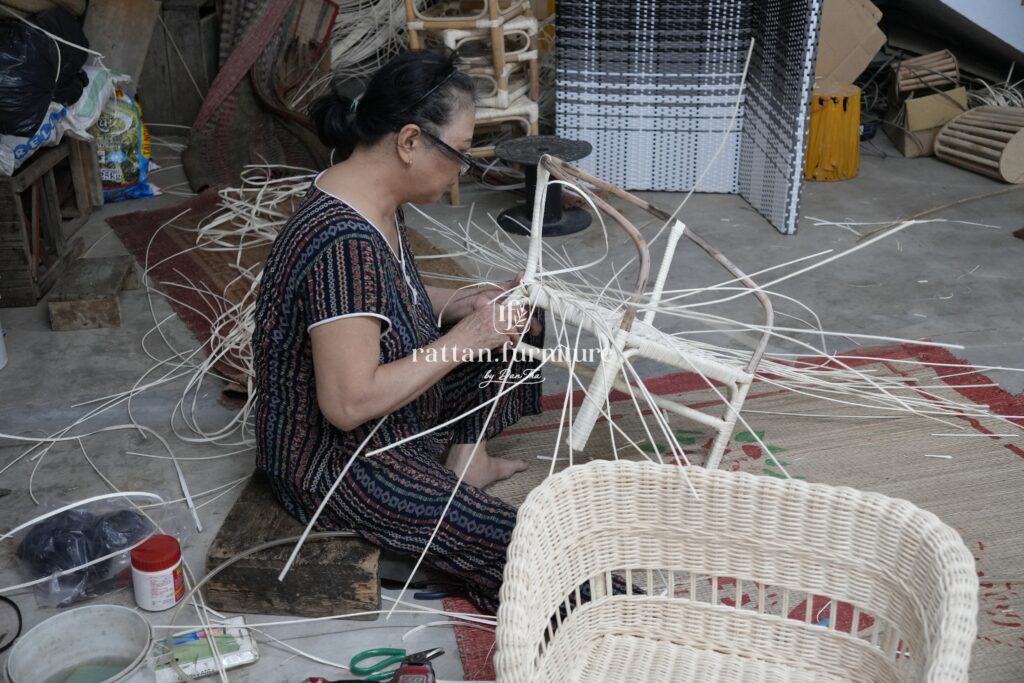
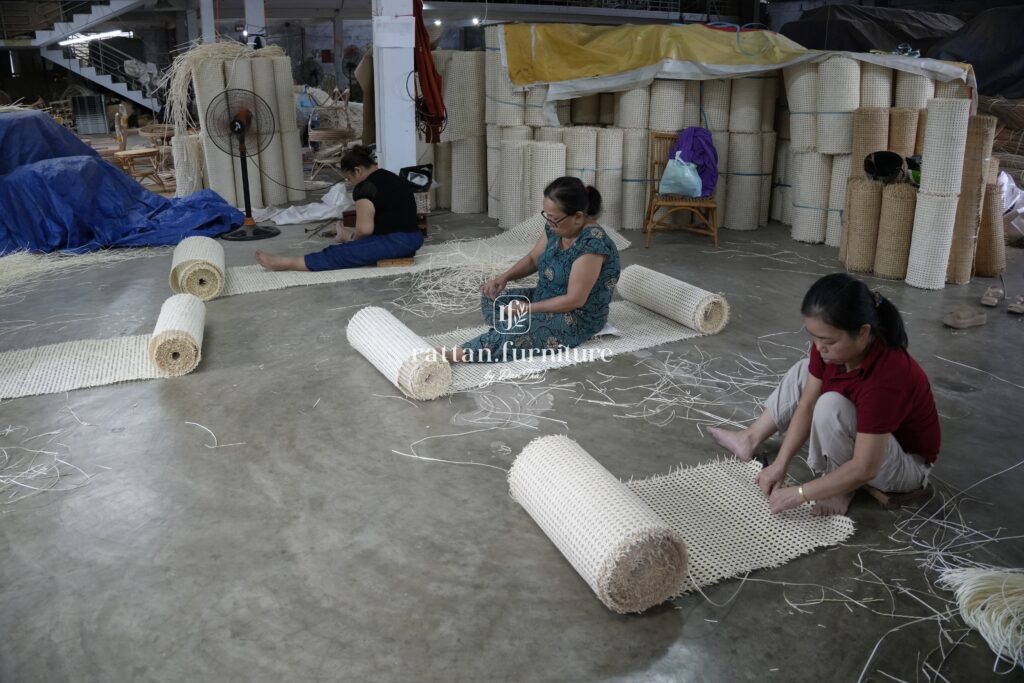
We are deliberately a pure natural rattan specialist. We do not produce synthetic / PE rattan. Everything we make uses real rattan sourced from licensed harvesting areas in central Vietnam, hand-woven by skilled artisans, and finished for indoor and covered-space use. When a project genuinely needs weatherproof outdoor furniture, we will tell you natural rattan is the wrong material — because being right for your customer matters more than one order.
Sources & further reading
The rattan-vs-wicker distinction and material definitions in this article draw on published industry sourcing guidance. Buyers are encouraged to verify independently:
- Rattan garden furniture wholesale sourcing guide — artexnaman.com (rattan as raw material; rattan vs wicker confusion; Vietnam, Indonesia, Philippines as major sources).
- Cosmo Sourcing — natural fibre manufacturing in Vietnam.