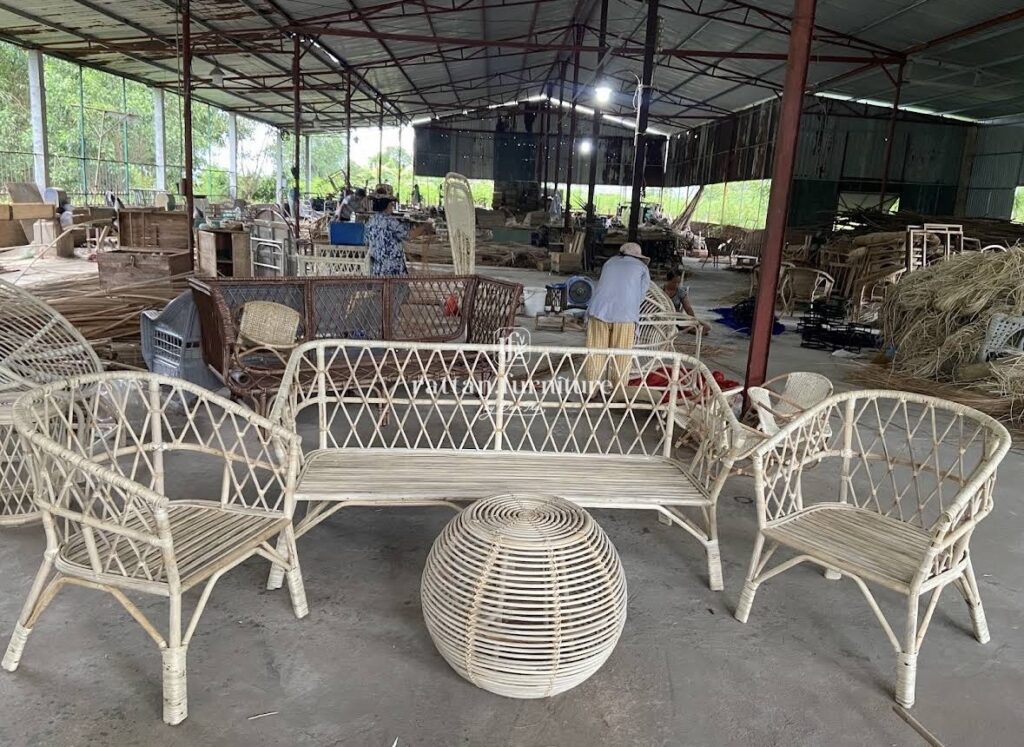
A buyer’s guide to sourcing genuine natural rattan — cane webbing, rattan core, rattan peel, rattan poles and woven rattan blinds — direct from the factories that actually make them.
The natural rattan material market at a glance
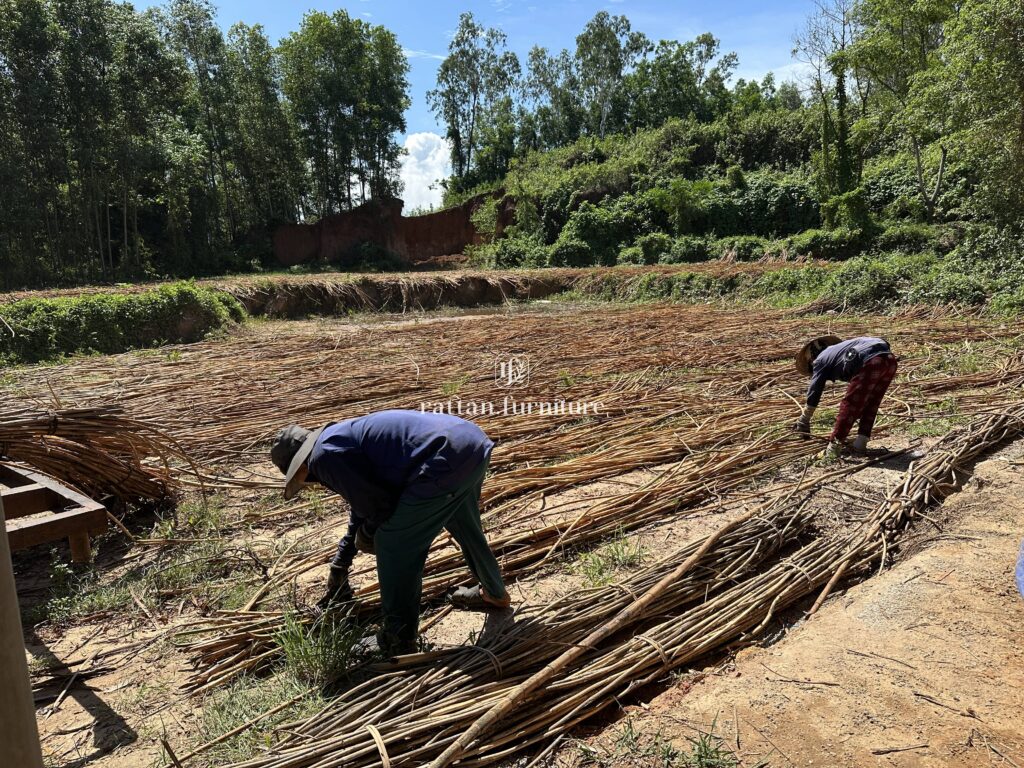
Rattan is a climbing palm (family Arecaceae) with a solid — not hollow — stem, which is exactly what makes it strong enough for furniture yet flexible enough to bend and weave. There are roughly 600 rattan species worldwide, the vast majority native to the rainforests of Southeast Asia, though only a small share are traded commercially. From a single harvested cane the industry produces several distinct materials, and buyers should know the difference before they request a quote:
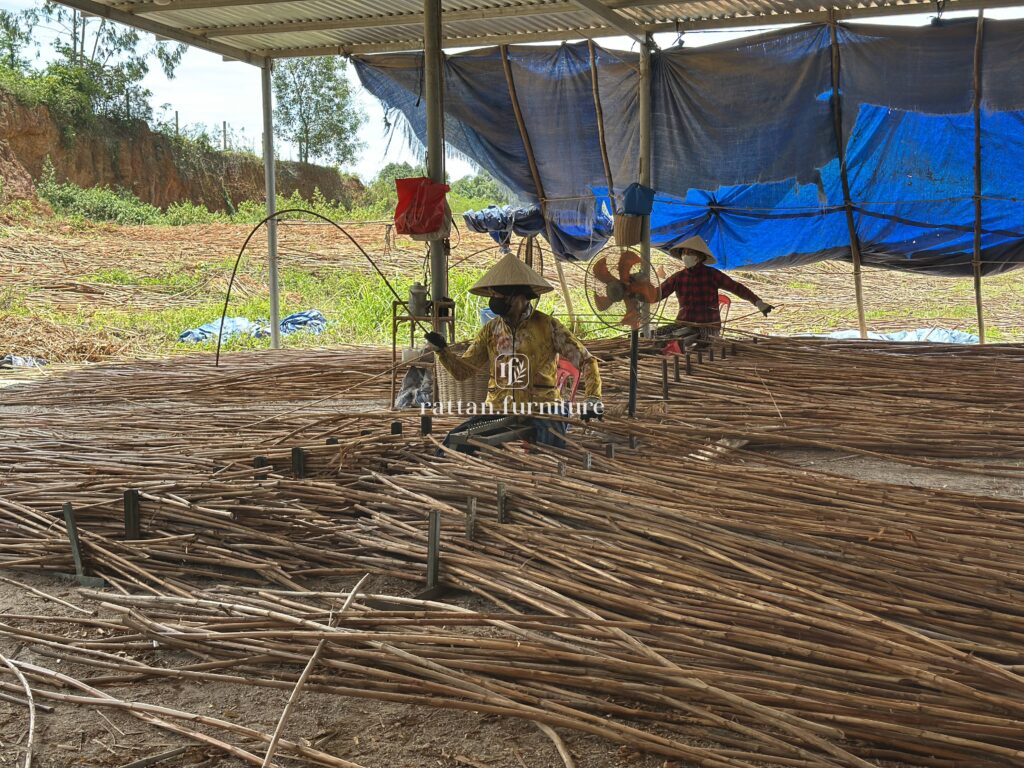
- Rattan poles / cane (cây mây): the whole stem, straightened and graded — used for furniture frames, structural elements and décor.
- Rattan core / reed (sợi mây, lõi mây): the peeled inner stem, round or flat-oval, used for weaving and binding.
- Rattan peel / skin (vỏ mây, chair cane): the glossy outer bark, cut into strips for chair caning and fine weaving.
- Cane webbing / rattan mesh (lưới mây): pre-woven sheets or rolls (hexagonal / open / radio weave) for chair seats, cabinet doors and wall panels. Webbing woven from peel is “cane webbing”; webbing from core is “reed webbing.”
- Rattan mats & blinds (mành mây): flat woven panels and roll-up screens for cladding, partitions and shading in covered spaces.
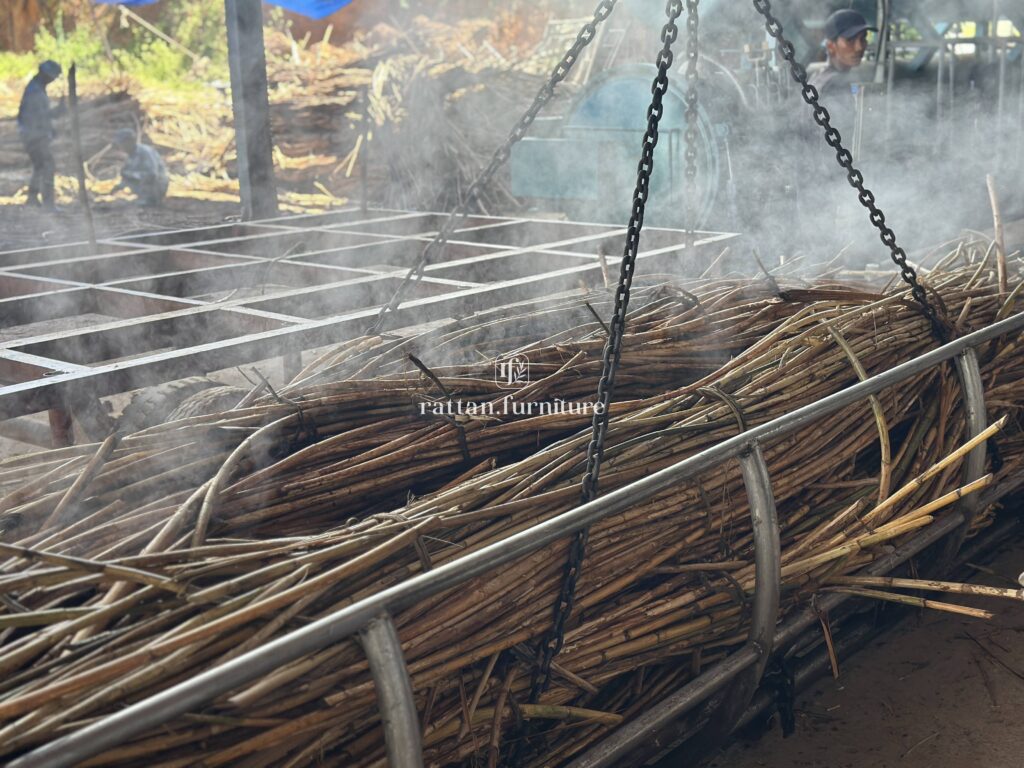
Market size: Estimates vary widely by analyst and by how “rattan” is defined. Mordor Intelligence values the global rattan furniture market at about USD 0.96 billion in 2025, rising to roughly USD 1.22 billion by 2030 (CAGR above 5%). Broader “rattan products” studies run higher — into the several-billion-dollar range — because they fold in décor, baskets and materials. The consistent theme across every report is steady growth driven by demand for sustainable, natural, hand-crafted materials in both residential and hospitality interiors.
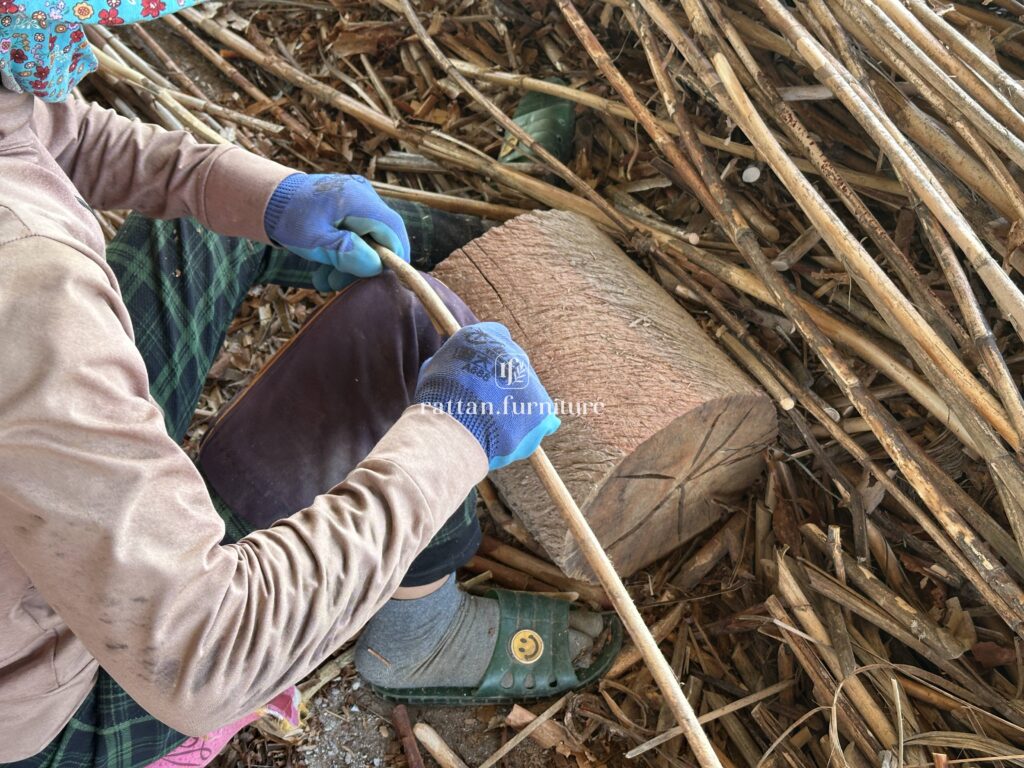
Where it comes from: Indonesia holds the world’s largest natural rattan resource — commonly cited at around 80% of global raw supply — concentrated in Kalimantan, Sulawesi and Sumatra and processed largely in the Cirebon cluster on Java. However, Indonesia has long restricted the export of raw rattan to protect its domestic industry, so international buyers there mostly access semi-finished or finished goods. Vietnam has become one of the top-four global exporters of rattan and bamboo products — shipping to 130+ countries, with sector exports around USD 600 million in just the first nine months of 2024 — and is increasingly the go-to origin for buyers who want direct-factory access to both natural material and finished pieces.
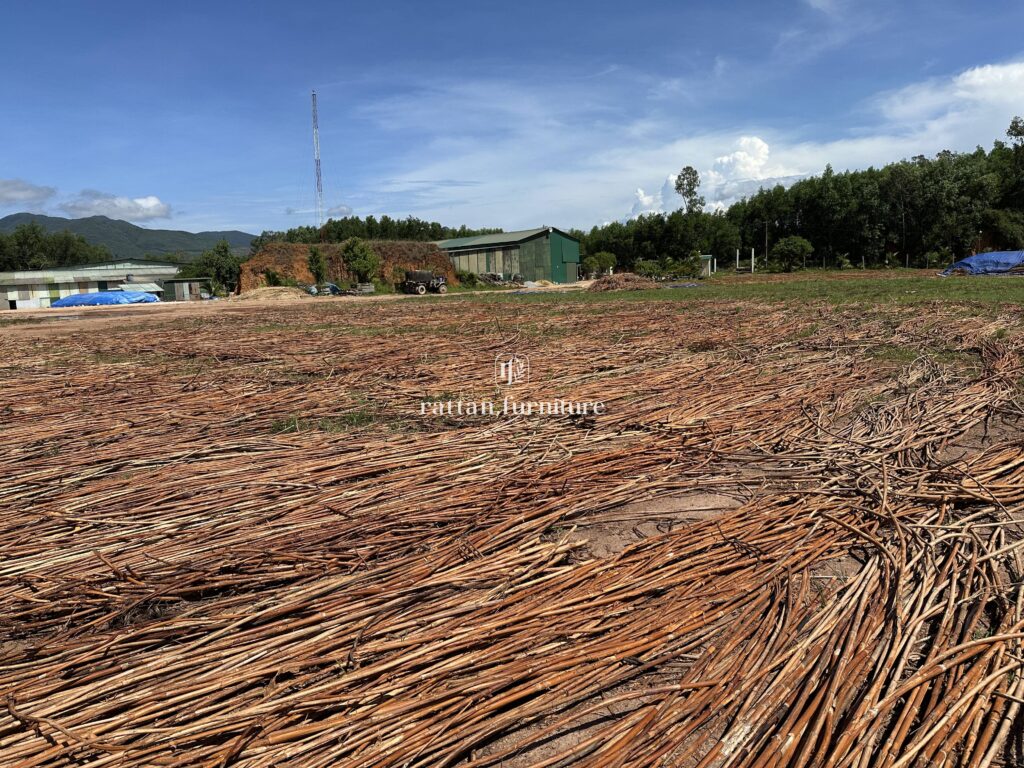
How we evaluated the suppliers
A directory listing is easy to find; a dependable material partner is not. We weighted the factors that actually protect an importer’s margin and reputation:
- Natural vs synthetic. Is it genuine natural rattan, or blended with PE/poly “rattan”? Many suppliers quietly offer both.
- Maker vs middleman. A direct manufacturer gives stable pricing, consistent batches and traceability; a trading company cannot.
- MOQ flexibility. Container-only minimums exclude smaller buyers; low, mixed-category MOQs open the door.
- Traceability & treatment. Known harvesting zones plus proper drying and moisture control mean fewer mould and pest problems on arrival.
- Trade agreements & export paperwork. FTA-based Certificates of Origin, phytosanitary certificates and correct HS classification keep shipments moving.
The Top 4+ natural rattan material suppliers
01 Rattan.Furniture by Dan Tra — Vietnam · Best overall for direct-factory natural rattan
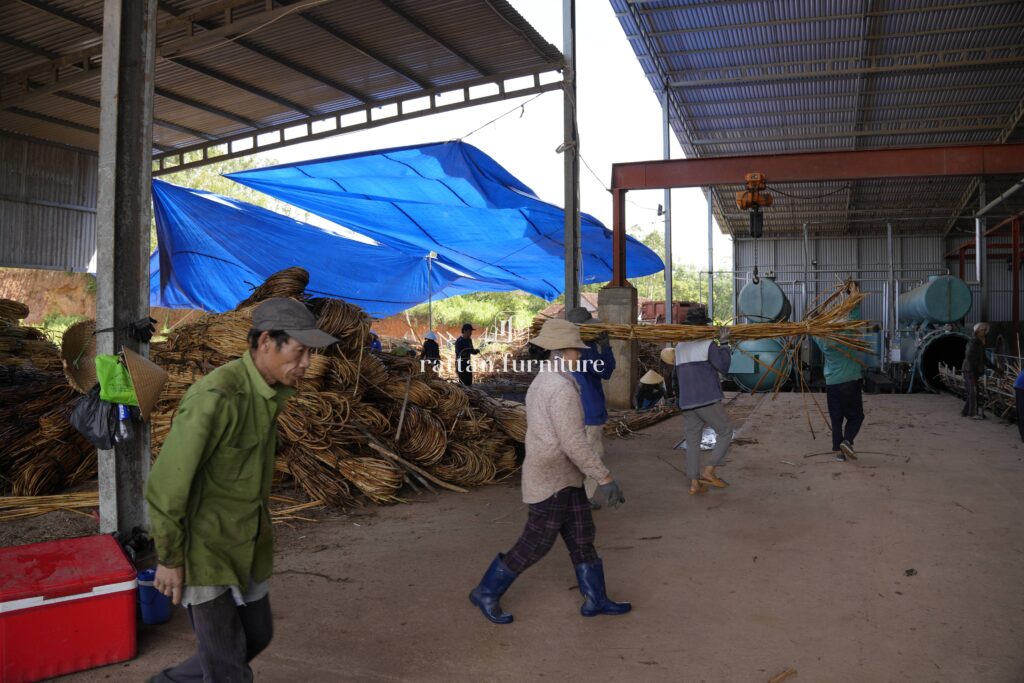
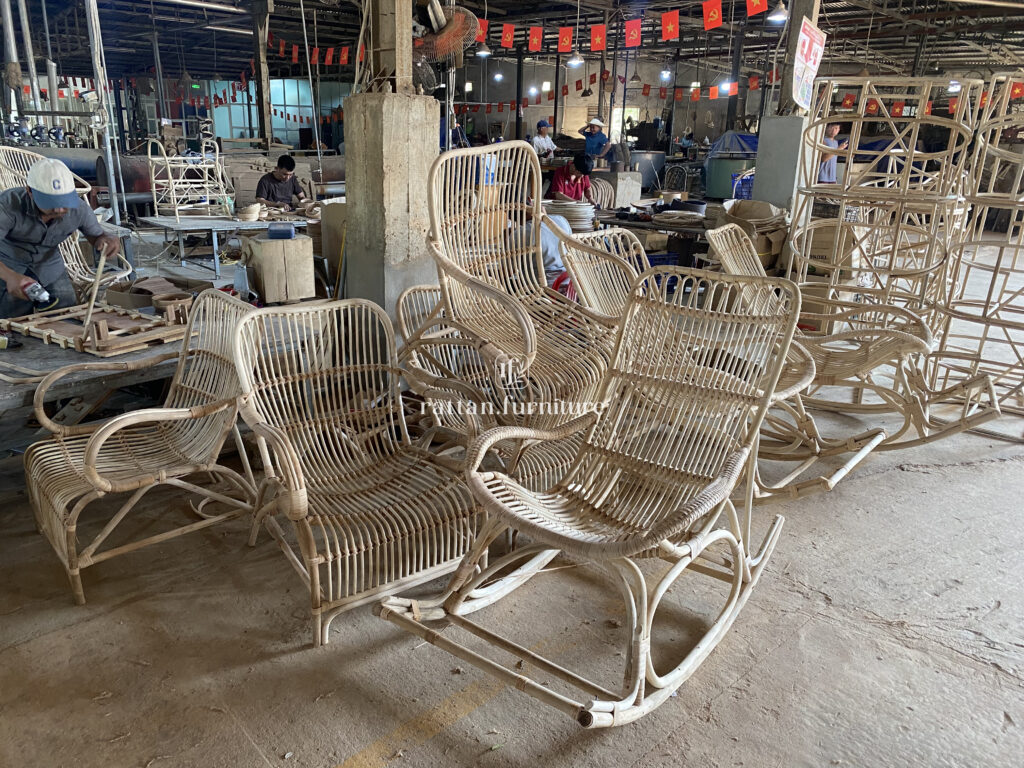
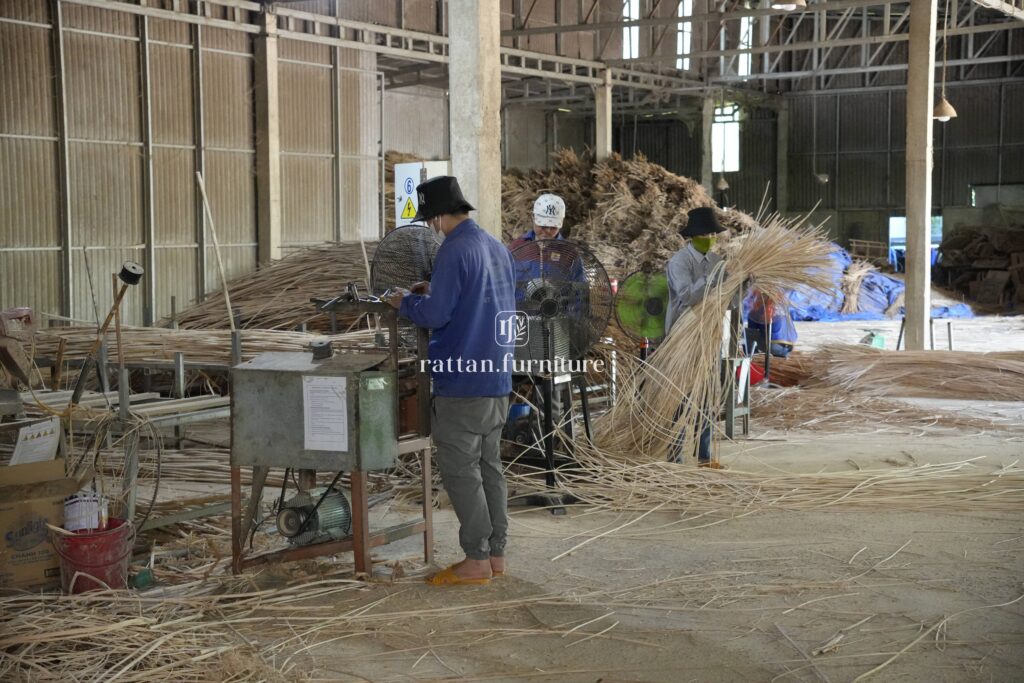
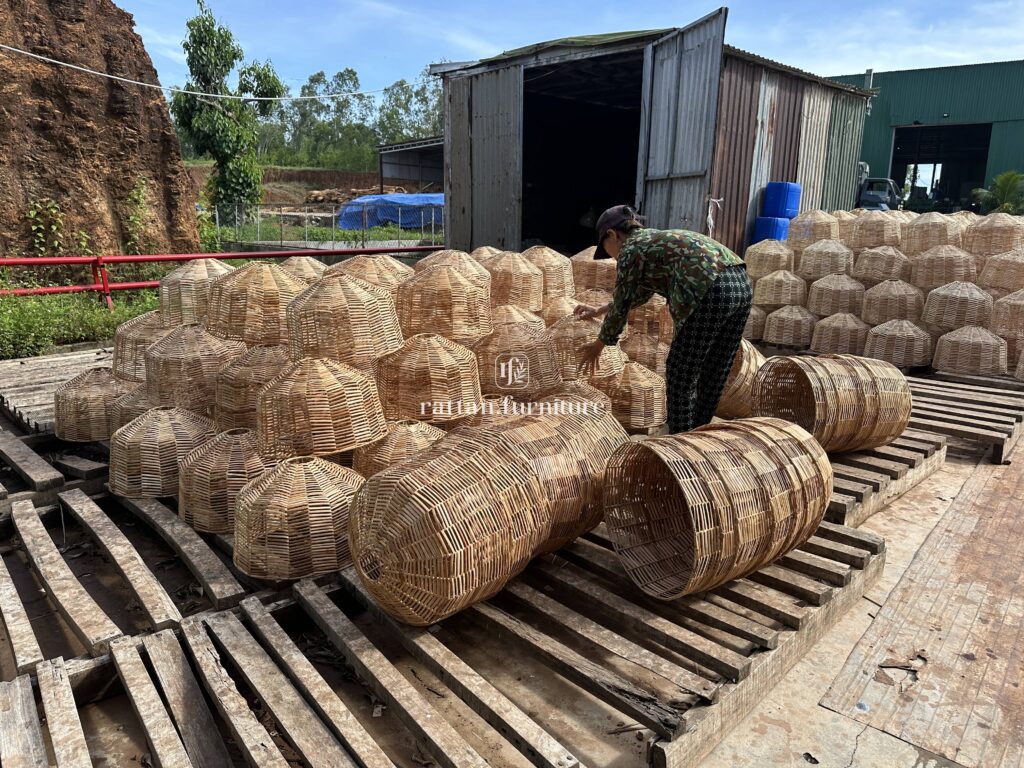
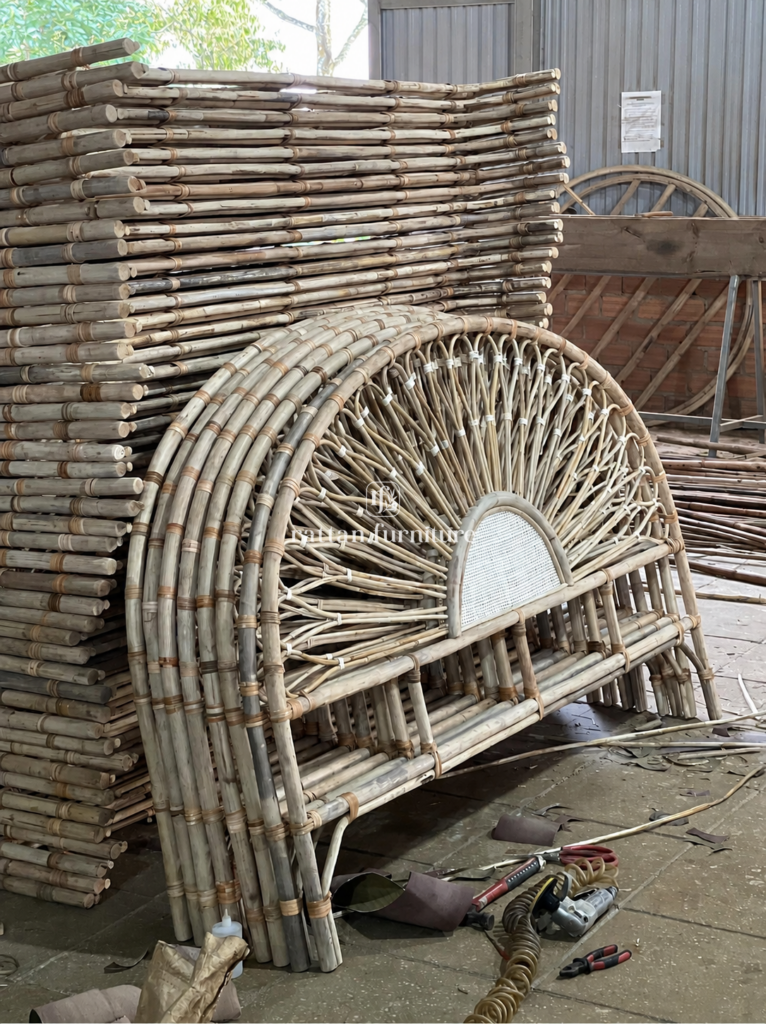
Rattan.Furniture is the international brand of Dan Tra, a Vietnamese producer that manufactures directly in its own factory rather than trading other workshops’ output. Established in 2014 and operating a single joint-venture production facility of 5.4 ha (54,000 m²) in Gia Lai province, it employs 965 workers — 765 of them skilled rattan-weaving artisans. Crucially for material buyers, it sells both raw natural rattan material and finished products, and a single shipment can combine cane webbing, rattan core/poles and finished furniture in whatever mix the buyer sets.
Why it ranks #1
- Pure natural rattan specialist. No PE/synthetic “rattan.” What you sample is what ships — an increasingly rare guarantee.
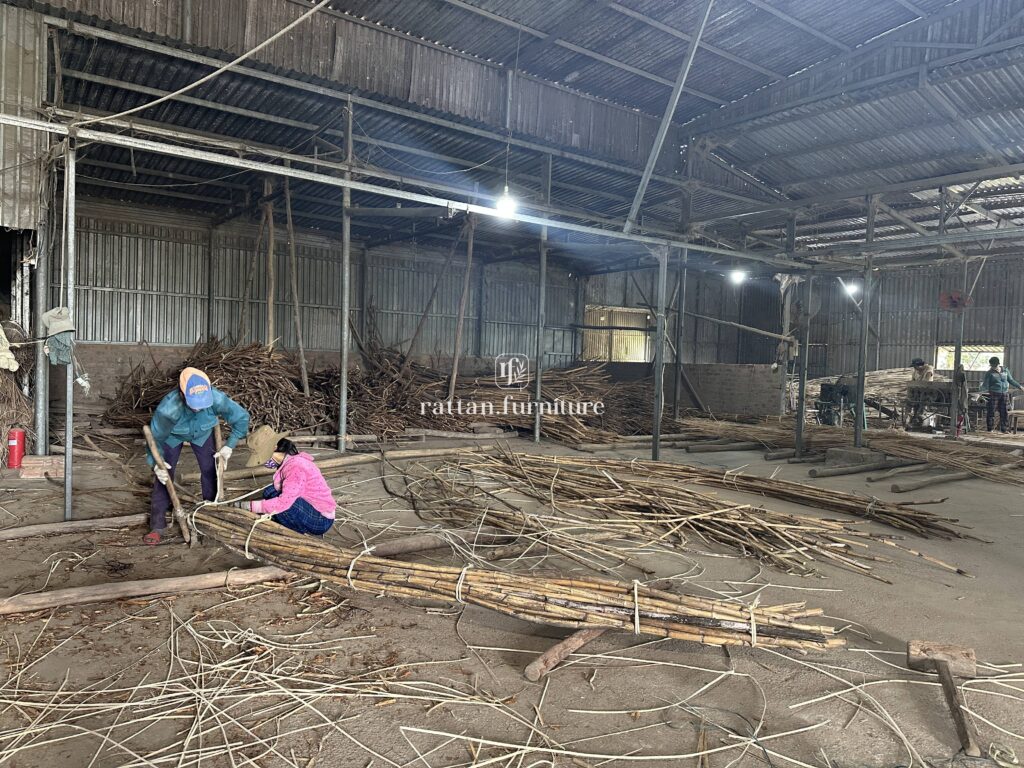
- Direct manufacturer, short traceable chain. Rattan is drawn from licensed forest harvesting zones and processed in-house, so pricing and batch quality stay consistent.
- Low, flexible MOQ. Cane webbing from just 20 rolls × 15 m; because it’s a factory, one order can span raw material, construction material and finished goods.
- Moisture & mould control. Moisture-controlled drying plus per-batch moisture testing before packing — the single biggest cause of importer complaints, addressed up front.
- Trade-agreement leverage. Eligible under EVFTA, CPTPP, UKVFTA, VKFTA and RCEP, with a Certificate of Origin issued under the agreement relevant to each destination — an edge origins without EU/UK/Korea FTAs cannot match.
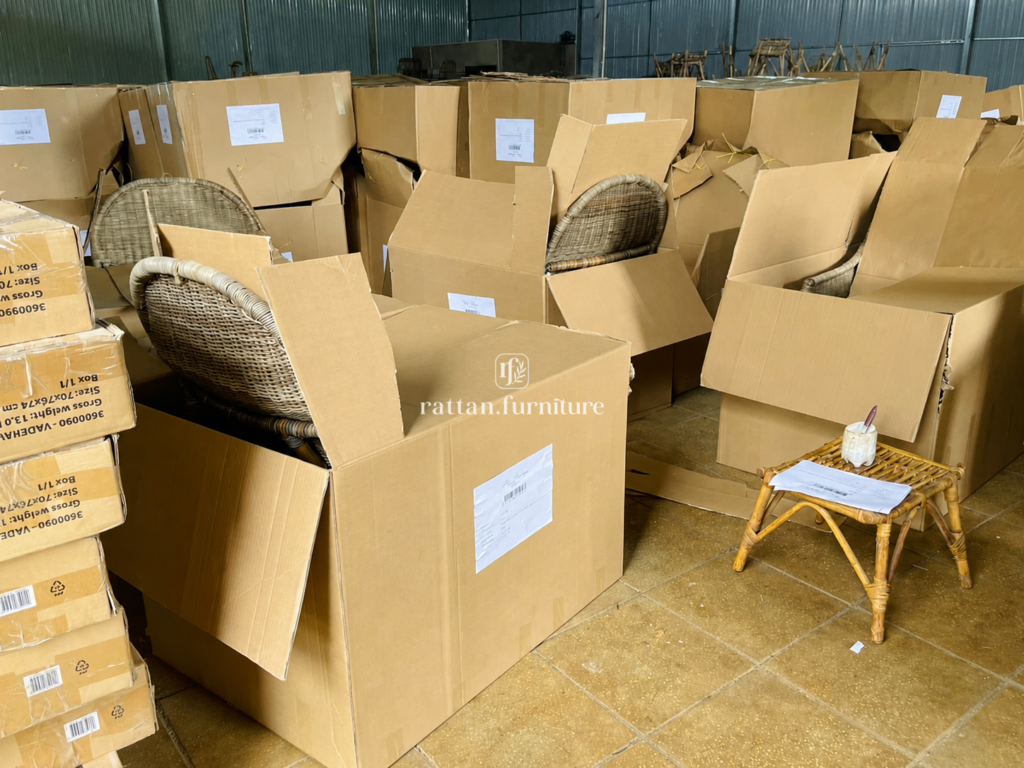
- Full export documentation. Phytosanitary certificate, HS-code classification and complete export paperwork handled for every shipment, delivered via Cat Lai Port (HCMC).
- Proven at scale. Supplies buyers including IKEA and Walmart, plus regional hospitality projects.
Honest fit note: natural rattan is for indoor and covered / sheltered spaces — not open poolside or fully exposed outdoor use. Rattan.Furniture states this up front, which sophisticated buyers read as credibility, not a limitation.
02 SSK – SHA Sivadanmull Kheemchand — India · Heritage cane specialist
A Chennai family business in the rattan trade since 1950, SSK supplies raw rattan and cane webbing — including Assam cane, Manau cane, rattan core and peel — direct from the source, and has launched its own furniture line (Rêve Rattan). A strong choice for buyers serving the Indian market or wanting an alternative sourcing origin with deep heritage. Note that a large share of premium raw cane is still imported from Southeast Asia, so lead times and pricing can reflect that.
03 Cirebon cluster (e.g. PT Danindo Jensen) — Indonesia · Raw-material heartland
Cirebon on Java is the historic heart of Indonesia’s rattan industry — hundreds of export-oriented workshops sitting closest to the world’s largest raw supply. PT Danindo Jensen (a Danish-Indonesian maker established in 1994) is representative: natural rattan, wicker and cane furniture with legal-timber export credentials. The trade-off for material buyers: Indonesia restricts raw rattan exports, so you’ll typically buy semi-finished or finished goods rather than raw cane, and many Cirebon exporters also offer synthetic lines — confirm “natural only” in writing.
04 Guangdong Xingtai Rattan Craft — China · Volume webbing & processing
China’s Guangdong province (Foshan / Zhongshan) hosts vertically integrated factories that pair material processing with high-volume weaving. Xingtai is a well-known example, offering natural cane webbing (often woven from Indonesian rattan) alongside paper, plastic mesh and PE options. Best for buyers who prioritise large, fast, price-driven webbing runs — with the caveat that “natural” and “synthetic” sit side by side in the catalogue, so specify material grade and origin clearly.
Also worth a look (4+)
- Seafan Rattan (China, since 1995) — long-running cane-webbing and rattan-core exporter with a low starting MOQ; blends China processing with Indonesian raw material.
- Yeeyahome (China, Suzhou) — responsive webbing supplier (natural + synthetic) aimed at furniture makers and designers.
- 99 Gold Data (Vietnam, est. 2017) — HCMC-based exporter of rattan core, peel and cane webbing among broader agricultural goods.
Quick comparison
| Supplier | Origin | Material scope | Model | Best for |
| Rattan.Furniture by Dan Tra | Vietnam | Raw material + webbing + finished (natural only) | Direct manufacturer | One-stop natural rattan, low flexible MOQ, FTA docs |
| SSK | India | Raw cane, webbing (Assam/Manau) | Manufacturer / trader | Heritage cane, India market |
| Cirebon cluster (Danindo Jensen) | Indonesia | Semi-finished & finished (natural + synthetic) | Manufacturers | Raw-region proximity |
| Guangdong Xingtai | China | Webbing (natural + PE/paper) | Processor / integrator | High-volume webbing runs |
Figures and company details above are drawn from public company and directory sources and should be re-verified before quoting to a buyer.
How to choose — a 6-point buyer checklist
- Ask directly: “Is this 100% natural rattan, or blended with PE?” Get it in writing.
- Confirm whether you’re dealing with the factory or a trader — ask to see the production line.
- Request the real MOQ per category, and whether one order can mix material + finished goods.
- Ask how canes are dried and moisture-tested before packing — your defence against mould and pests.
- Check which trade agreement covers your market and whether they issue the matching Certificate of Origin.
- Verify current duty by HS code for your destination — rates change; never rely on a supplier’s old figure.
Frequently asked questions
Which country is best for sourcing natural rattan material?
Indonesia has the largest raw supply, but its raw-export limits push buyers toward finished goods. Vietnam is often the better all-round choice for direct-factory access to both natural material and finished products, plus EU/UK/Korea trade-agreement coverage.
What’s the difference between cane webbing and reed webbing?
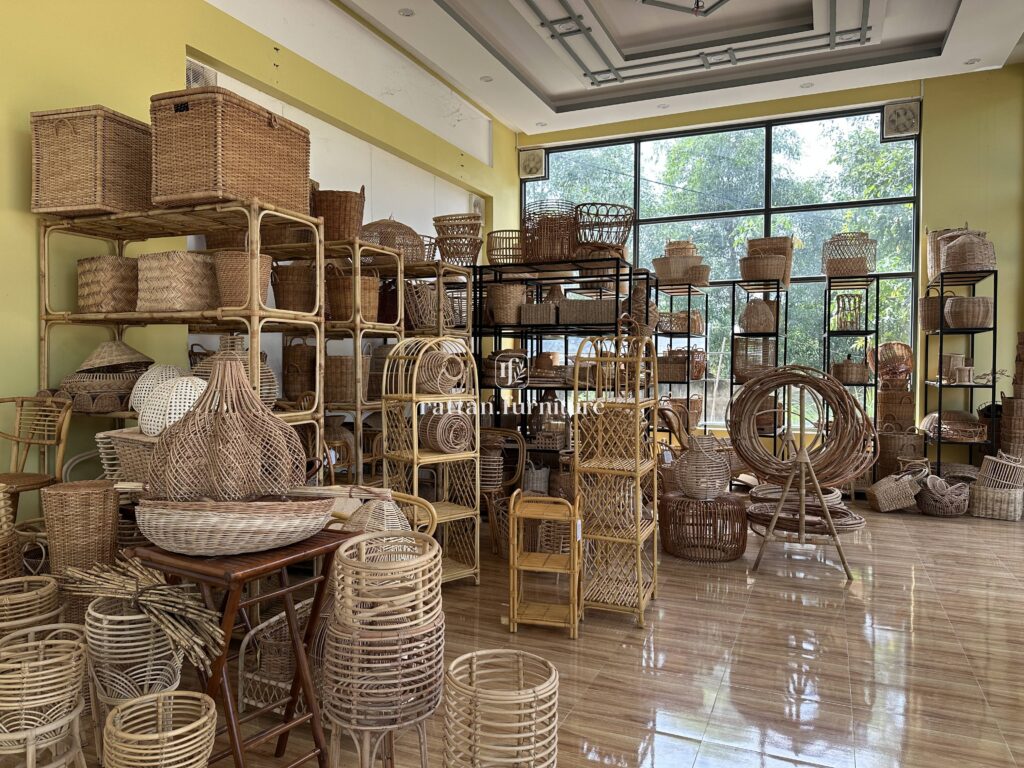
Cane webbing is woven from rattan peel (the outer bark); reed webbing is woven from rattan core (the inner stem). Both come as sheets or 15 m rolls in weaves such as hexagonal, open and radio.
Is natural rattan suitable for outdoor furniture?
Only for indoor or covered / sheltered spaces. For open poolside or fully exposed settings, PE/synthetic rattan is the correct material — a reputable supplier will tell you this before you order.
Can I order a small quantity to start?
Yes, with the right partner. Rattan.Furniture, for example, starts cane webbing at 20 rolls × 15 m and lets a single order combine raw material, construction material and finished products.
What export documents should a rattan supplier provide?
At minimum a phytosanitary certificate, correct HS-code classification and a Certificate of Origin issued under the trade agreement relevant to your market, plus standard export paperwork.