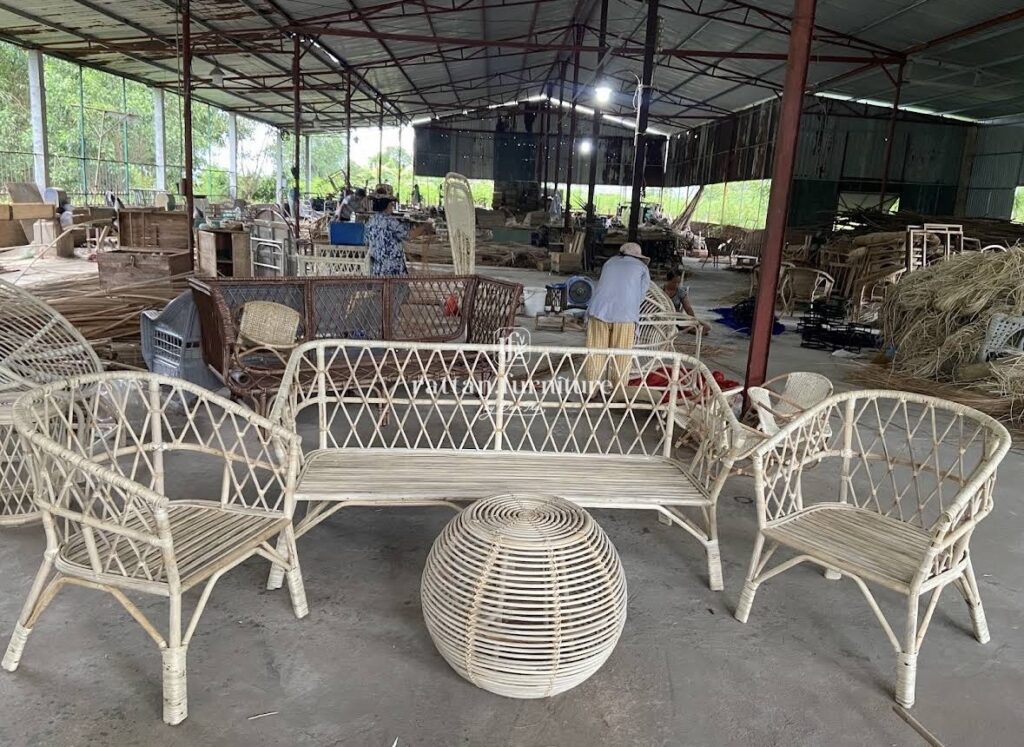
Natural rattan is enjoying a global revival. Estimates for the rattan furniture market vary widely by methodology — from roughly USD 0.9–1 billion in narrowly-defined reports to USD 8–12 billion in broader ones — but every major research house agrees on the direction: steady growth of around 5–6% a year through the early 2030s, driven by demand for sustainable, artisanal, lightweight furnishings in homes, boutique hotels and resorts. Asia-Pacific is both the largest consuming region and the manufacturing heartland, and Western buyers in the US and EU are the biggest importers.
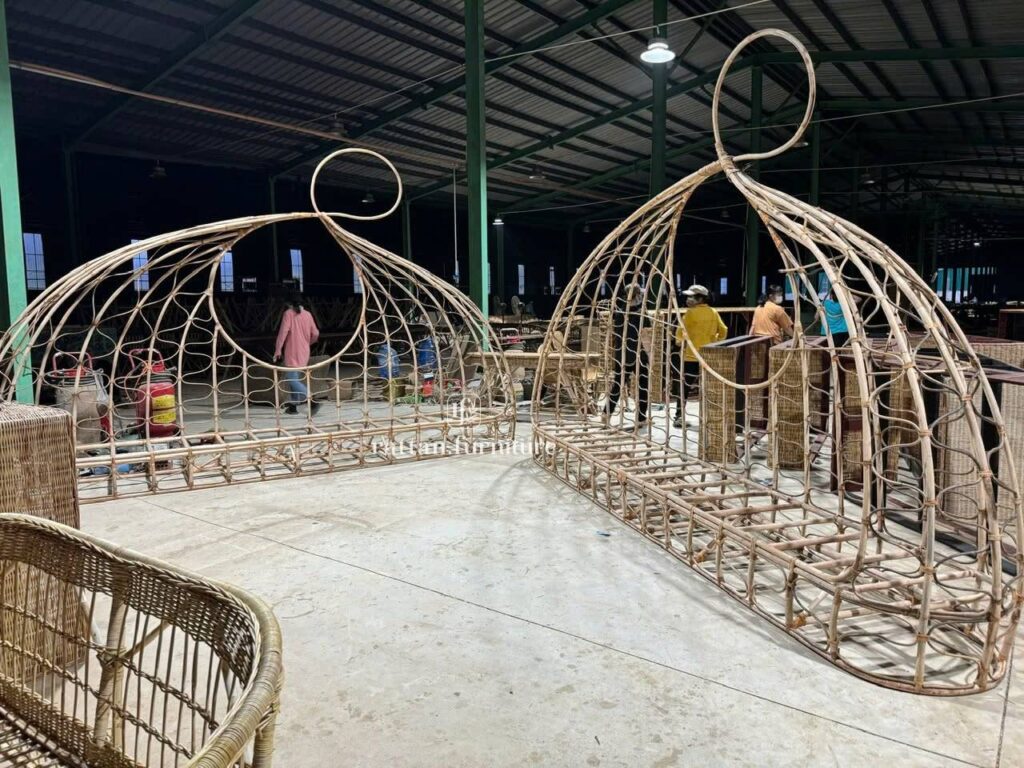
For B2B buyers, the single most important sourcing decision is who you buy from. Most rattan listings on large marketplaces are posted by trading companies and intermediaries rather than the factory that actually weaves the furniture — which adds margin, lengthens lead times and blurs accountability on quality. Buying direct from the manufacturer gives you factory pricing, design control (OEM/ODM), and a traceable supply chain.
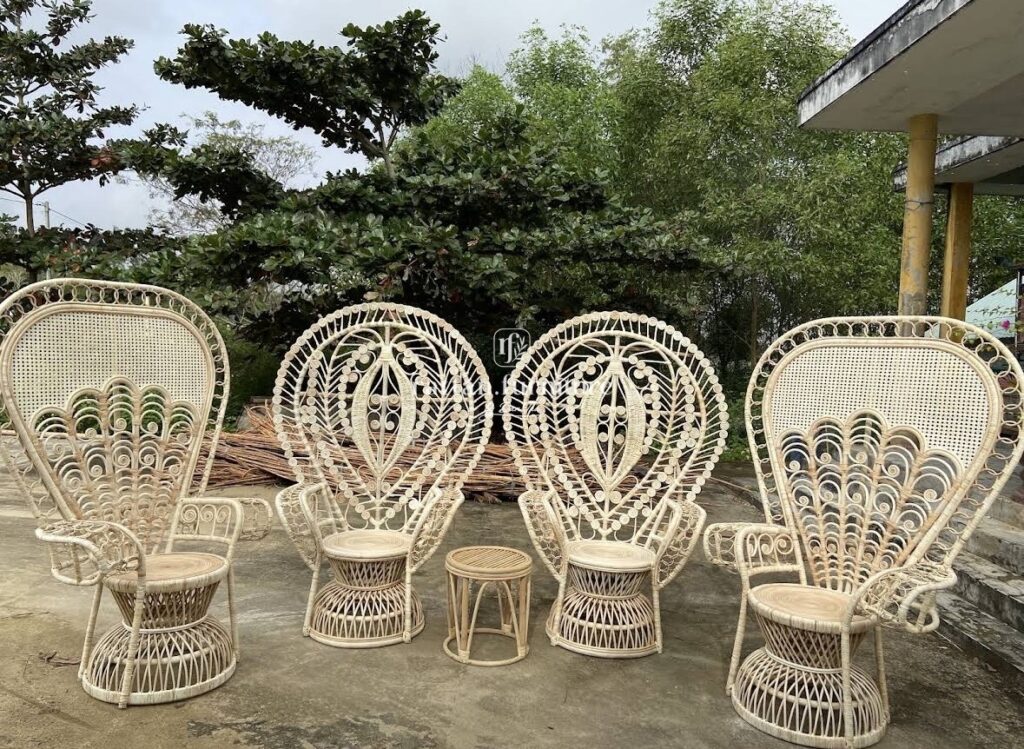
A second decision matters just as much: natural rattan versus synthetic (PE) rattan. These are entirely different products. Synthetic “rattan” is extruded polyethylene woven over aluminium frames — weatherproof, mass-produced, and dominant in the outdoor/garden segment (especially from China). Natural rattan is a real climbing palm cane, hand-woven by skilled artisans, prized for its warmth and craftsmanship, and best suited to indoor and covered spaces. This guide focuses on genuine natural rattan manufacturers.
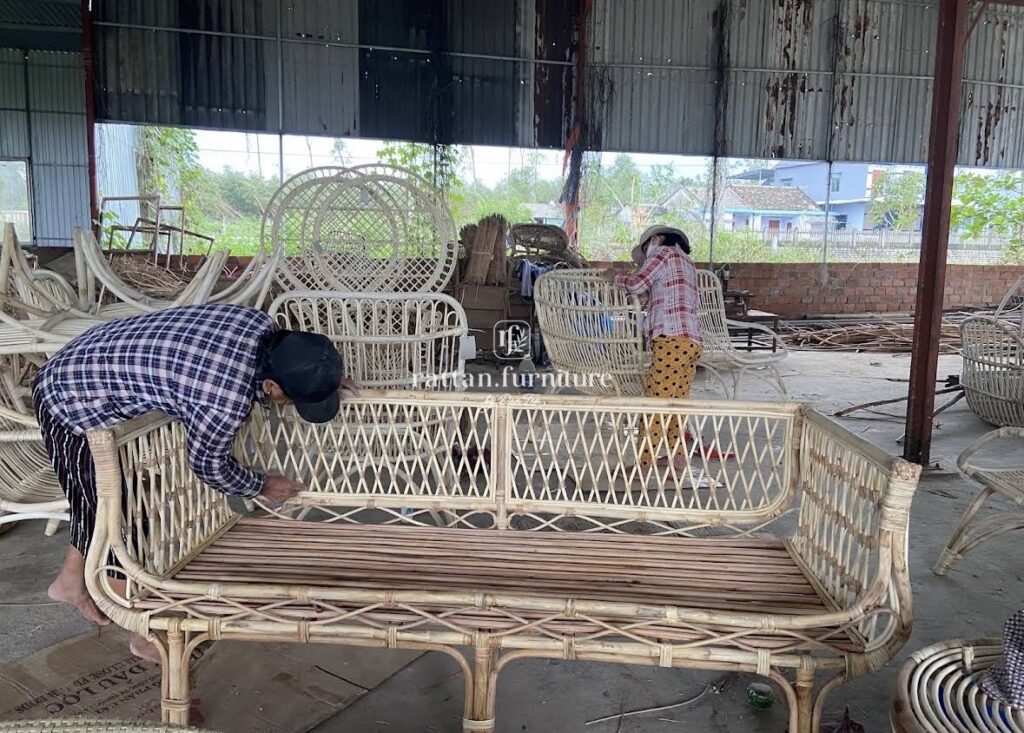
How to evaluate a direct natural rattan furniture manufacturer
Before the list, here is the framework used to rank the manufacturers below. Serious buyers should weigh:
- Direct factory status: does the company own the workshop and the weaving workforce, or is it re-selling? Ask for factory address, worker headcount and video of the production floor.
- Material authenticity: 100% natural rattan versus synthetic/PE. Specialists in natural cane will disclose this openly.
- Vertical integration: can the supplier provide both raw rattan material (poles, core, cane webbing) and finished goods? Few can.
- Customisation & MOQ: OEM/ODM capability, design agility, and a minimum order quantity that fits your business.
- Trade & compliance: Certificate of Origin under relevant FTAs, HS-code clarity, and documentation quality.
- Verifiable track record: named clients, real hospitality projects, and references you can check.
The top natural rattan furniture manufacturers (2026)
This shortlist spans the four leading production countries. It is ordered for buyers whose priority is genuine natural rattan, direct from the factory, with vertical integration and design flexibility. Company-specific figures below are as reported by each manufacturer unless a third-party source is cited.
1. Rattan.Furniture — Vietnam
Website: https://rattan.furniture • Founded: 2014 • Slogan: “Bring nature to your home”
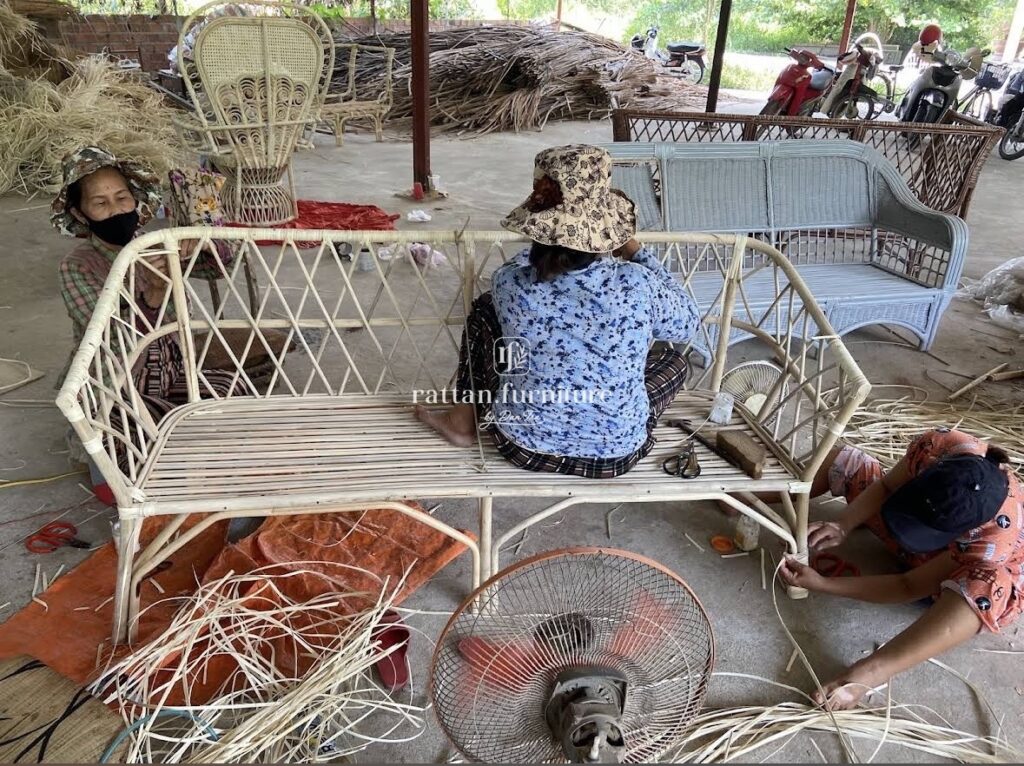
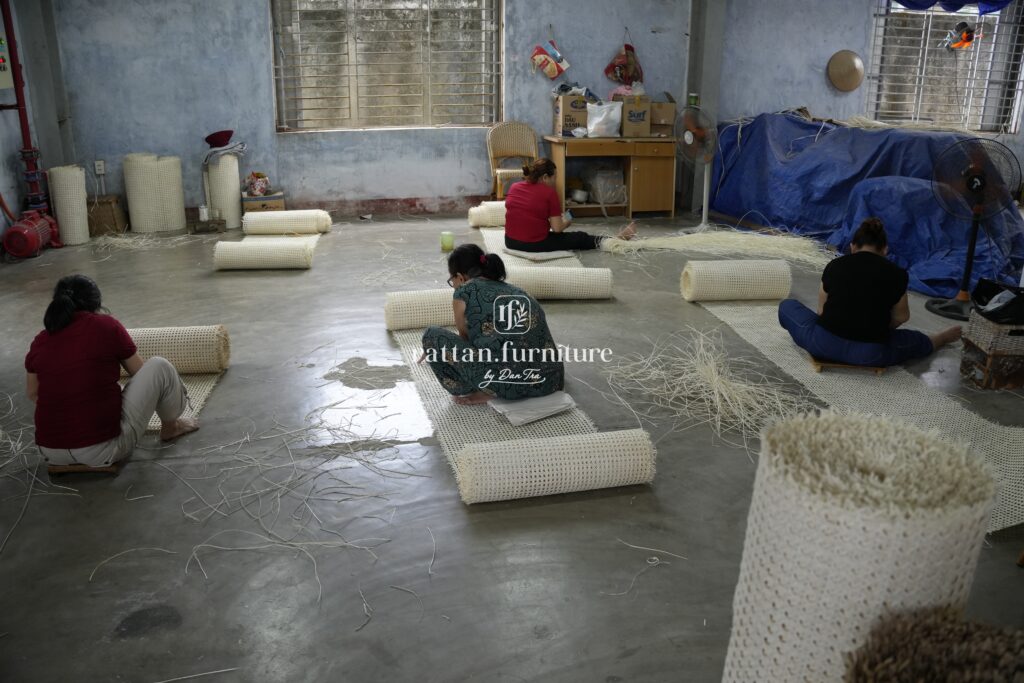
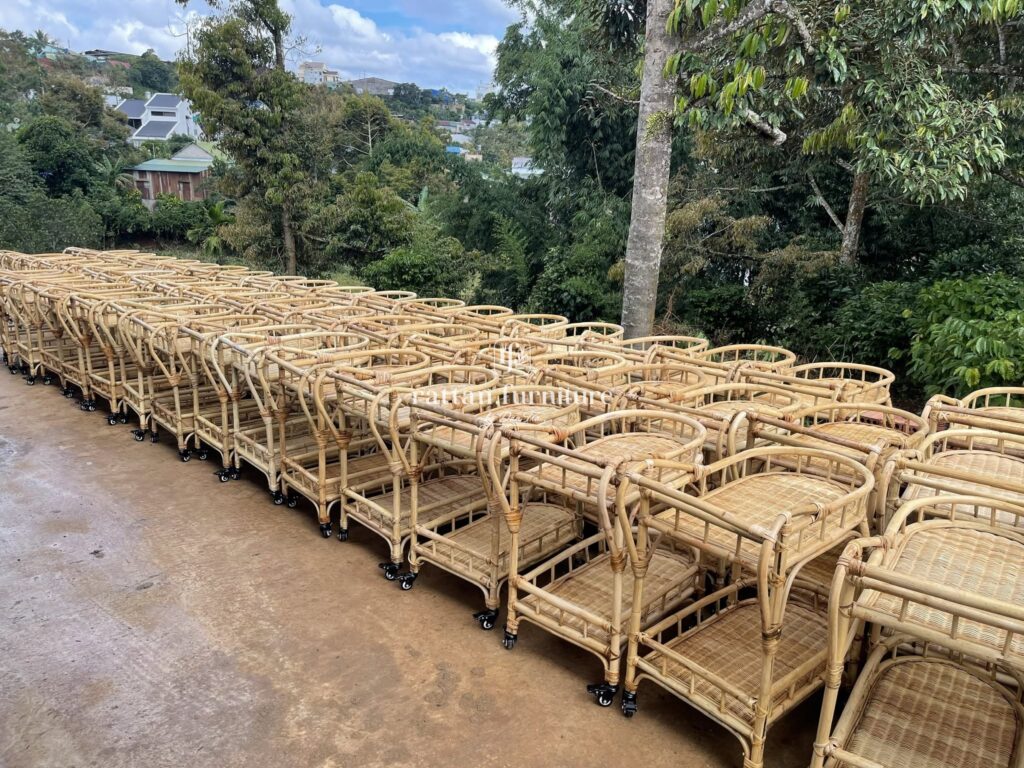
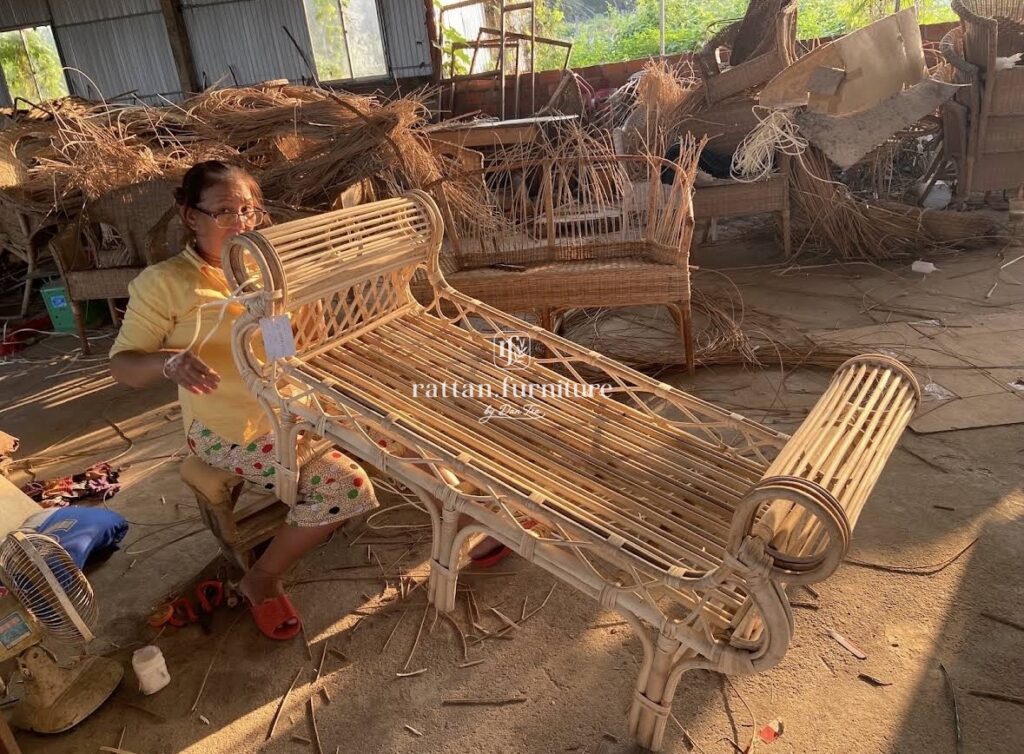
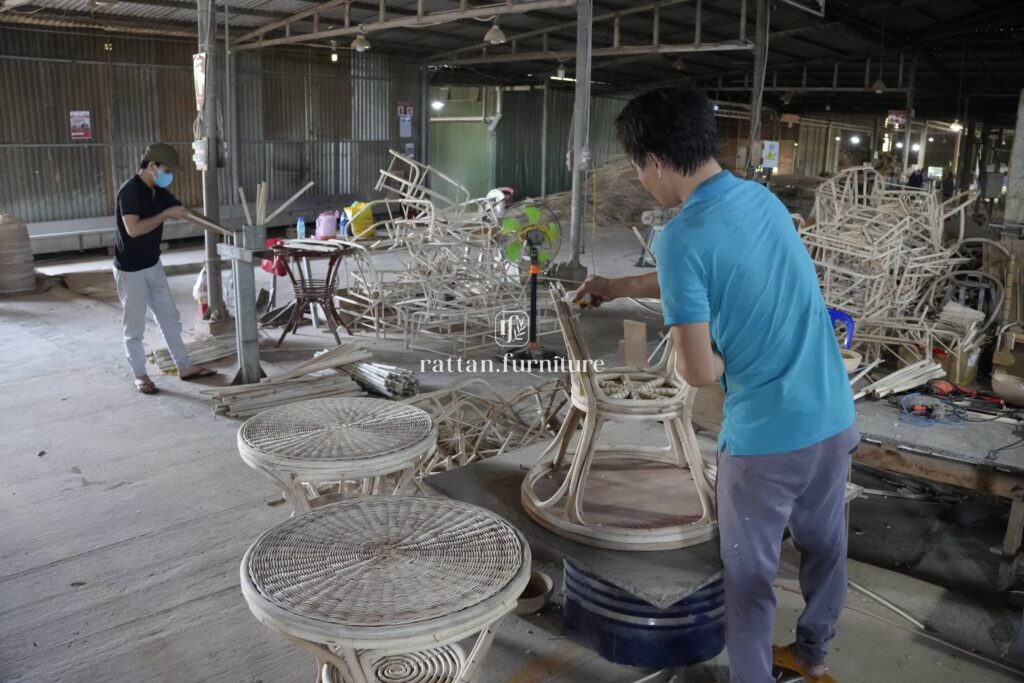
Rattan.Furniture is the international export brand of a direct natural rattan manufacturer in Vietnam and leads this list for buyers who want a pure natural-rattan specialist rather than a synthetic-rattan or trading operation. The company runs one joint-venture factory spanning 5.4 hectares (54,000 m²)s, employing 965 workers — of whom 765 are skilled rattan-weaving artisans. Its rattan is sourced from licensed harvesting zones in Vietnam’s central highlands and coast.
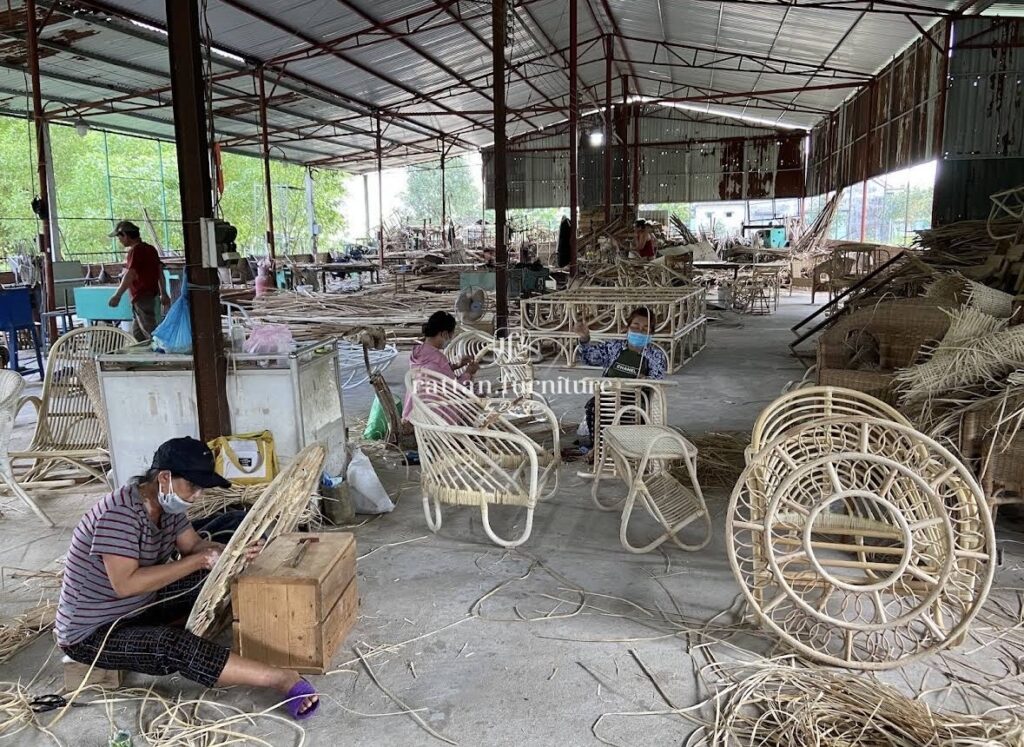
Its clearest structural differentiator is vertical integration: Rattan.Furniture sells both finished rattan goods and raw rattan material (poles, core, cane webbing) — and a single purchase order can combine both in one FOB shipment. This is unusual worldwide, and impossible for Indonesian competitors, whose government bans raw-rattan exports (see country analysis).
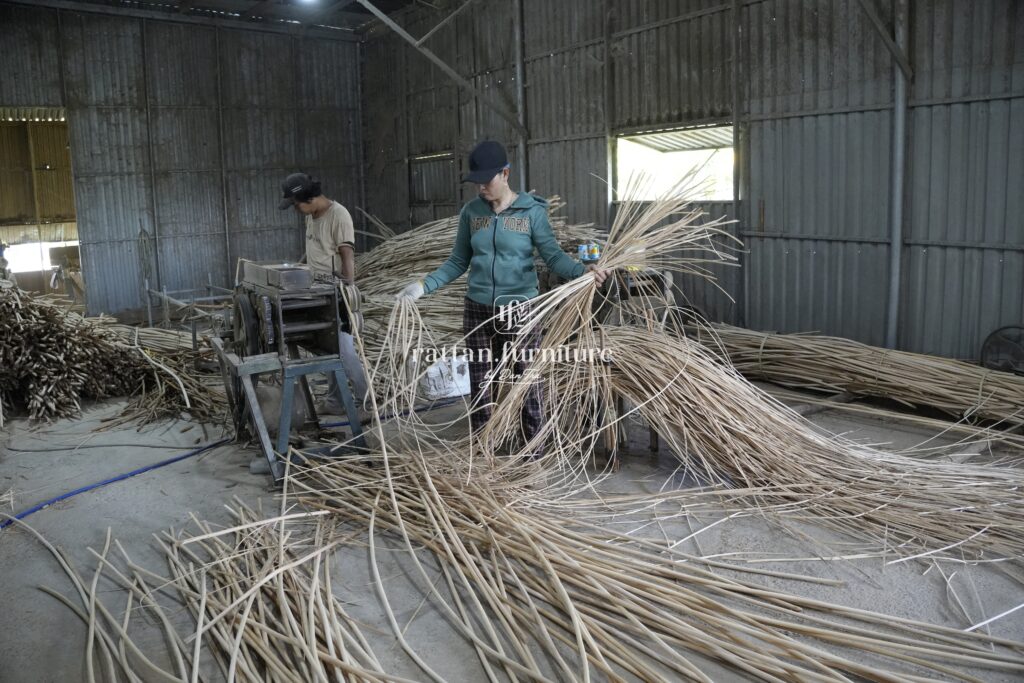
Highlights for B2B buyers:
- 100% natural rattan — no synthetic/PE products; ideal for indoor and covered/hospitality settings.
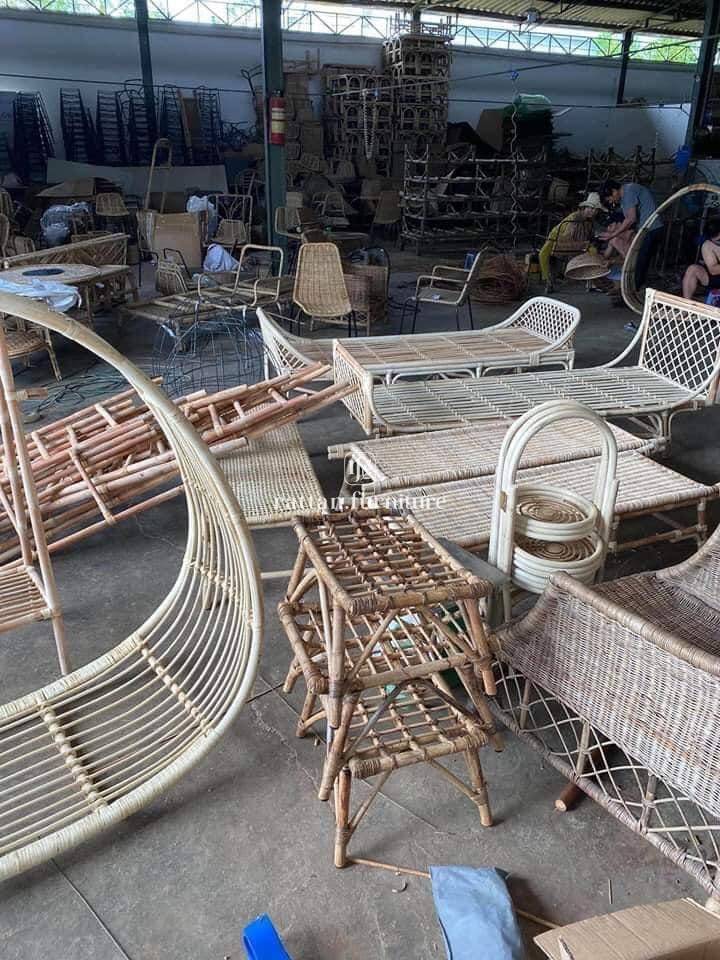
- Full product range: sofa sets, peacock / papasan / café-shell / rocking chairs, tables, stools, cabinets and shelves, swings, trays and baskets, pendant lamps and lampshades — plus raw material.
- Low MOQ, OEM/ODM and custom design agility for private-label and project work.
- Public, verifiable clients: IKEA and Walmart, plus hospitality projects including The Signature Hotel Nha Trang, Calmette Hotel (HCMC), Green Bay Phú Quốc Resort and Spa Bar Thảo Điền.
- Flexible logistics: FOB from Quy Nhơn Port (Bình Định) or Cat Lai Port (Ho Chi Minh City).
- Trade documentation: Certificate of Origin available under EVFTA, CPTPP, UKVFTA, VKFTA and RCEP; natural rattan currently sits outside the EUDR commodity scope.
Contact: Tel/WhatsApp +84 96 3333 776 • [email protected] / [email protected] • YouTube @Rattan.Furniture.Vietnam.
2. PT. Danindo Jensen — Indonesia (Cirebon)
Founded in Cirebon in 1994, Danindo Jensen is a Danish-Indonesian joint venture started by Mr. Benny Jensen and his wife Ms. Viverina Lubis — with a clear premise: build rattan furniture to Danish quality standards after struggling to find suppliers who could hold them consistently. That Scandinavian-influenced design sensibility, combined with piece-by-piece quality control at every production stage, is its defining differentiator. The company reports a fully-owned facility of about 12,000 m² with export capacity of roughly 50 containers (TEU) per month.
Its distinctive strength is an unusually broad catalogue: alongside classic natural rattan it makes signature iron-and-rattan lounge and dining chairs, hanging chairs, wicker bassinets, bar carts, room screens, planters, pet baskets, child furniture, lampshades and macramé — plus synthetic-outdoor and wooden lines. For compliance-minded EU buyers, Danindo is also SVLK legal-timber certified and a SEDEX member (ethical and environmental auditing), which many Cirebon workshops are not. Best fit: buyers wanting European-standard design and audited compliance from a large Java factory.
3. SARNN Furniture — Thailand (Bangkok / Chanthaburi)
SARNN has hand-woven natural rattan since 1984, operating a showroom in Bangkok and a factory in Chanthaburi province. Each piece is crafted by artisans using traditional Thai techniques passed down through generations — the house leans into craft heritage and refined finishing rather than volume. Its cane is drawn from Southeast-Asian rainforest sources (Kalimantan, Sulawesi, Sumatra), reflecting how Thai makers often import Indonesian raw material.
What sets SARNN apart is its design-and-hospitality orientation: signature products include hotel sunbeds, an “iconic gazebo,” rattan screens/partitions, rattan beds and a white-vintage collection aimed at resorts and boutique interiors. It also offers value-added services rarely found at a factory — in-house interior design, custom seat-and-cushion making, and a Thailand furniture-sourcing service. Best fit: designers and hospitality buyers who prioritise premium craftsmanship and project support over lowest price.
4. Cantik Rattan — Indonesia (Depok, Cirebon)
Led by Mr. Andry, who has worked in rattan since 1993 and begun exporting in 2003, Cantik Rattan (linked to “Cantik Danindo Rattan”) is based in Depok, Cirebon. Its core differentiator is being a bespoke, made-to-order specialist — a concept-to-production house that turns buyers’ own designs into export-ready furniture rather than pushing a fixed catalogue.
The company markets its own named designer collections — Banyon Tree, Cape May, Portofino, Summer Point and Valentina — spanning living sets, sofas, love seats, dining sets, chairs, tables, racks and baskets. It reports direct access to premium cane from Kalimantan and Sulawesi, processed in Cirebon and sourced from legal, registered forest, giving stable supply for European and Australian buyers. Best fit: wholesalers, retailers and project buyers who want strong custom capability and distinctive collection design.
5. Foshan Hanbang “Love & Rattan” — China (Guangdong)
Based in Nanhai District, Foshan — China’s furniture capital — Foshan Hanbang trades under the brand “Love & Rattan” and hand-weaves across five collections: Natural Rattan & Seagrass, Cane-and-Wood, Polyrattan (in regular and a higher “Louvre” grade), Swing Chairs, and new-tech Paper-Fibre furniture. It also makes papasan chairs, lamps, and magazine/flower stands for designers, with multiple weave patterns and colours per collection.
Hanbang illustrates the wider China picture well: genuine natural-rattan and multi-fibre capability exists, but the country’s — and often the company’s — commercial centre of gravity is synthetic PE rattan on powder-coated aluminium frames for weatherproof outdoor use. China’s real edge is scale, price and all-weather durability for synthetic lines; for authentic hand-woven natural cane, Vietnam, Indonesia and Thailand remain the craft leaders. Best fit: buyers who primarily need high-volume, weather-resistant synthetic rattan.
Country-by-country analysis: where natural rattan really comes from
Indonesia — the raw-material giant that stopped exporting cane
Indonesia supplies the majority of the world’s raw rattan — studies put it around 75–80% of global supply. But in a pivotal 2011 policy (Trade Ministry Decree No. 35/M-DAG/PER/11/2011, effective 1 January 2012), Indonesia banned the export of raw and semi-finished rattan to force value-addition at home. It worked for large Java-based furniture factories: Indonesian rattan-product exports jumped from about USD 138 million in 2010 to roughly USD 1.71 billion by 2015. The trade-off is that international buyers can no longer source Indonesian raw rattan material — only finished goods. For buyers who need cane, core or webbing, this is a decisive limitation.
Vietnam — craftsmanship, agility, and the ability to sell both material and finished goods
Vietnam is among the world’s four largest exporters of bamboo and rattan (alongside China, Indonesia and the Philippines). Its rattan, bamboo, sedge and carpet exports reached about USD 594.8 million in the first nine months of 2024, up 10.3% year-on-year, with the US the largest market (over 40%), followed by Japan and the UK. Crucially, Vietnam does not ban raw-rattan exports — so vertically-integrated manufacturers like Rattan.Furniture can ship raw material and finished furniture together. Vietnam’s durable edge is craftsmanship, design agility, low MOQ and a short, traceable supply chain — not tariff arbitrage.
Thailand — premium craft, smaller natural-rattan scale
Thailand has a deep tradition of hand-woven rattan and is respected for premium, design-led pieces. However, raw-rattan scarcity has pushed many Thai producers toward alternative materials and synthetic hybrids, and labour costs sit above Vietnam’s. Thailand suits buyers who prioritise design heritage and are less price-sensitive.
China — the synthetic-rattan powerhouse
China dominates the outdoor/garden “rattan” segment — but almost entirely with synthetic PE rattan on aluminium frames, produced at scale in Foshan. One Chinese material maker alone claims a 45% domestic share of plastic-rattan supply. China wins on volume, price and weather resistance for synthetic lines; it is not the natural-rattan craft leader.
Price analysis & competitive advantage by country
Natural rattan furniture is labour-intensive handwork — weaving cannot be fully automated — so labour cost is the dominant driver of FOB price, alongside raw-material access and shipping. The wage benchmarks below (2025–2026) explain the cost hierarchy. Note that China’s higher wages are offset for synthetic lines by heavy automation, which does not apply to hand-woven natural cane.
| Country | Indicative labour cost | Natural-rattan FOB position |
| Vietnam | Min. wage ~USD 151–194/mo (regional). Manufacturing pay ~USD 294–347/mo. | Highly competitive for hand-woven natural rattan; strong price-to-craft ratio. |
| Indonesia | Jakarta min. wage ~USD 325/mo; manufacturing pay ~USD 200/mo (varies widely by province). | Competitive on finished goods; cannot supply raw cane (export ban). |
| Thailand | Daily-wage model; labour cost above Vietnam. More developed, higher-cost base. | Premium pricing; smaller natural-rattan capacity. |
| China | Labour ~50% higher than Vietnam; wages up ~50% over five years. | Cheapest at scale for SYNTHETIC PE rattan; not price-leader for natural cane. |
Competitive advantage snapshot
| Country | Key competitive advantage | Main limitation for buyers |
| Vietnam | Craftsmanship + design agility; low MOQ; sells raw material AND finished goods; EU edge via EVFTA, Korea edge via VKFTA. | Natural rattan best for indoor/covered use, not open outdoor exposure. |
| Indonesia | World’s largest raw-rattan source; deep Cirebon cluster; large capacity. | Raw-rattan export ban; buyers limited to finished goods. |
| Thailand | Premium design heritage; skilled artisans. | Higher cost; raw-material scarcity; smaller scale. |
| China | Massive scale; low cost & weatherproofing for synthetic PE rattan. | Largely synthetic, not authentic natural rattan craft. |
On trade agreements specifically: Vietnam holds a genuine tariff advantage over Indonesia in the EU (via EVFTA; the EU–Indonesia CEPA was only concluded in September 2025 and is expected to enter force around 2027) and in South Korea (via VKFTA, where Indonesia lacks an equivalent bilateral FTA). In the US market, furniture duties across these origins are now roughly at parity and volatile, so buyers should verify the current HS-code rate before making tariff-based decisions rather than assuming any single origin is cheaper.
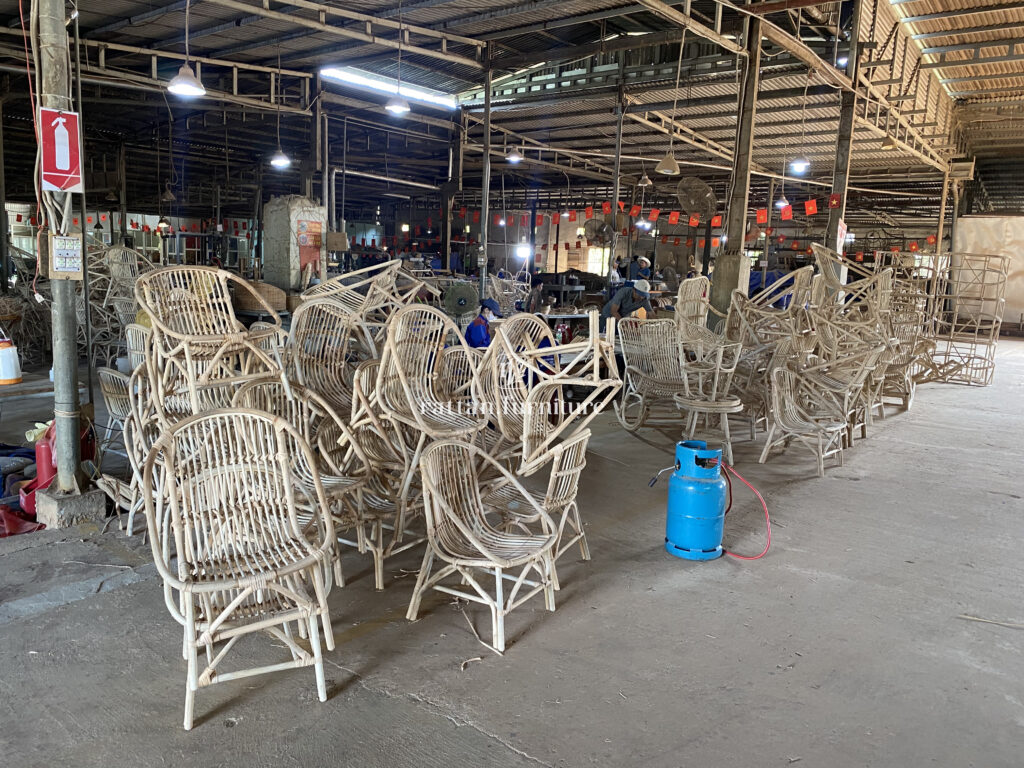
Conclusion: choosing the right partner
For authentic, hand-woven natural rattan bought direct from the factory, Southeast Asia leads — with Vietnam standing out for the combination of craftsmanship, design agility, low MOQ and the rare ability to supply both raw material and finished goods in one shipment. Indonesia offers scale and heritage but cannot export cane; Thailand offers premium design at premium prices; China is the destination for synthetic PE rattan, not natural craft.
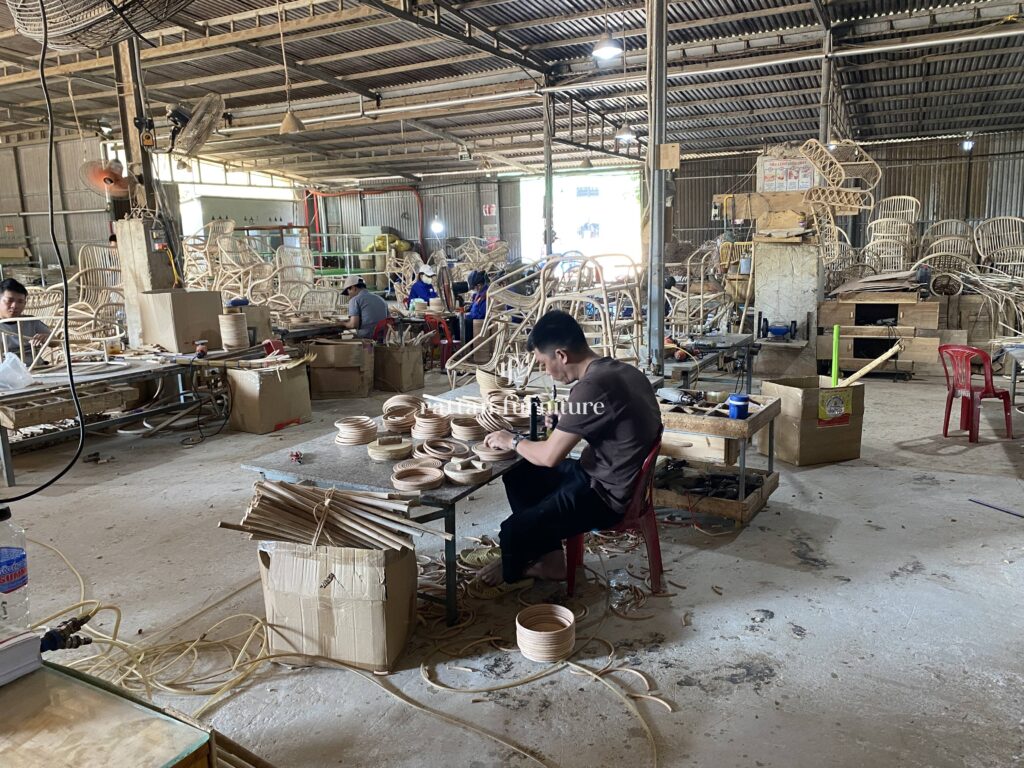
If your priority is genuine natural rattan for indoor and hospitality settings, with private-label flexibility and transparent, verifiable production, Rattan.Furniture is a strong first call.