A sourcing guide for importers, wholesalers, and procurement teams looking to buy natural rattan raw material from Vietnam — wholesale or retail.
Why importers source natural rattan from Vietnam
If you’re sourcing natural rattan for furniture, décor, or architectural materials, Vietnam belongs on your shortlist. Vietnam is one of the top five rattan and bamboo exporters in the world, alongside China, Indonesia, and Thailand. In 2024, total exports of the rattan, bamboo, sedge, and carpet group reached USD 804 million, and the first eight months of 2025 already reached USD 574 million.
For international buyers, the three largest destination markets map neatly onto familiar import lanes: the EU accounts for around 31% of export value, the United States 20%, and Japan over 9%. Combined with a deep craft base — Vietnam has more than 1,000 rattan and bamboo weaving villages — the country offers strong advantages in craftsmanship, design flexibility, and a short supply chain.
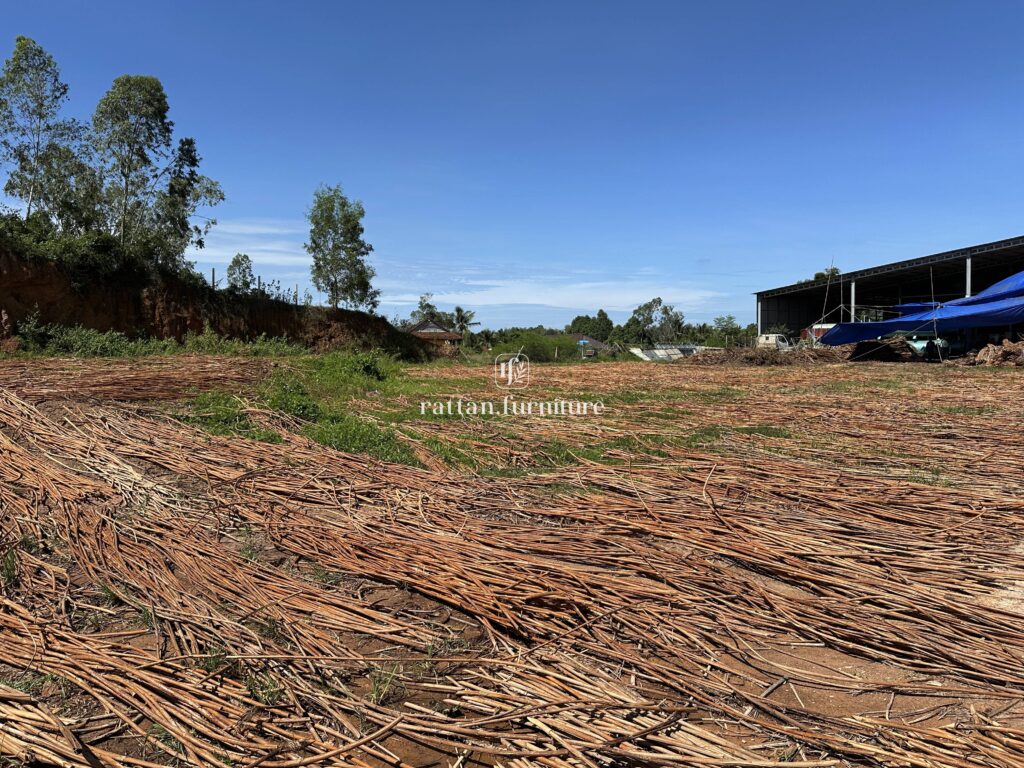
There’s one dynamic every importer should understand: wild rattan is getting scarcer. Cultivation, harvesting, and processing have not reached their full potential because of a shortage of raw-material zones and over-harvesting to the point of depletion. Under IUCN criteria, Vietnam already has 19 rattan species classified as threatened. As a result, buyers increasingly require a transparent process traceable from the raw-material zone through to the finished product. Choosing a source with a clear, traceable harvesting area is now a decisive factor.
Natural rattan types you’ll encounter
Before choosing a supplier, it helps to know the main commercial species so you can order the right specification:
| Species | Scientific name | Key traits | Commercial note |
| Nep rattan (may tat) | Calamus tetradactylus | 0.8–1.2 cm dia., supple, ivory-white, easy to split | Workhorse for woven cane & webbing |
| Song mat | C. platyacanthus / inermis | Very tough & durable, over 3 cm dia. | Furniture frames; prized for export |
| Song bot | Calamus poilanei | Large-diameter premium cane | Price often double other canes |
| Song da (black cane) | Calamus rudentum | 2.5–4 cm dia., climber 50–60 m | Declining from over-harvesting |
| Water rattan | Daemonorops applanata | Canes 25–30 m, 12–18 mm dia. | High-volume weaving; lower load-bearing |
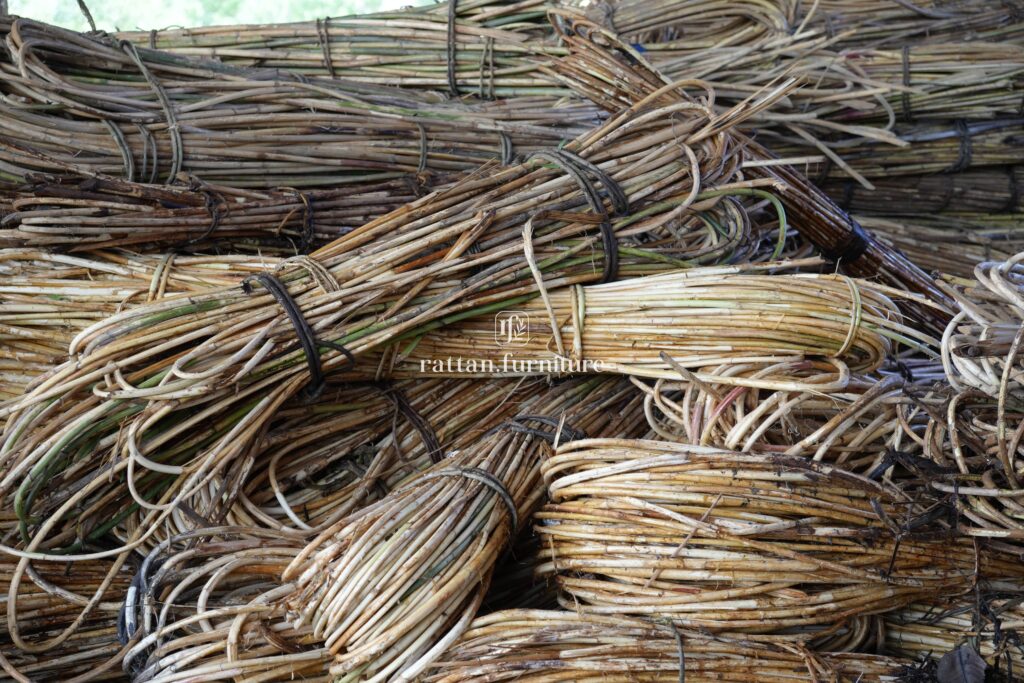
A sourcing note: only four rattan species are currently cultivated, so most large-diameter cane still comes from natural forests. This is why a supplier who can sort by species and diameter saves procurement teams significant time.
Top 9+ natural rattan sources & harvesting regions in Vietnam
Group A — Key natural rattan harvesting regions
1. Truong Son forest belt — An Toan, An Lao
Natural forest along the Truong Son range, one of Vietnam’s traditional rattan-cane supply zones, tied to long-established harvesting communities.
2. Hoai An – An Khe – Van Canh (South Central – Central Highlands)
A region rich in valuable rattan species. High-value red-thorn rattan is common across Quang Ngai, Gia Lai, Kon Tum, Dak Lak, and Quang Nam.
3. Ba To (Quang Ngai) — the water-rattan heartland
A zone actively organizing its water-rattan raw-material supply through community forests, where local people have been planting rattan on forestry land since 2012.
4. Tra My – Tien Phuoc – Nui Thanh (Quang Nam – Da Nang)
Quang Nam is developing a raw-material zone for export, against an estimated national demand of about 80,000 tonnes of rattan raw material per year for export.
5. Da Teh (southern Central Highlands)
A harvesting zone tied to the Highlands’ humid tropical forest, supplementing supply of large-diameter cane species.
6. Other high-value rattan provinces
Most economically valuable rattan is distributed and harvested in Phu Yen, Khanh Hoa, Gia Lai, Dak Lak, Dong Nai, and Quang Nam.
Group B — Rattan supply channels
7. Rattan & bamboo craft villages
Vietnam has over 1,000 weaving villages, about 24% of all craft villages. Their strength is craftsmanship; the trade-off for importers is small, fragmented capacity, with export documentation and batch consistency harder to guarantee.
8. Cooperatives & community forests (the sustainability route)
A rising channel. The first FSC certificate for a rattan product was issued to a community forest in Quang Tri, and the Central Truong Son region already has 151,802 hectares of FSC-certified forest. Well suited to EU buyers who need a sustainability file.
9. Trading companies / material intermediaries
These supply raw cane, rattan core, and cane strands to specification. The downside for importers: they are a middle layer, with a longer traceability chain and less control back to the harvest zone.
10. Direct manufacturers with their own raw-material base — the optimal option for importers
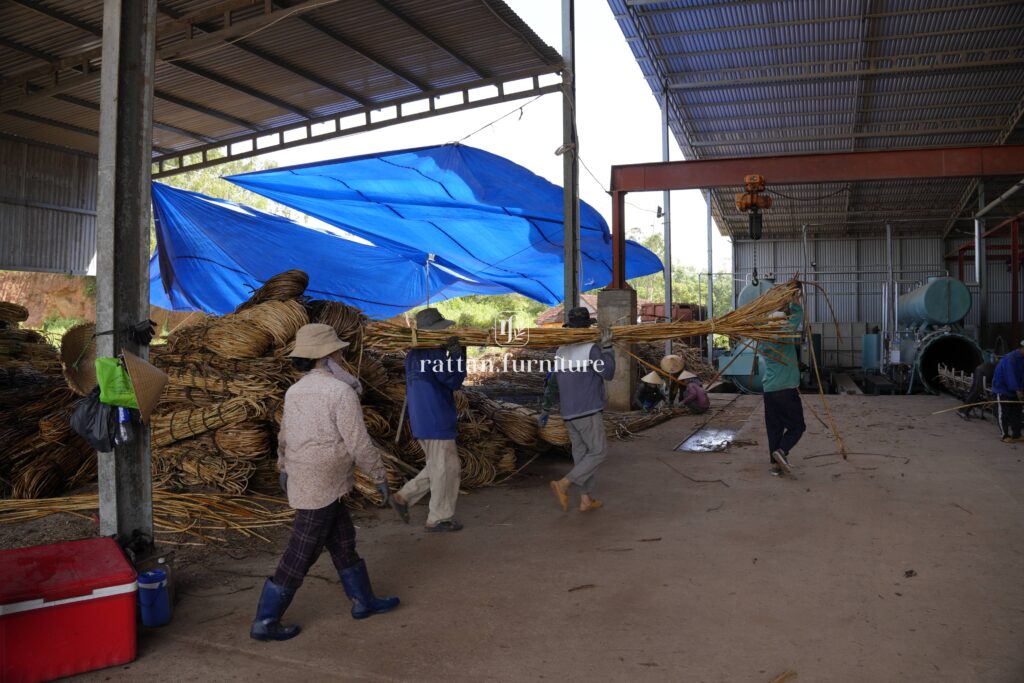
A closed-loop model: a stable harvesting/procurement base, in-house processing – sorting – production, and direct export. For importers, this channel means factory-gate pricing, short traceability, complete documentation, and consistent batch quality. Rattan.Furniture (Dan Tra Co., Ltd.) is the leading example of this group.
Rattan.Furniture — direct supplier of raw, semi-processed & sorted natural rattan
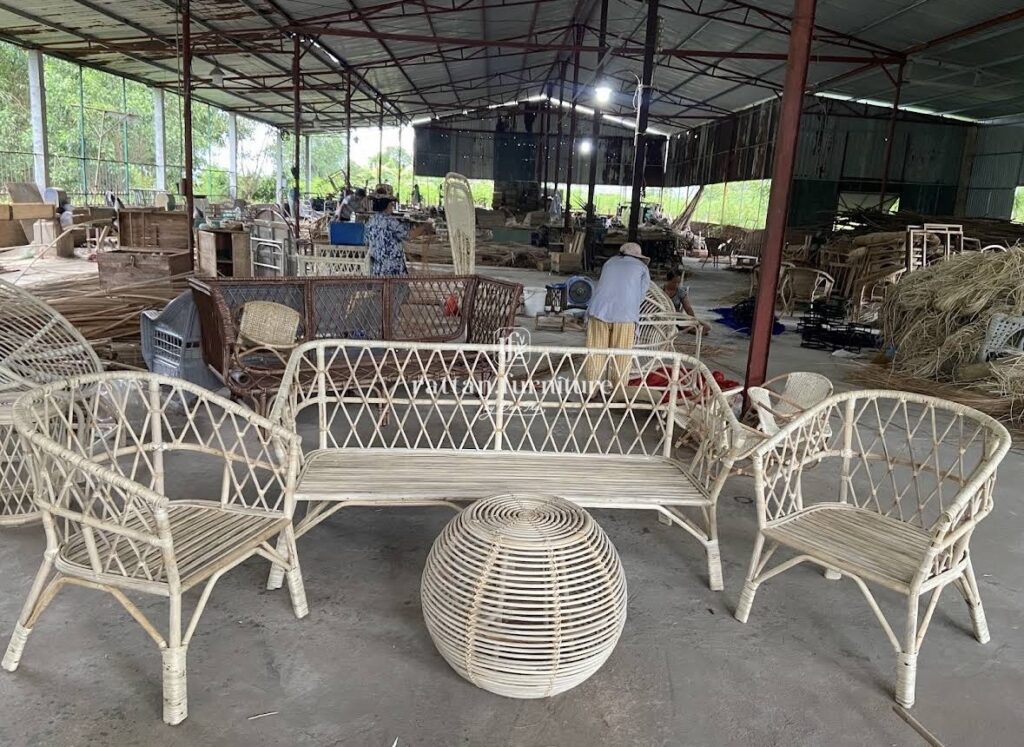
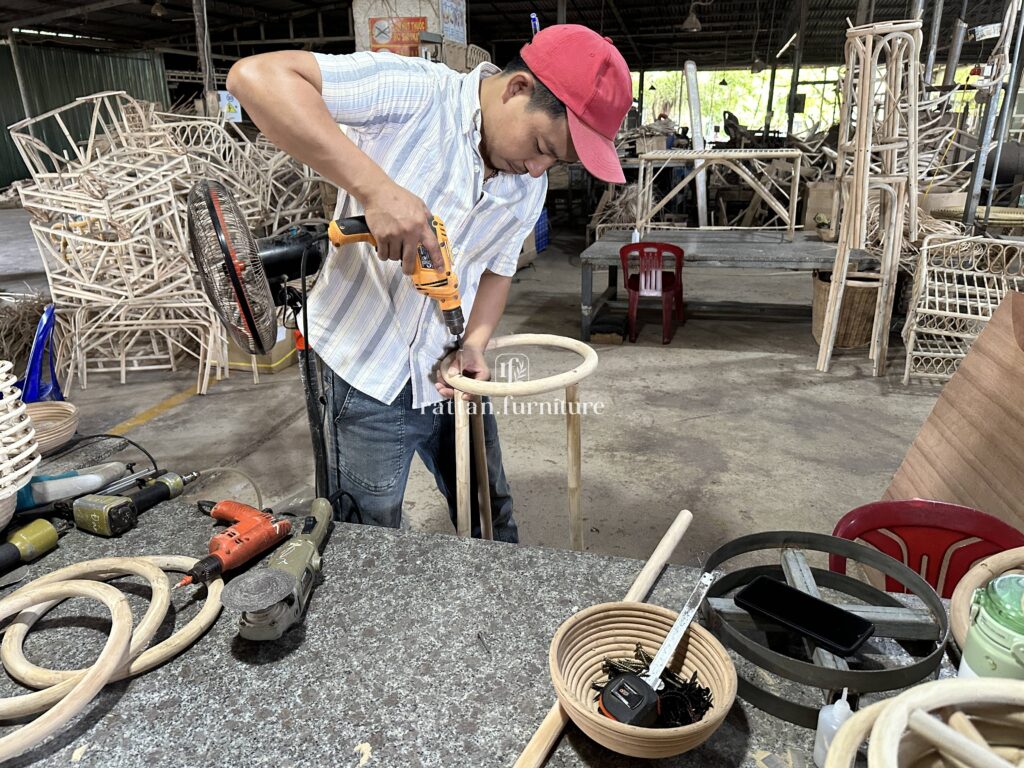
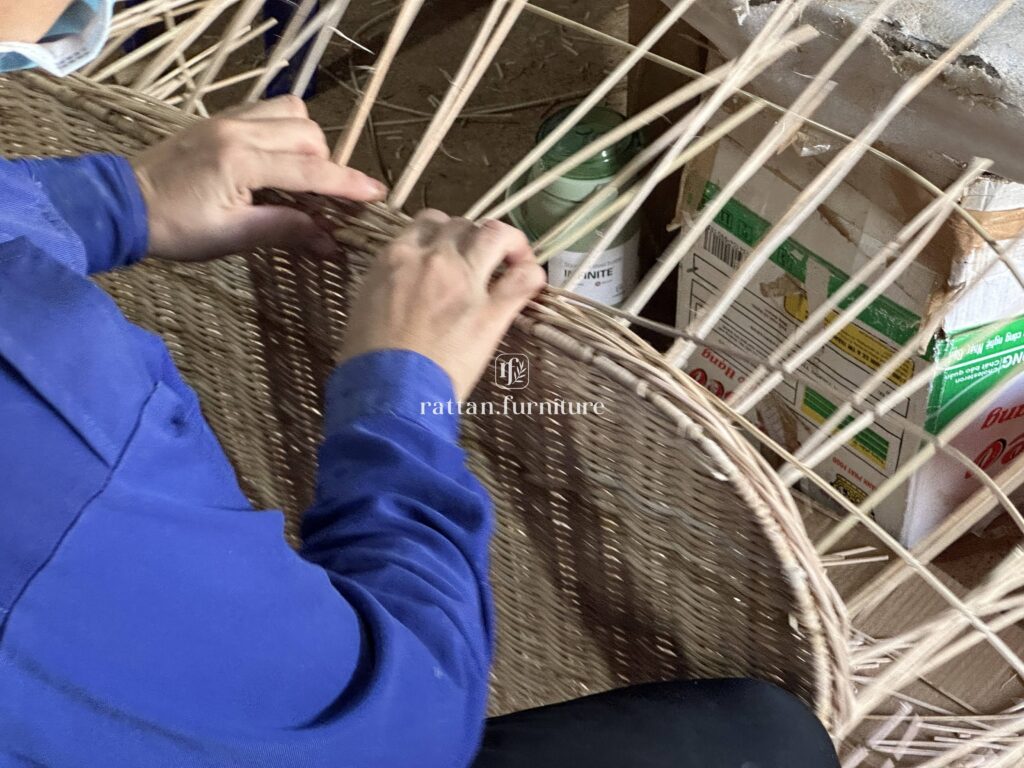
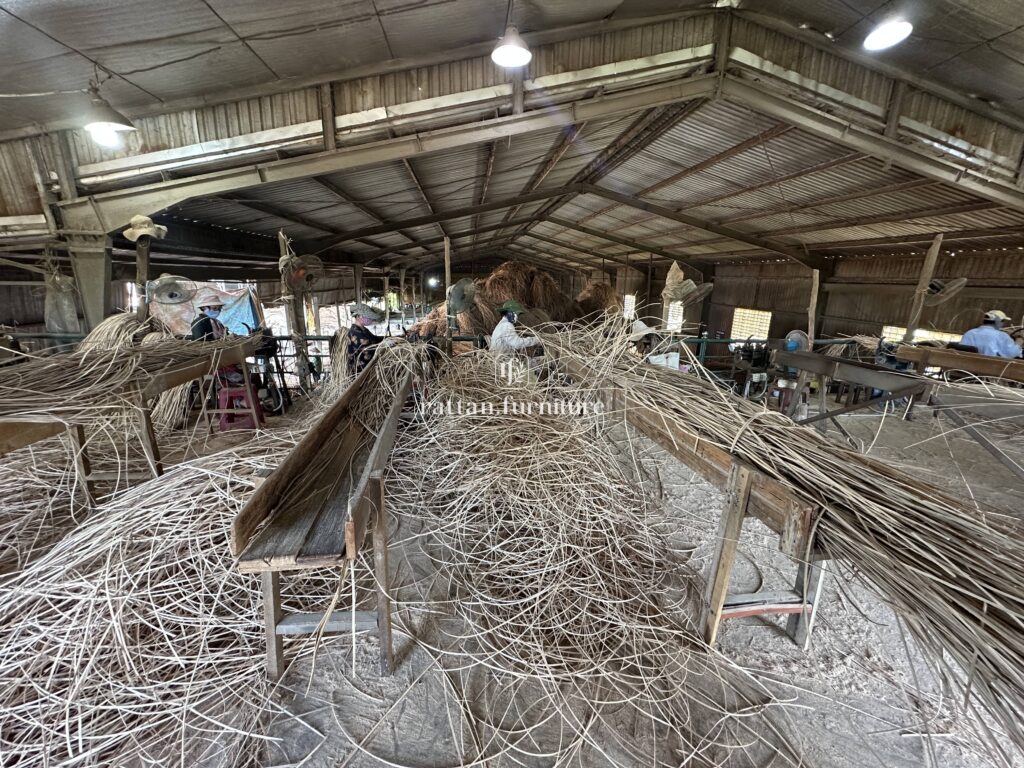
Rattan.Furniture by Dan Tra is a direct natural-rattan manufacturer (not a trading company), founded in 2014. With 965 workers — including 765 skilled rattan-weaving artisans — and licensed harvesting zones across the Truong Son – South Central – Central Highlands belt (An Toan–An Lao, Hoai An, Van Canh, An Khe, Ba To, Tra My–Tien Phuoc–Nui Thanh, Da Teh), the company controls its material at the source.
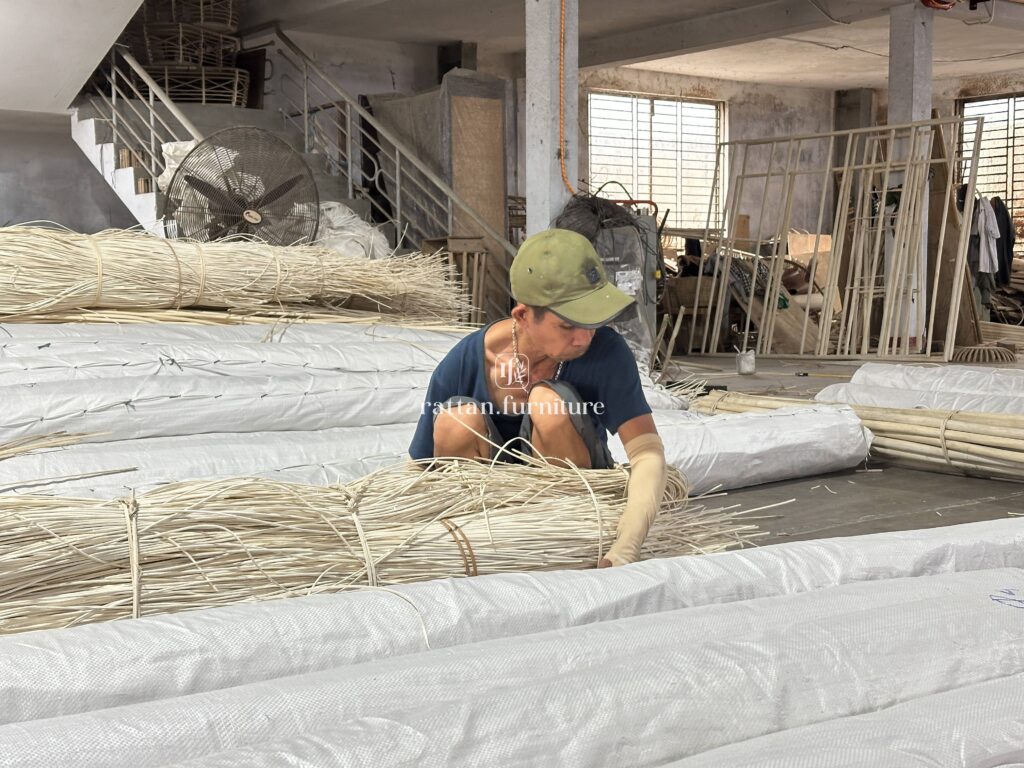
A full range of natural rattan raw material — wholesale & retail, domestic & export:
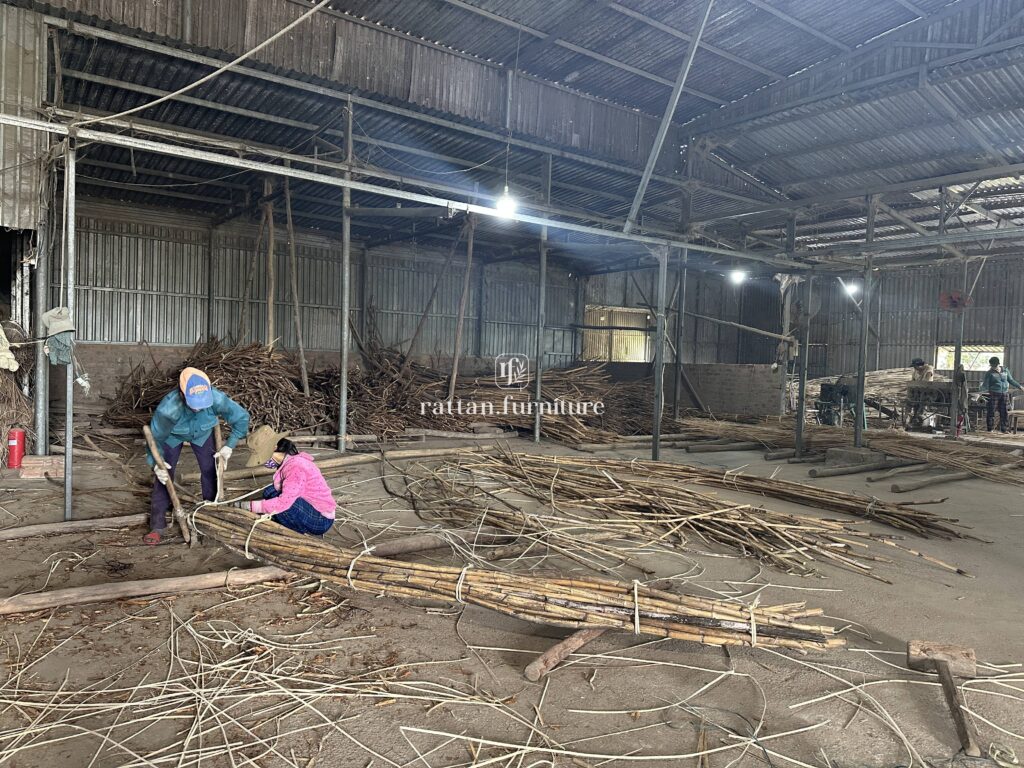
- Raw whole cane, sorted by species and diameter
- Rattan core, rattan peel, cane strands, and rattan strips in multiple sizes
- Natural cane webbing and architectural rattan materials — ceiling and wall cladding, cabinet fronts, and interior detailing for indoor and covered spaces
- Finished rattan products and raw material can be combined in a single order
What matters to importers:
- 100% natural rattan — a specialist focus, with no synthetic PE rattan
- Traceability: licensed harvesting zones and a short supply chain
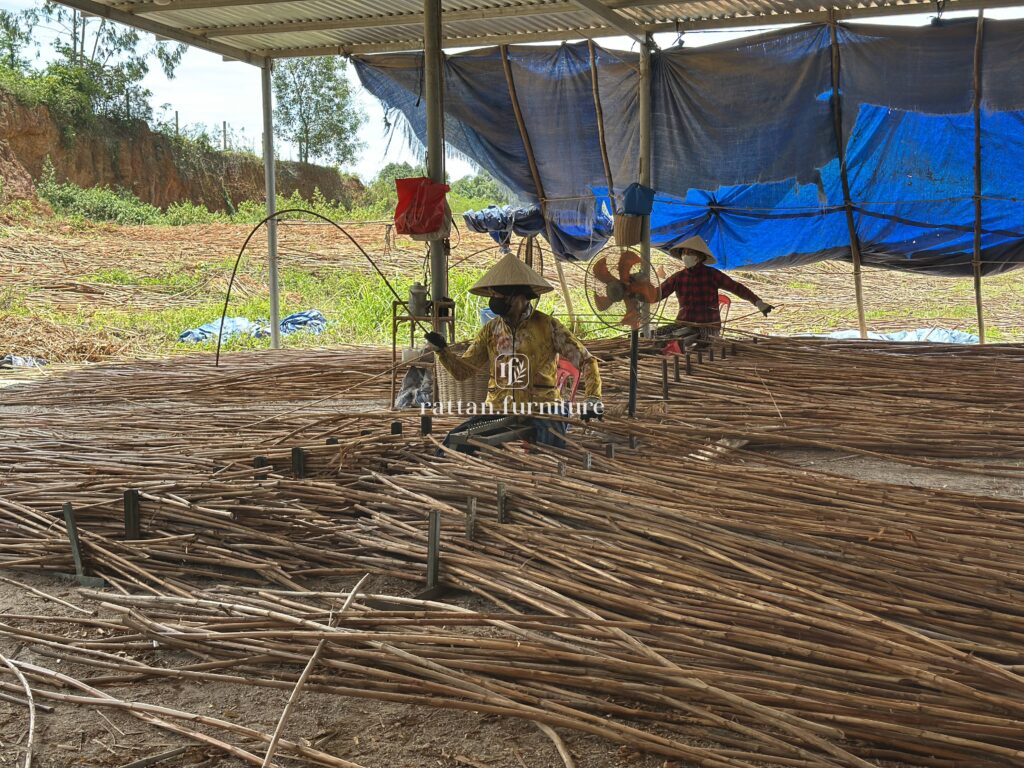
- Export-grade processing: flame bending, sun-drying, moisture-controlled drying, and per-batch moisture testing before packing
- Flexible MOQ: cane webbing from 20 rolls × 15 m; other lines to buyer-set quantities
- FOB export via Cat Lai Port (Ho Chi Minh City), with full documentation: phytosanitary certificate, HS-code classification, and Certificate of Origin under the relevant trade agreement (EVFTA, UKVFTA, VKFTA, CPTPP, RCEP)
- Client references: IKEA and Walmart
How importers should evaluate a rattan source
Before committing, check:
- Direct or intermediary? A manufacturer with its own material base gives better pricing and quality control than a trading intermediary.
- Harvest-zone traceability — EU, Japanese, and Korean buyers increasingly require transparency from the raw-material zone.
- Moisture control — decisive for durability and for clearing phytosanitary inspection.
- MOQ and the ability to combine raw material with finished goods in one order.
- Export documentation capability — phytosanitary certificate, HS-code, and FTA Certificate of Origin.
- Species range and sorting by species and diameter.
Connect with the source
Rattan.Furniture — Bring nature to your home.
- Website: https://rattan.furniture
- Tel / WhatsApp: +84 96 3333 776
- Email: [email protected] / [email protected]