
If you are sourcing natural rattan, two Southeast Asian names come up first: Indonesia and Vietnam. Both are genuine origins with deep craft traditions, and neither is a “wrong” answer. But they differ in ways that directly affect what you can buy, how you buy it, and how your landed cost looks in different markets. This article lays out those differences with real, checkable data — including the points that don’t always favour Vietnam — so you can make an informed decision rather than a marketed one
The single most important difference: raw material availability
Indonesia is, by a wide margin, the world’s largest source of raw rattan — published research puts its share of the world’s raw rattan supply at roughly 75–80%. On paper that sounds like the obvious place to buy. But there is a decisive catch.
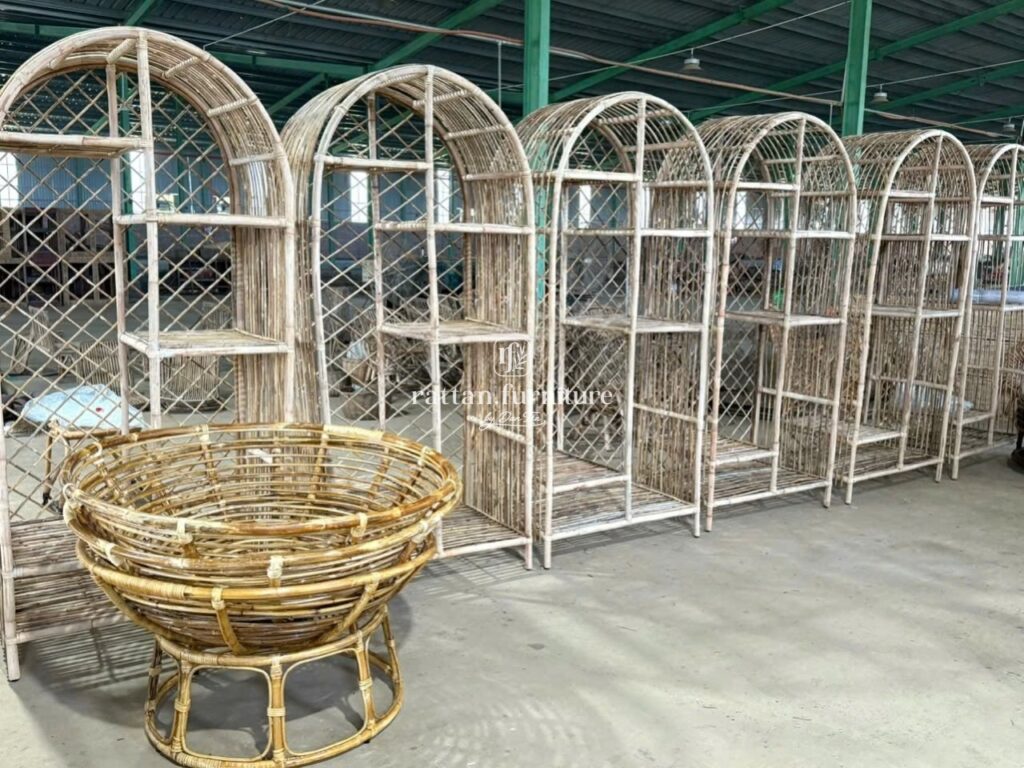
For a buyer who wants raw rattan material — cane, core, poles, webbing — this is the whole story. The largest supplier of the raw material has removed itself from the raw-material market by law. Vietnam, by contrast, exports both finished rattan goods and raw rattan material, and can combine both in a single shipment. If your business needs material (for your own weaving, restoration, or manufacturing), Vietnam is a legal, open source where Indonesia is closed.
This is not a marketing claim — it is trade policy. The Indonesian ban is well documented and its effects are studied: after it took effect, world rattan-material prices rose and specialist users elsewhere reported shortages. For anyone sourcing raw rattan, Vietnam’s open export of material is a structural advantage, not a slogan.
Craftsmanship and product quality
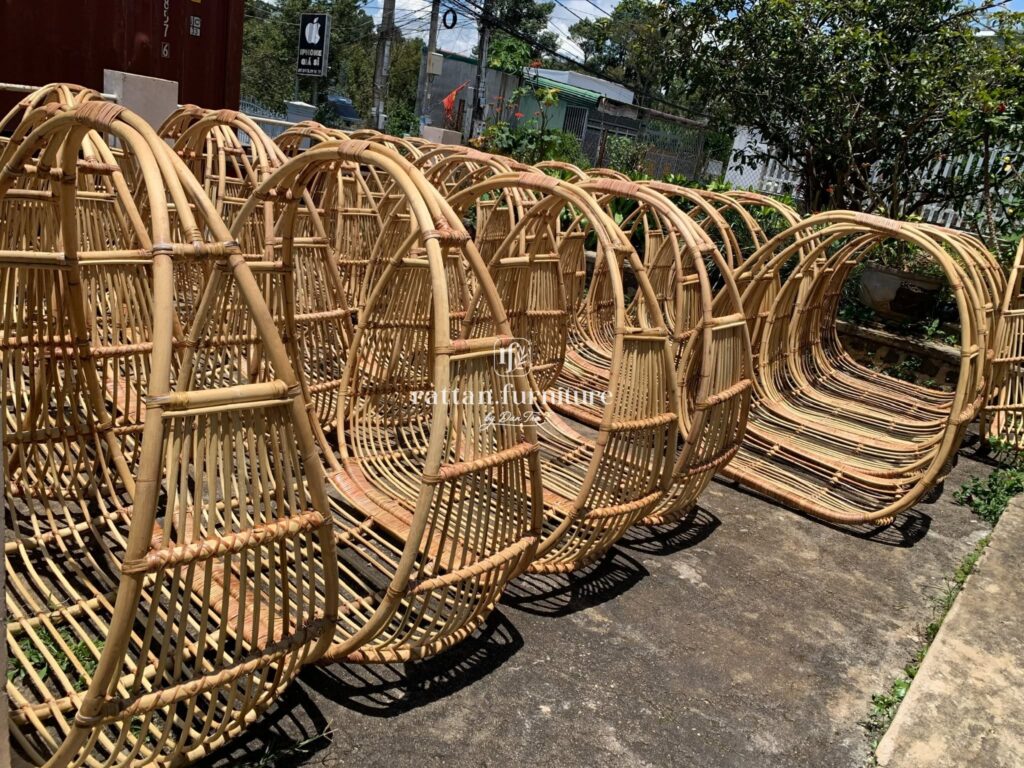
On finished goods, both countries are capable — but Vietnam has a specific reputation. Vietnam currently ranks second globally in bamboo, rattan, sedge and mat exports and is recognised in industry reporting for superior quality and aesthetics compared with competitors including Indonesia, Thailand and Malaysia. Vietnam’s products reach more than 130 countries.
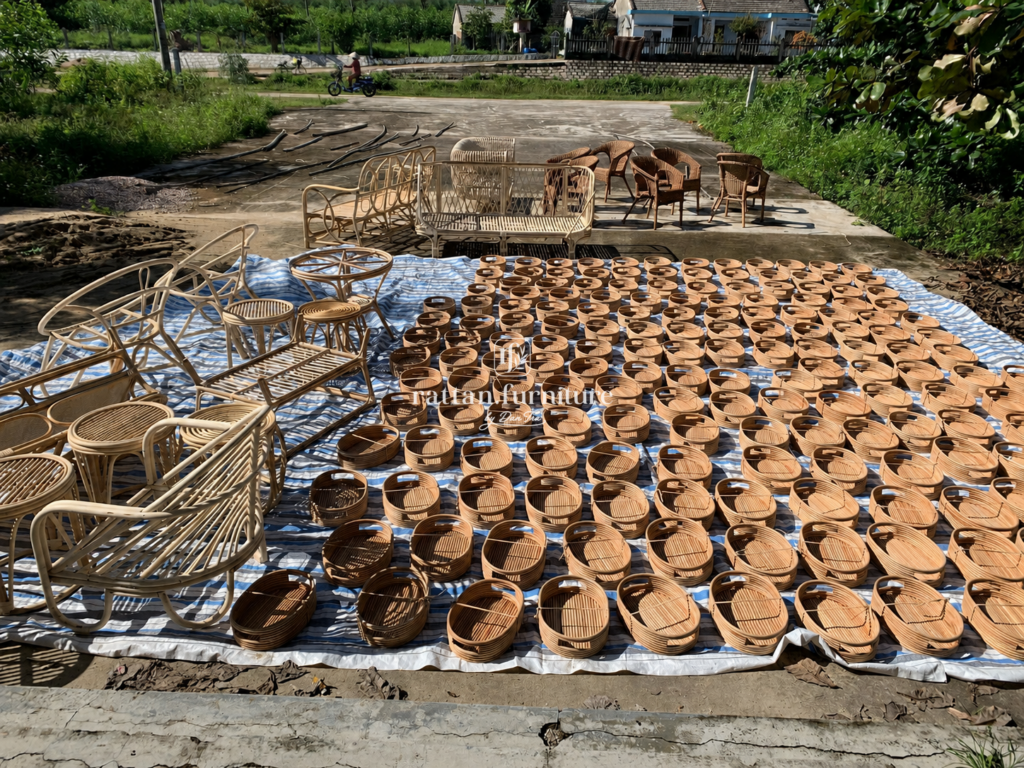
Vietnam’s durable edge is craftsmanship, design agility, and a short, traceable supply chain — the ability to develop new designs quickly, accommodate customisation, and keep the path from harvest to port transparent. That matters more to a serious buyer than headline volume: China dominates the category with roughly two-thirds of global market share on the back of subsidies and scale, while Vietnam holds only about 3.37% — Vietnam competes on quality and flexibility, not on being the cheapest mass producer.
Market size and momentum
Vietnam’s rattan, bamboo, sedge and carpet sector is sizeable and growing. Exports reached more than US$733 million in 2023, and roughly US$594.8 million in just the first nine months of 2024 — up about 10.3% year on year. The demand is geographically concentrated in exactly the markets most B2B buyers serve:
| Market | Share of Vietnam’s exports (9M 2024) | Note |
| United States | 41.6% (US$247M+) | Largest market, up ~21.4% YoY |
| Japan | 7.6% (US$45.4M) | Second largest |
| United Kingdom | 5.3% (US$31.6M) | Third; up ~8.9% YoY |
The takeaway for a buyer: Vietnam is not a fringe origin you have to educate your logistics team about. It is an established, growing supply base with proven lanes into the US, Japan, the UK and the EU.
Trade agreements & tariffs — the honest version
Tariff positioning is where a lot of marketing overreaches, so here is the accurate picture in mid-2026.
Where Vietnam has a real, time-sensitive edge: the EU (and Korea)
Vietnam has had the EU–Vietnam Free Trade Agreement (EVFTA) in force since 2020, alongside CPTPP, UKVFTA, the Vietnam–Korea FTA (VKFTA), and RCEP. Indonesia only concluded its Comprehensive Economic Partnership Agreement (CEPA) with the EU on 23 September 2025, and that deal is expected to enter into force around 1 January 2027 — after ratification. In other words, for shipments into the EU, Vietnam holds a multi-year preferential-tariff head start that Indonesia will not match until 2027 at the earliest. If EU market access is part of your plan, this window is real and it is closing.
Where the picture is neutral: the United States
We will be straight with you here, because some suppliers are not: as of mid-2026, US furniture duties are roughly at parity between the two origins — Vietnam and Indonesia are broadly comparable, and rates have been volatile. Do not choose Vietnam over Indonesia expecting a US tariff advantage; there generally isn’t a durable one right now. Vietnam’s case for the US market rests on craftsmanship, design flexibility, low minimums and a traceable supply chain — not on duty rates.
Side-by-side summary
| Factor | Vietnam | Indonesia |
| Raw rattan material export | Open & legal (cane, core, poles, webbing) | Banned since 2012 |
| Finished rattan goods | Yes — recognised for quality & design | Yes — large finished-goods base |
| Both in one shipment | Yes (goods + raw material combined) | Finished goods only |
| EU tariff preference | EVFTA in force since 2020 | CEPA not in force until ~2027 |
| Korea preference | VKFTA (Form KV) | AKFTA only |
| US tariffs (mid-2026) | Roughly at parity | Roughly at parity |
| Global export rank (bamboo/rattan/sedge) | 2nd; noted for quality | Top-4 exporter |
So which should you choose?
If you need raw rattan material, the decision is effectively made for you: Vietnam is an open source, Indonesia is closed. If you need finished goods for the EU or Korea, Vietnam’s FTA head start is a concrete, time-limited advantage. If you are buying finished goods purely for the US market, treat tariffs as neutral and choose on craftsmanship, customisation, minimum order flexibility and supply-chain transparency — which is exactly the ground Vietnam is strongest on.
Where Rattan.Furniture fits
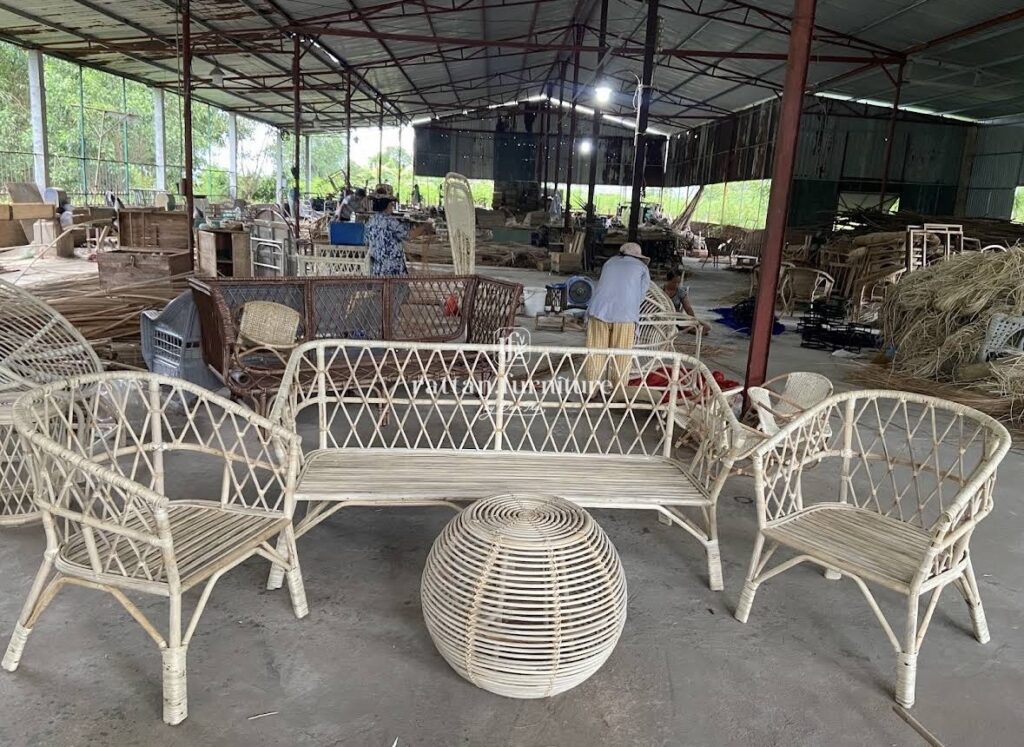
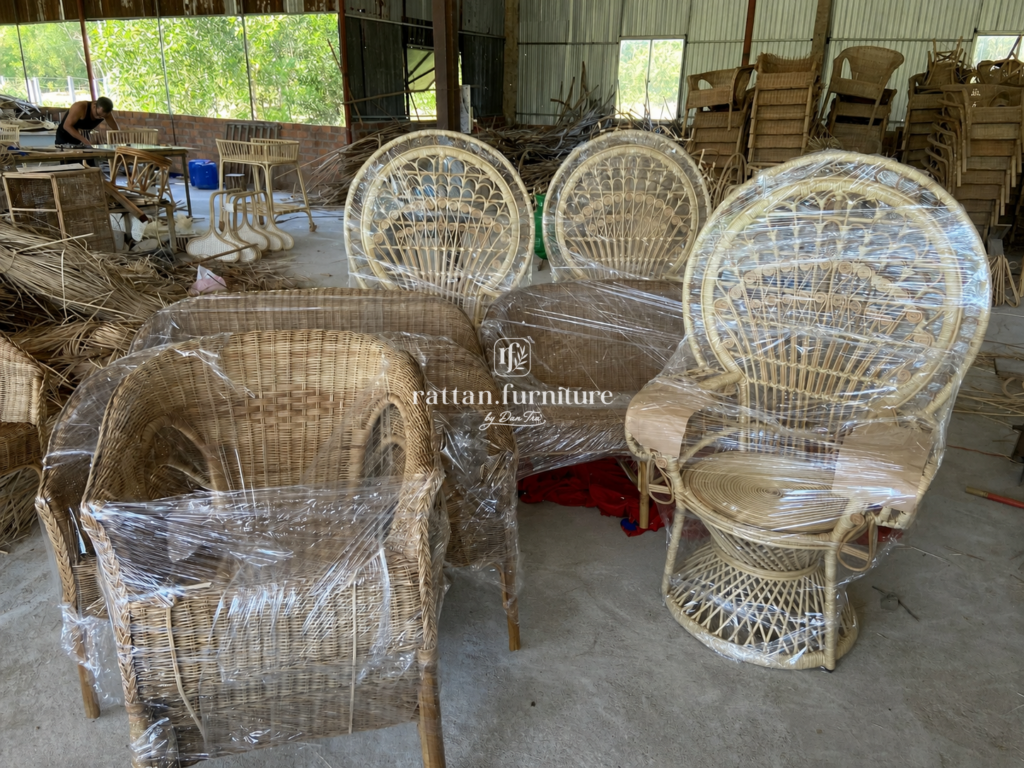
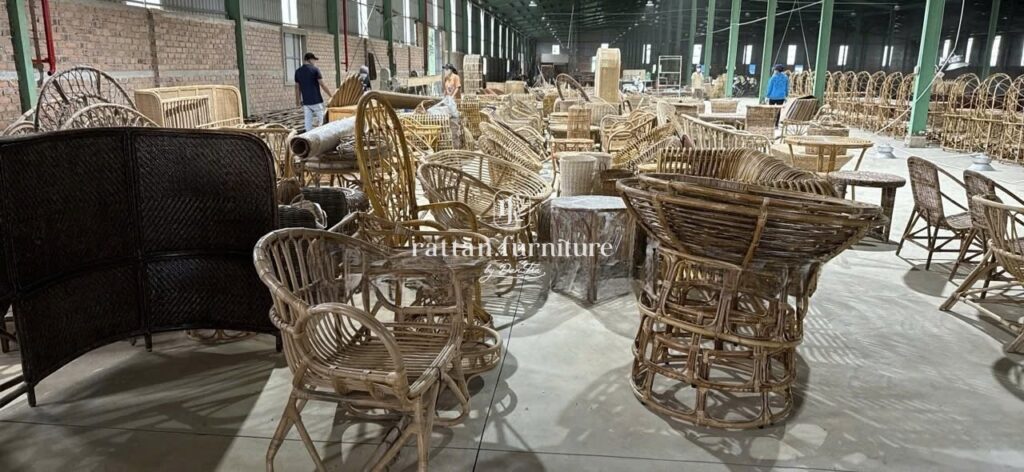
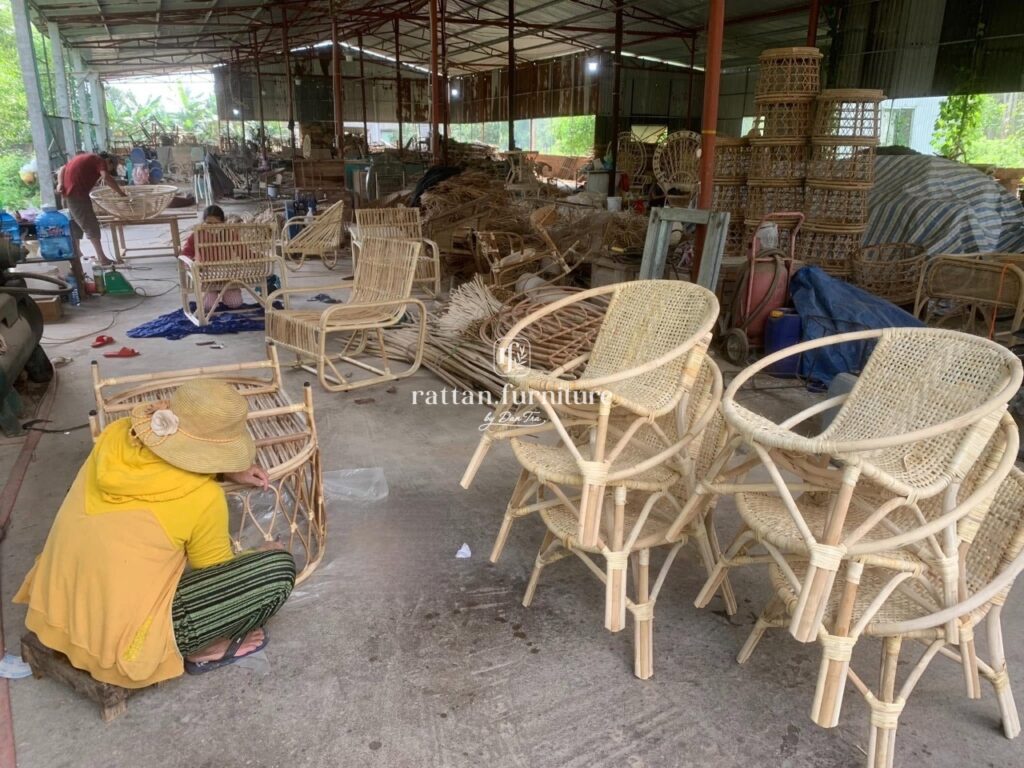
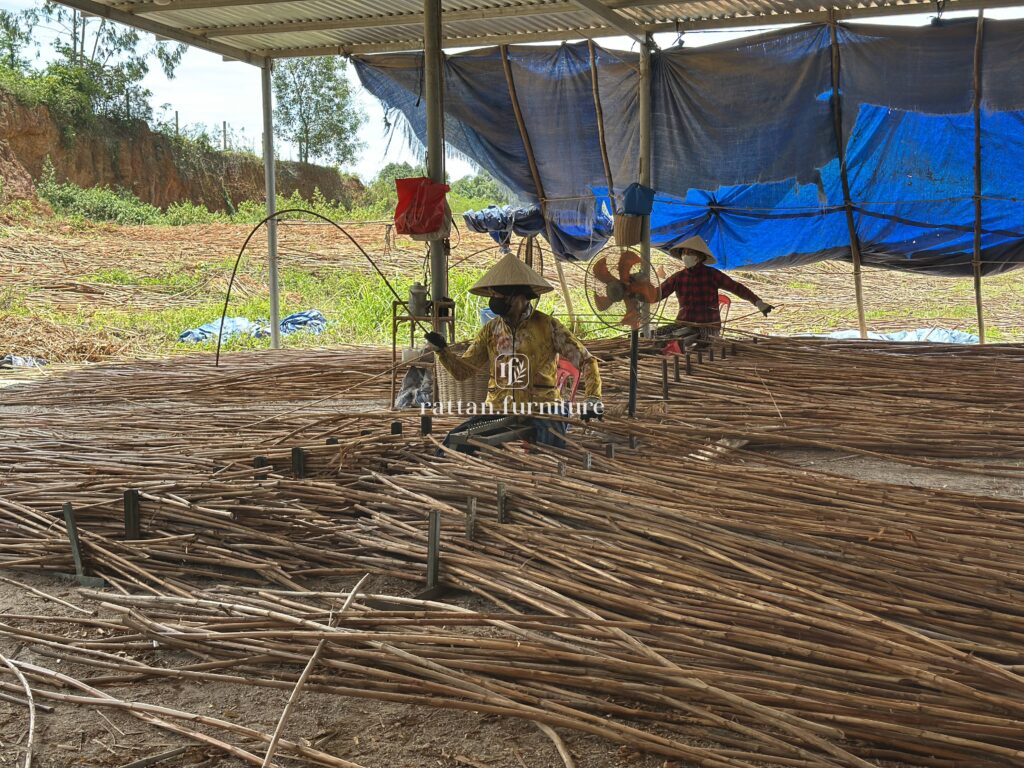
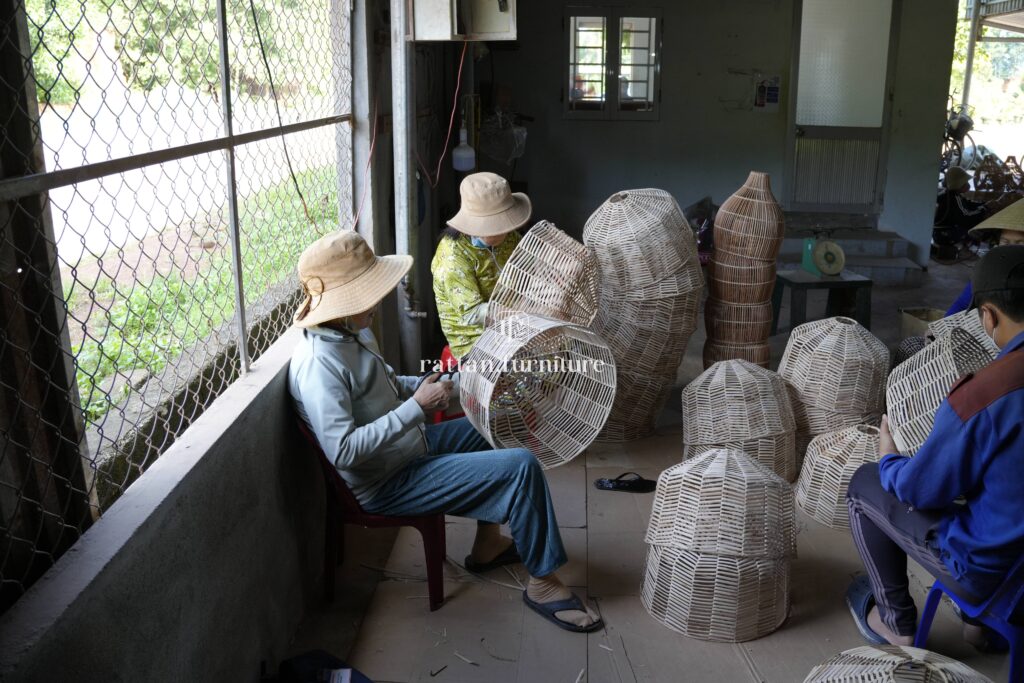
We are a direct natural-rattan manufacturer and exporter in Vietnam — not a trading company — established in 2014. Because we run our own production, we can supply both finished rattan furniture and raw rattan material in a single FOB shipment, with a short, traceable chain from licensed harvesting areas in central Vietnam to port. We ship FOB from Quy Nhơn Port (Bình Định) or Cat Lai Port (HCMC), and can issue Certificates of Origin under EVFTA, CPTPP and UKVFTA. For raw material specifically, that combination — direct manufacturer, legal raw-material export, EU tariff preference — is difficult to match from Indonesia today.
Sources
All figures above are drawn from published, checkable sources. Buyers are encouraged to verify independently:
- Vietnam export figures: VietnamNews / VOV / General Department of Customs (rattan, bamboo, sedge & carpet exports, 2023–2024).
- Vietnam global ranking & 3.37% market share; China ~67%: ncvietnam.net / International Trade Centre (ITC) summary.
- Indonesia raw rattan export ban (Decree 35/M-DAG/PER/11/2011, effective 1 Jan 2012) and ~75–80% raw-rattan share: ANTARA News; CIFOR-ICRAF; Forest Policy and Economics (ScienceDirect).
- EU–Indonesia CEPA concluded 23 Sept 2025, entry into force ~2027: European Commission (policy.trade.ec.europa.eu); Alvarez & Marsal.
- US tariff parity (mid-2026): internal trade-position review — rates volatile, verify at time of quotation.
RATTAN.FURNITURE
Natural rattan manufacturer & exporter, Vietnam · [email protected] · [email protected] · WhatsApp +84 96 3333 776 · https://rattan.furniture