When you buy natural rattan from Vietnam, you’re buying from one of the world’s great weaving traditions. Behind the finished chair or lampshade is a village – often centuries old – where artisans have handwoven cane for generations. For importers and hospitality buyers, knowing those villages isn’t just romance: traceable provenance is what turns a supplier’s story into something you can verify and put in front of your own customers.
Vietnam has over 1,000 rattan and bamboo craft villages – about 24% of all its handicraft villages – and ranks among the world’s leading exporters of bamboo and rattan alongside China, Indonesia and the Philippines. These are the highest-value products among the country’s non-timber forest goods. Below are 6+ of the most famous weaving villages, with their locations, and where Rattan.Furniture fits as a direct manufacturer carrying this heritage into export-ready natural rattan furniture.
Quick reference: 7 famous weaving villages
| Village | Location | Known for |
| Phu Vinh | Chuong My, Hanoi | ‘Land of rattan’, ~400 yrs, fine ‘xau xien’ weave |
| Ngoc Dong | Duy Tien, Ha Nam | Heartland of rattan chairs & furniture |
| Bao La | Quang Dien, Hue | 600+ yrs; rattan-bamboo cooperative |
| Thach Cau | Nam Truc, Nam Dinh | Renowned bamboo basketry |
| Tang Tien | Viet Yen, Bac Giang | 300+ yrs; mats, cushions, blinds |
| Ninh So | Thuong Tin, Hanoi | Long-established export weaving |
1. Phu Vinh (Hanoi) – the ‘Land of Rattan’, 400 years on
Location: Phu Nghia commune, Chuong My district, Hanoi (along National Highway 6A, about 27 km southwest of central Hanoi)
Phu Vinh is Hanoi’s most iconic rattan and bamboo village, with nearly 400 years of history. Its original name, Phu Hoa Trang, translates roughly as ‘blessed with silk-soft hands’. What made Phu Vinh famous is its ‘xau xien’ fine-weaving technique – unique in Vietnam – which produces work so intricate it looks embroidered from cane, including portraits and landscapes. With hundreds of designs and a majority of its households in the craft, Phu Vinh earned its nickname as the ‘land of rattan’.
2. Ngoc Dong (Ha Nam) – the heartland of rattan chairs
Location: Hoang Dong commune, Duy Tien town, Ha Nam province
Unlike villages built on bamboo, Ngoc Dong grew up around rattan and giang cane – so it has the clearest heritage in rattan furniture specifically. Its artisans make rattan chairs, trays, vases and bowls in many designs. Notably, Ngoc Dong produced the rattan furniture set placed in President Ho Chi Minh’s stilt house, and once crafted a salon set commissioned for North Korean leader Kim Il Sung – a testament to the quality of its rattan work.
3. Bao La (Hue) – 600+ years by the Bo River
Location: Quang Phu commune, Quang Dien district, Thua Thien – Hue (on the Bo River)
Bao La is a traditional village of more than 600 years, best known for its durable winnowing baskets. Once focused on everyday household ware, it transformed through the Bao La Rattan & Bamboo Cooperative into refined handicrafts that now export worldwide, and today welcomes visitors as a craft-tourism destination.
4. Thach Cau (Nam Dinh) – celebrated bamboo basketry
Location: Thach Cau hamlet, Nam Tien commune, Nam Truc district, Nam Dinh province
Tucked into Thach Cau hamlet, this weaving village is celebrated in a local saying that its baskets are ‘the finest under heaven’. Here, from children to elders past seventy, generations keep the hand-weaving craft alive – a tradition running back hundreds of years.
5. Tang Tien (Bac Giang) – 300+ years since the Later Le dynasty
Location: Tang Tien ward, Viet Yen town, Bac Giang province
Tang Tien has practised its weaving craft since the Later Le dynasty – more than 300 years – and is known for mats, cushions, bags and blinds, made to a quality carefully guarded across generations.
6. Ninh So (Hanoi) – export weaving with deep roots
Location: Ninh So commune, Thuong Tin district, Hanoi
Ninh So is a long-established Hanoi weaving village, known for the skill of its artisans and for taking its rattan and bamboo products to export markets early.
Ghi chú (VN): Co the bo sung Thuy Lap, Lien Khe hoac cum mien Nam de thanh ’10+’ neu muon.
Why craft-village provenance matters to buyers
For an importer, a named, traceable village is more than heritage – it’s due diligence you can act on. It lets you verify the supply chain, protect your own brand story, and answer the questions design-led and sustainability-minded customers increasingly ask. Vague claims about ‘trade villages’ don’t do that; a specific village does.
Rattan.Furniture – a direct manufacturer carrying the tradition forward
These villages are the shared heritage of Vietnamese weaving. Rattan.Furniture doesn’t claim to make the products of any of them – instead, it is a direct manufacturer that brings the craft-village tradition into modern, export-ready natural rattan furniture.
Scale, sourcing and traceability
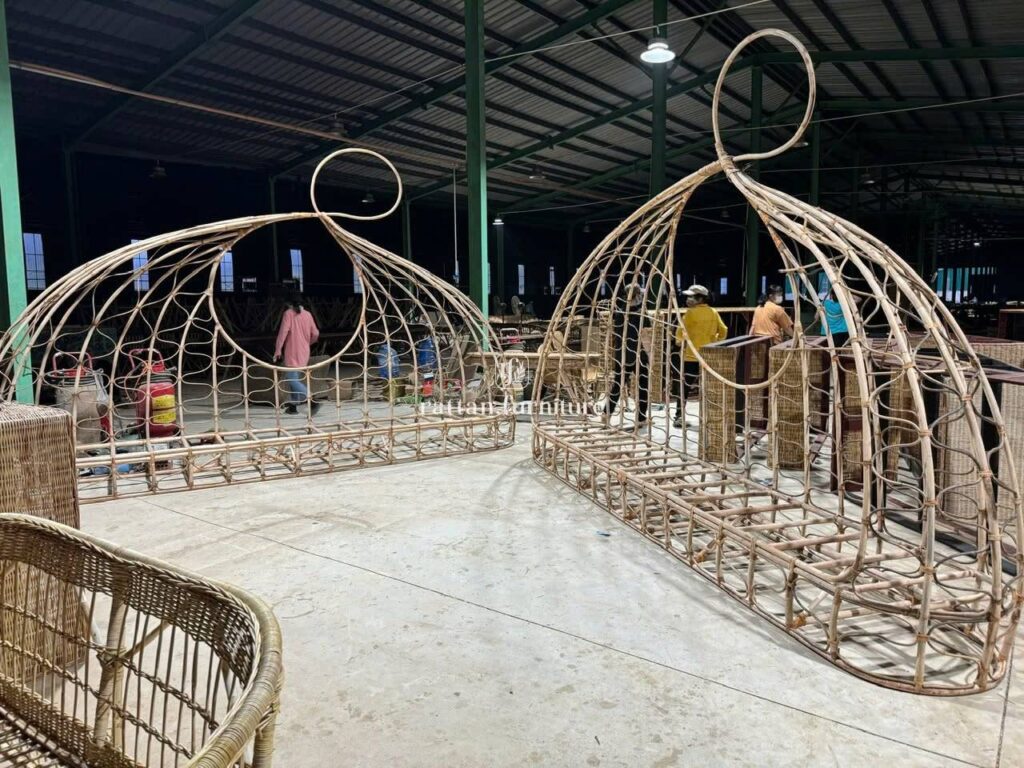
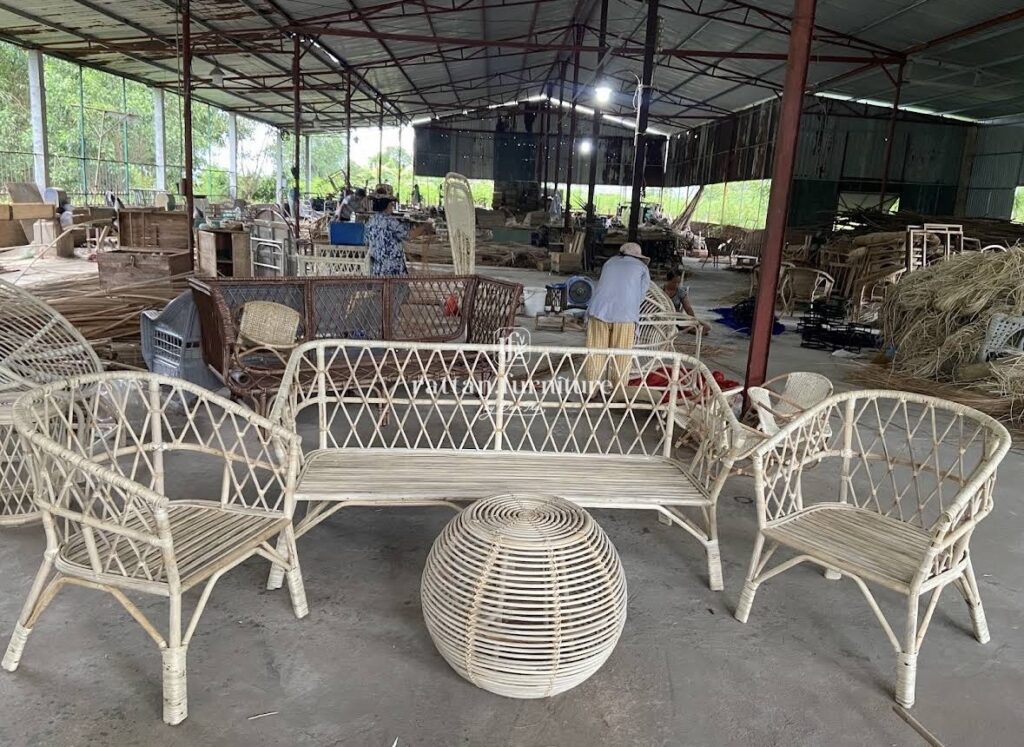
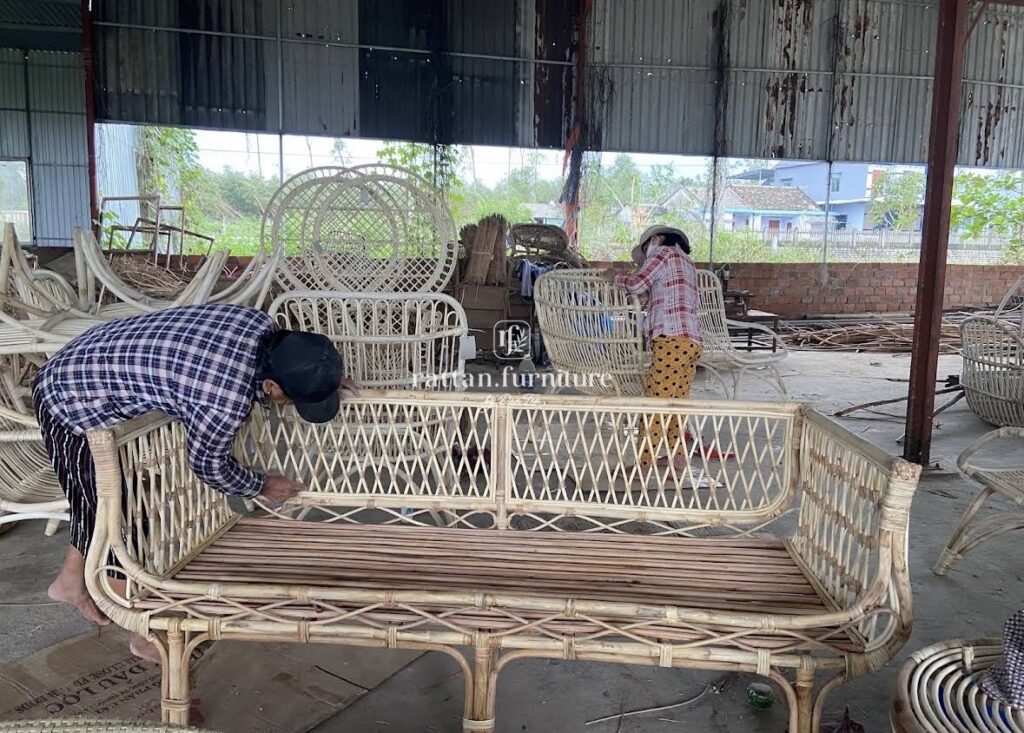
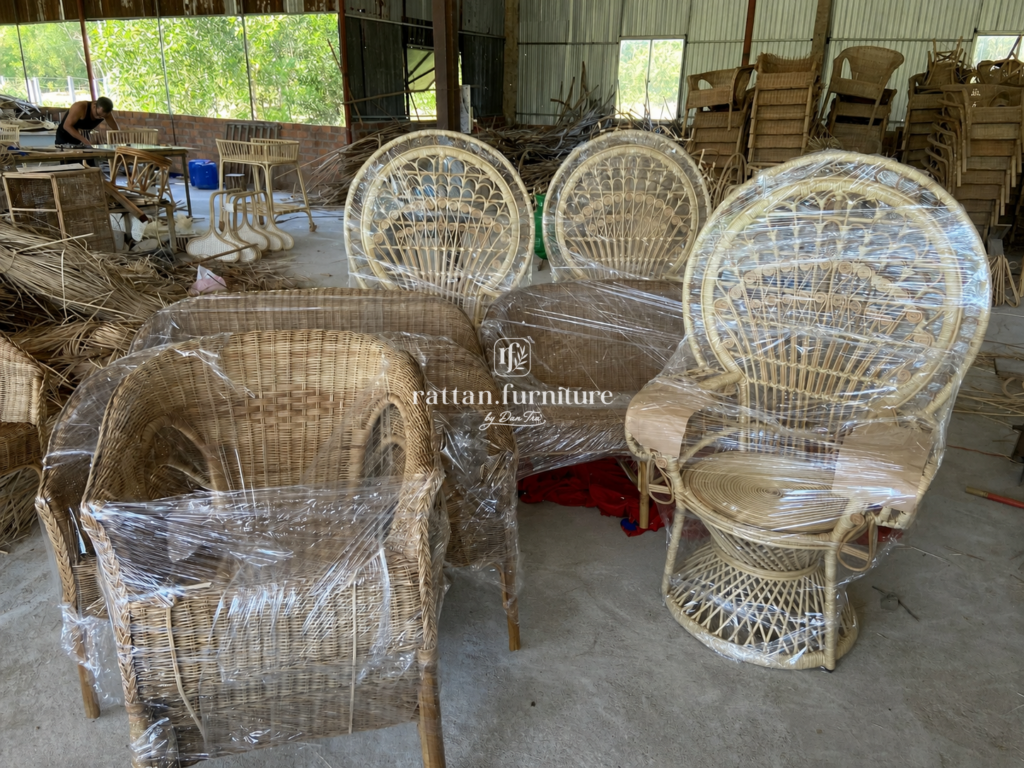
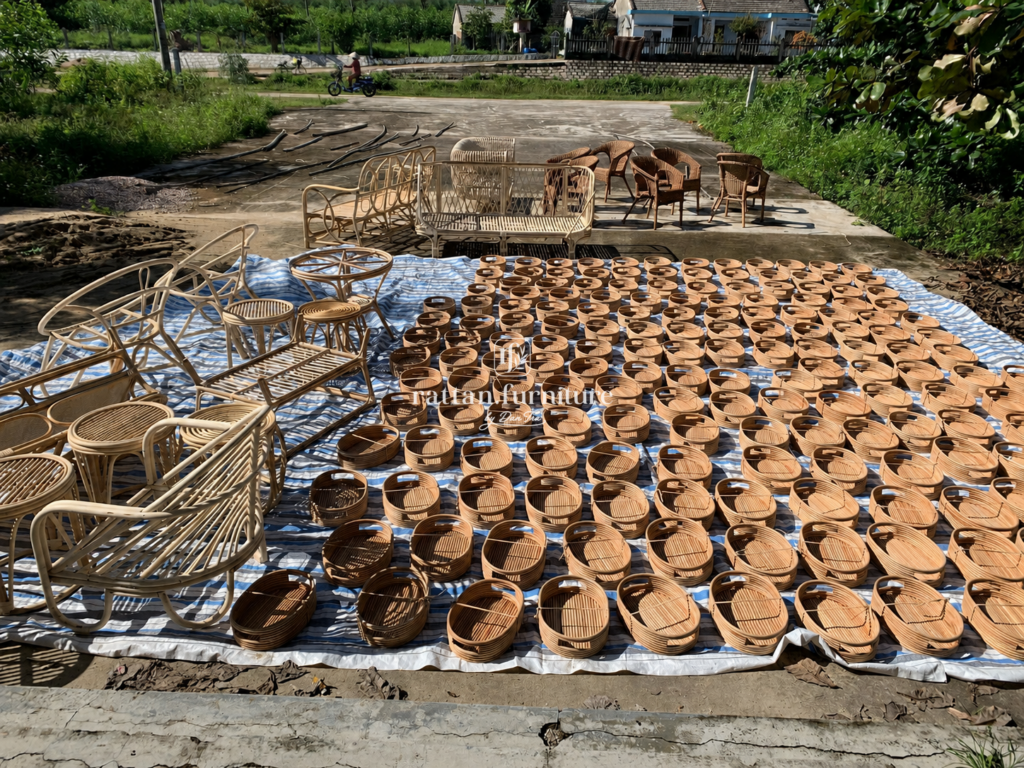
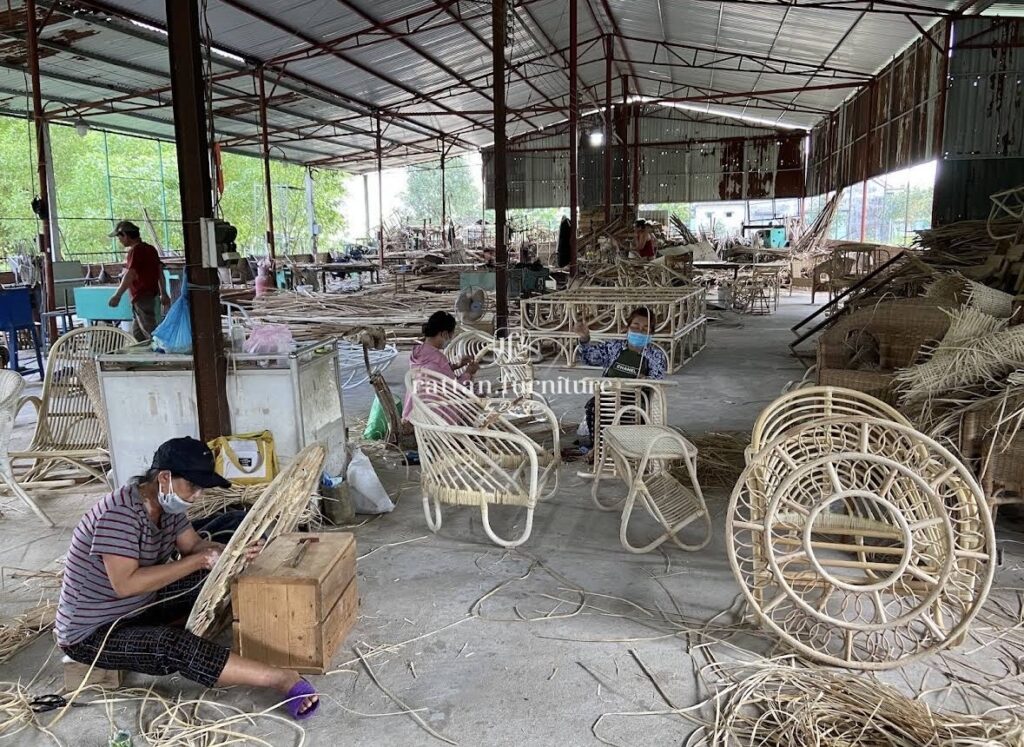
Rattan.Furniture is based in Binh Dinh and Gia Lai, central Vietnam. It operates through a joint venture with two large facilities totalling 5.4 hectares (54,000 m2), employing 965 workers – including 765 skilled artisans – and has grown steadily since 2020. Its natural rattan is sourced from licensed forests in the Gia Lai highlands, so the chain from raw cane to finished piece stays short and traceable. Its work is trusted by global retailers including IKEA and Walmart.
A comprehensive, export-ready maker
- Facilities in Binh Dinh and Gia Lai provinces, central Vietnam (5.4 ha, 965 workers incl. 765 skilled artisans).
- A full range: rattan chairs (rocking and peacock chairs), pendant lights and lampshades, baskets, decor, pet beds and raw rattan material.
- 100% natural rattan, handwoven – and honest about where natural rattan isn’t suited to open outdoor use.
- Serving both domestic buyers and export markets (US, EU, Japan, South Korea, Australia); FOB Quy Nhon Port (Binh Dinh) or Cat Lai Port (HCMC).
- OEM/ODM: custom designs, finishes and branded packaging.
- Certificates of Origin under EVFTA, CPTPP and UKVFTA to lower duties for EU, UK and CPTPP buyers.
Proven on real projects
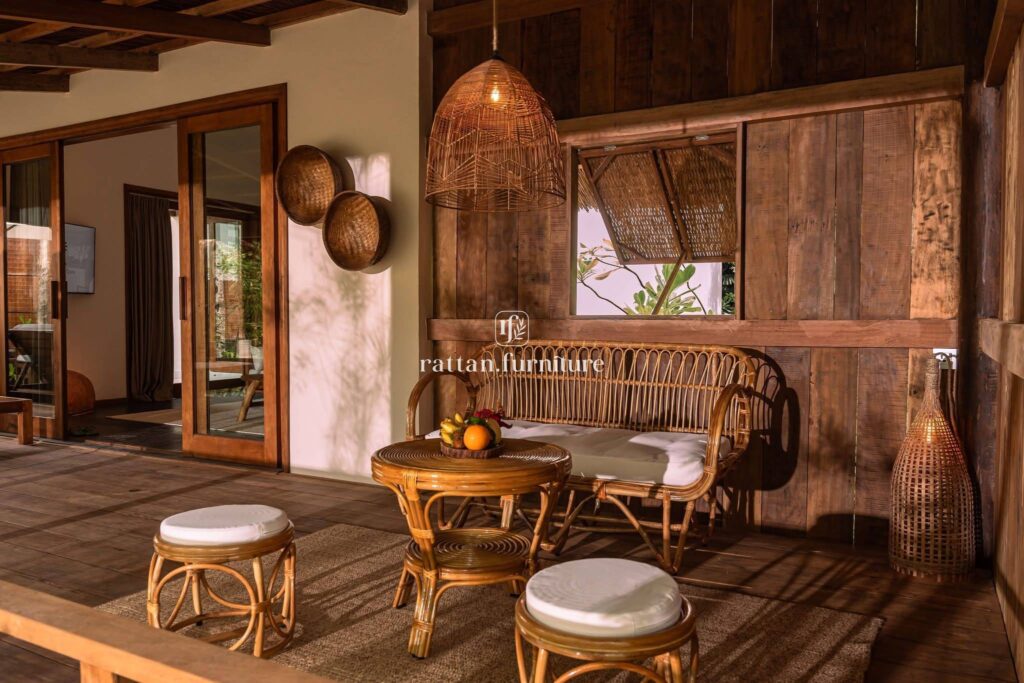
Rattan.Furniture has supplied natural rattan for named hospitality projects including The Signature Hotel Nha Trang, Calmette Hotel (District 1, HCMC), Green Bay Phu Quoc Resort and Spa Bar Thao Dien – proof rather than promises.
Contact Rattan.Furniture: Tel / WhatsApp +84 96 3333 776 – [email protected] – https://rattan.furniture
Frequently asked questions
Which is the most famous rattan craft village in Vietnam?
Phu Vinh (Chuong My, Hanoi) is generally seen as the most iconic rattan and bamboo village, known for its unique ‘xau xien’ fine weave. For rattan furniture specifically, Ngoc Dong (Ha Nam) has the clearest heritage.
Can I source natural rattan traceable to a specific village?
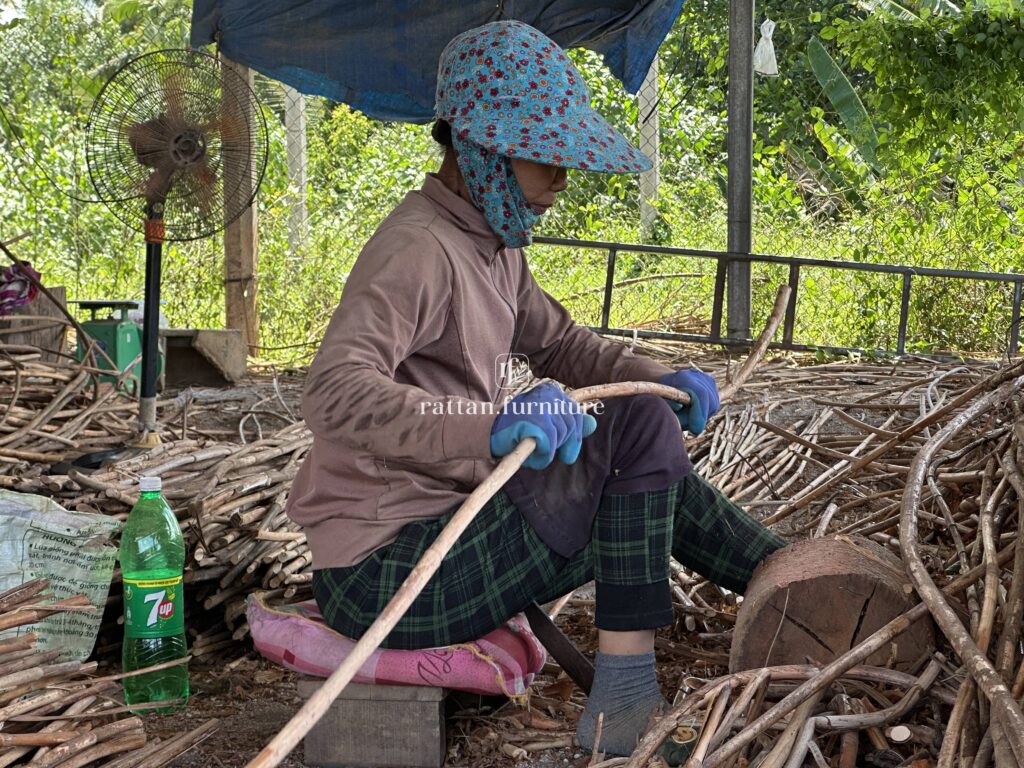
Yes. Rattan.Furniture sources its natural rattan from licensed forests in the Gia Lai highlands and produces in Binh Dinh, so the material can be traced along a short supply chain – useful for buyers who need a verifiable sourcing story.
Is Rattan.Furniture a craft village or a factory?
It is a direct manufacturer of natural rattan furniture, based in Binh Dinh and Gia Lai (5.4 ha, 965 workers), serving both domestic and export markets.