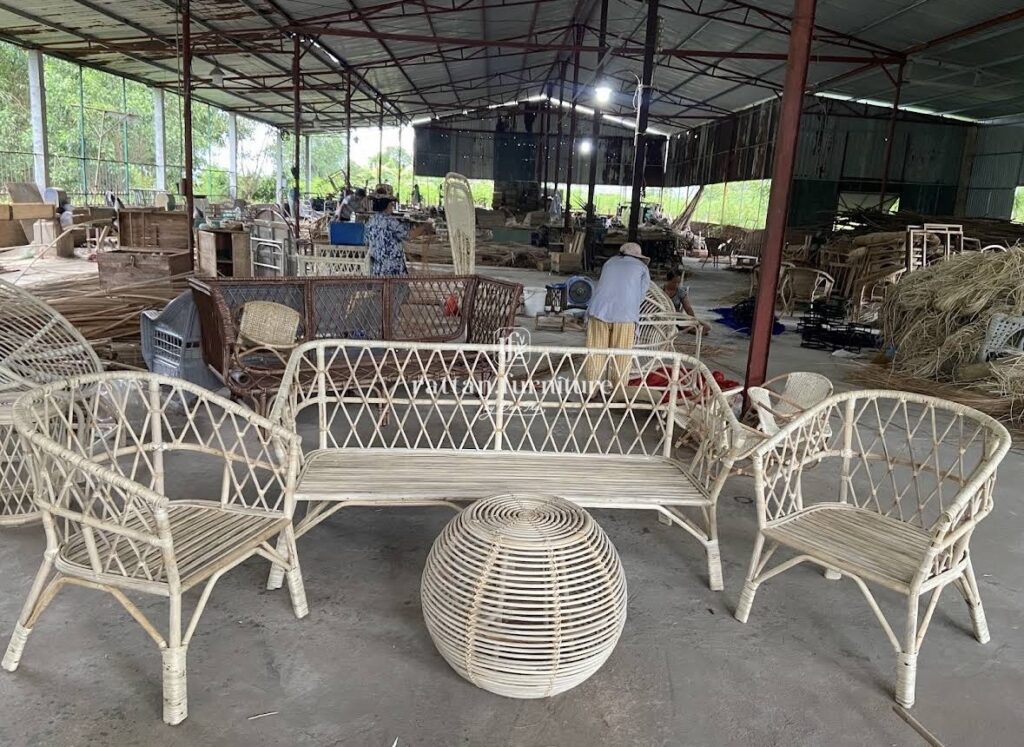
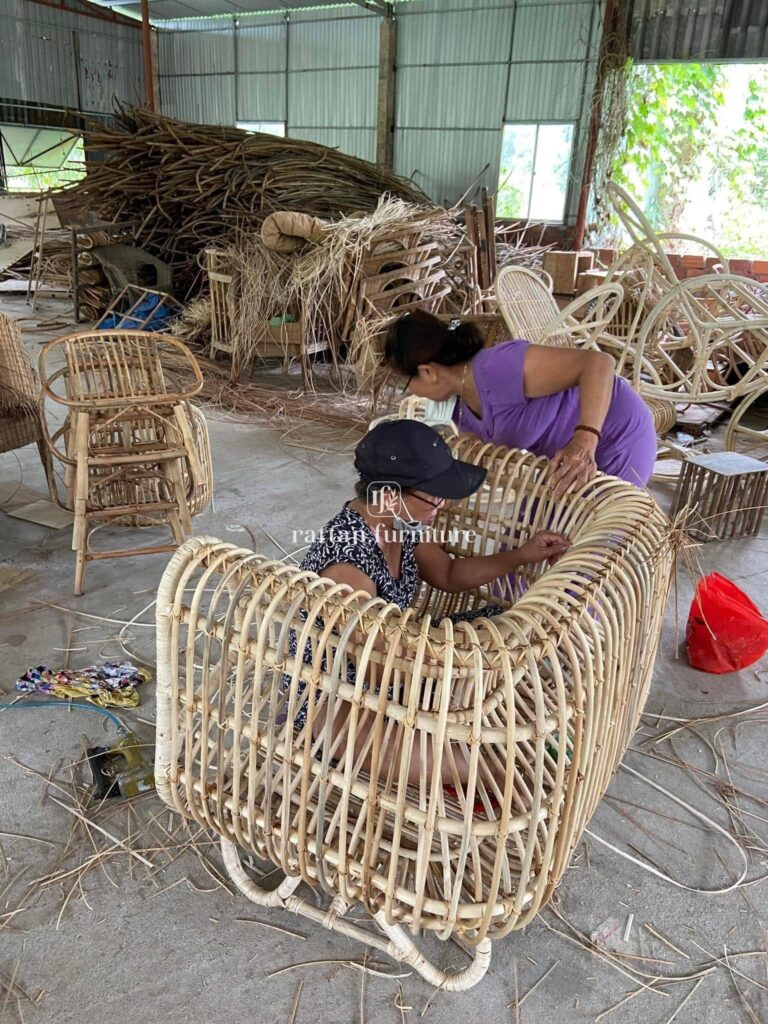
Vietnam is now one of the world’s largest furniture exporters, and its natural rattan is a favourite of hotels, retailers and design-led brands. But importing it well means understanding duties, documentation and quality control – not just picking a factory. This guide walks through the whole process, step by step, with current figures and the sources behind them.
A note on accuracy: trade rules in 2026 are unusually fluid, especially US tariffs. We cite the current position and its source, and flag where you must confirm the live figure with a licensed customs broker before you quote a season. Where we mention Rattan.Furniture, it’s as a worked example of a direct natural-rattan manufacturer – compare it against any supplier on the same criteria.
Step 1 – Decide exactly what you’re importing
Before you talk price, pin down the product and its classification. Two decisions matter most.
Natural rattan or synthetic (PE) rattan?
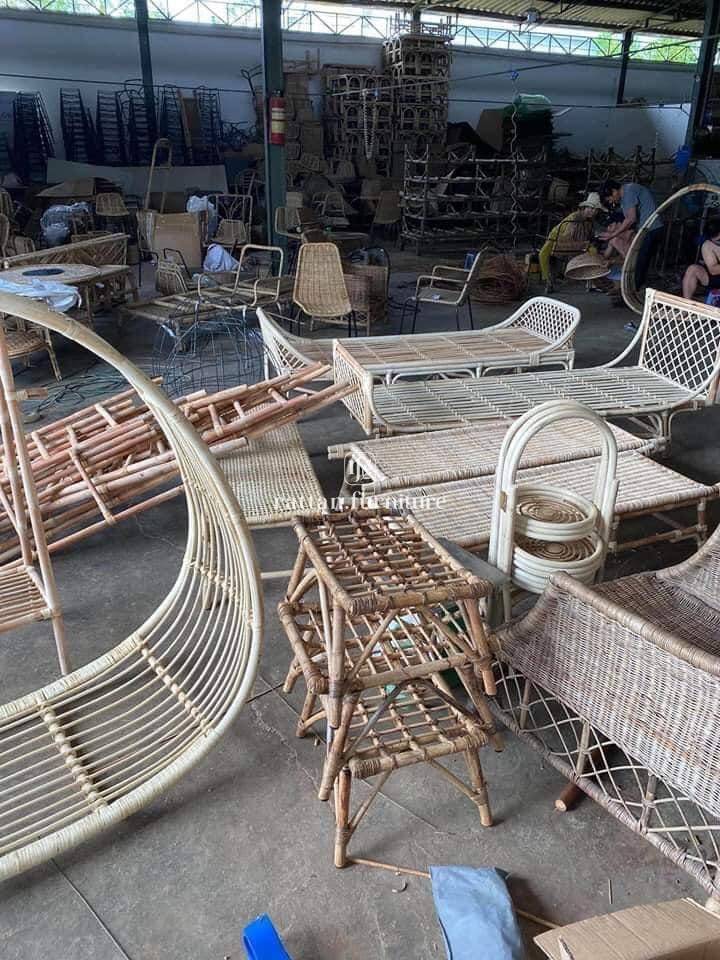
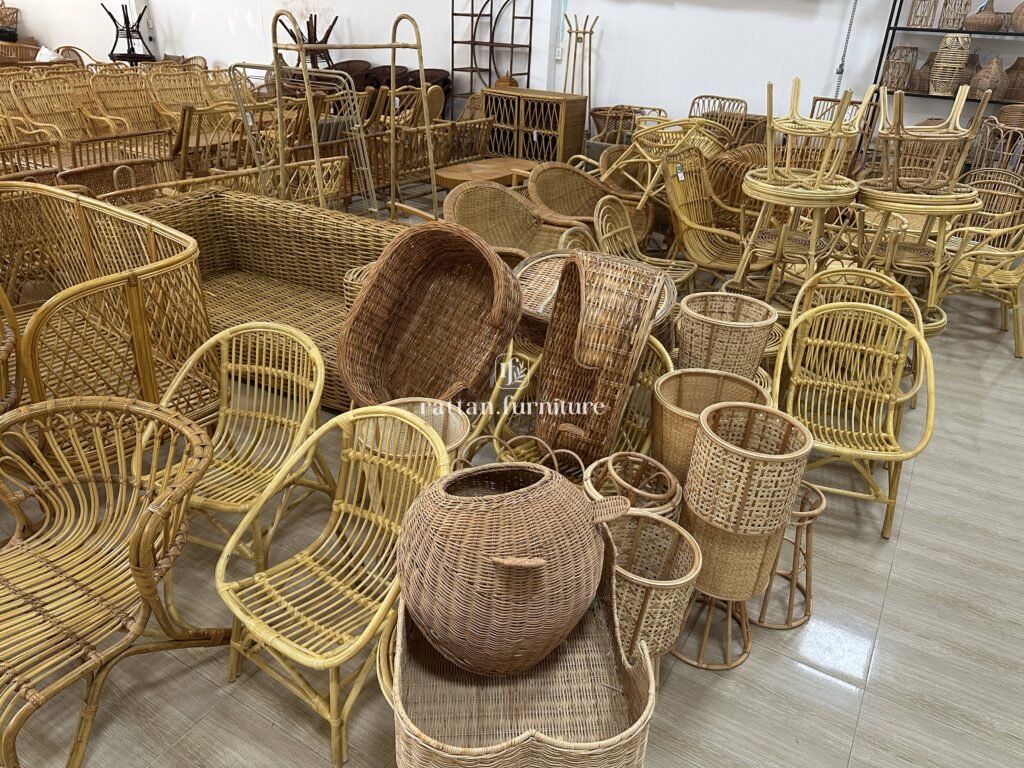
Natural rattan is a real palm fibre, handwoven for interiors and covered spaces. Synthetic ‘PE rattan’ is extruded plastic on aluminium frames, built for open outdoor use. They carry different customs codes, different price points and different compliance profiles. Sophisticated hospitality buyers increasingly want genuine natural rattan for its look, story and sustainability – just not for permanent poolside exposure. Decide which you need first; it shapes everything downstream.
Get the HS / HTS classification right
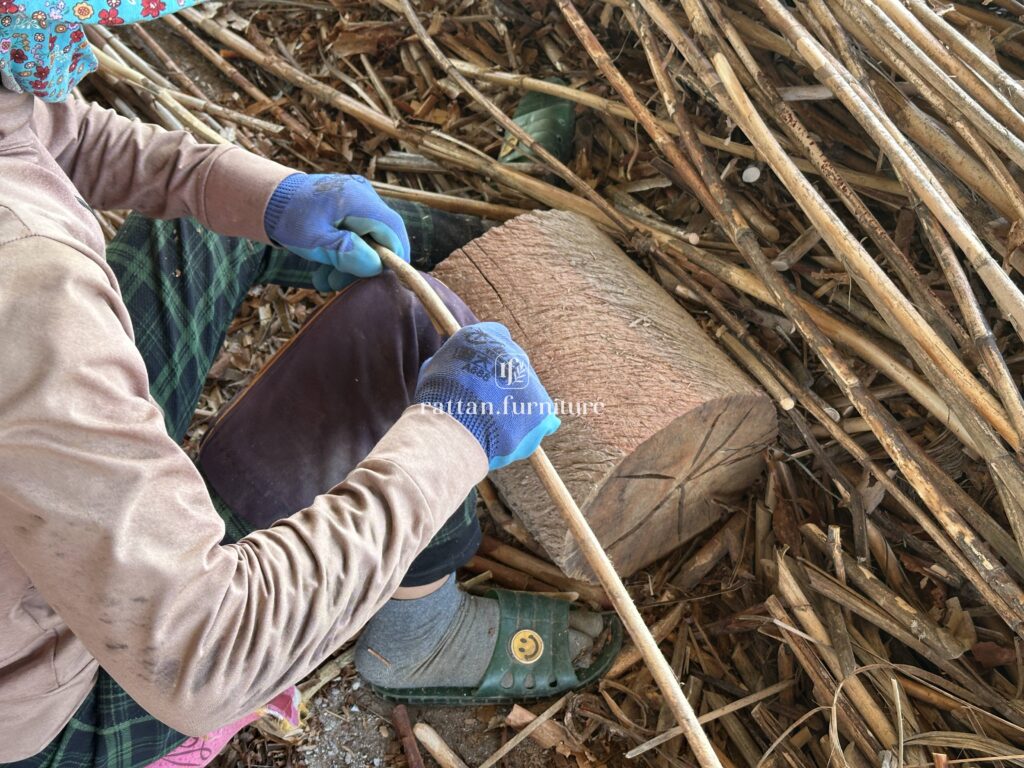
Your Harmonized System code sets your duty rate and your paperwork. Misclassification causes delays, reclassification and penalties – and legally, the importer of record is responsible. Common codes for rattan products (confirm the full national code with your broker):
| HS code | Product | Notes |
| 9401.53 | Rattan seats / chairs | Seats of rattan (bamboo = 9401.52) |
| 9403.83 | Rattan furniture (non-seat) | Tables, cabinets, shelving of rattan |
| 4602.12 | Rattan basketwork / wickerwork | Baskets, woven panels |
| 9405 | Rattan lighting / lampshades | Luminaires & lighting fittings |
| 1401.20 | Raw rattan material | Rattan as a raw plaiting material |
| 9403.99 / 9403.89 | Rattan furniture parts | Parts / unfinished components |
Ghi chu (VN): HS 6 so la chuan quoc te; moi nuoc them duoi (US HTSUS 10 so, EU CN 8 so). Buyer/broker phai xac nhan ma day du. Nguon: WCO HS 2022, USITC HTS, EU TARIC.
Step 2 – Find and vet a manufacturer (not just a seller)
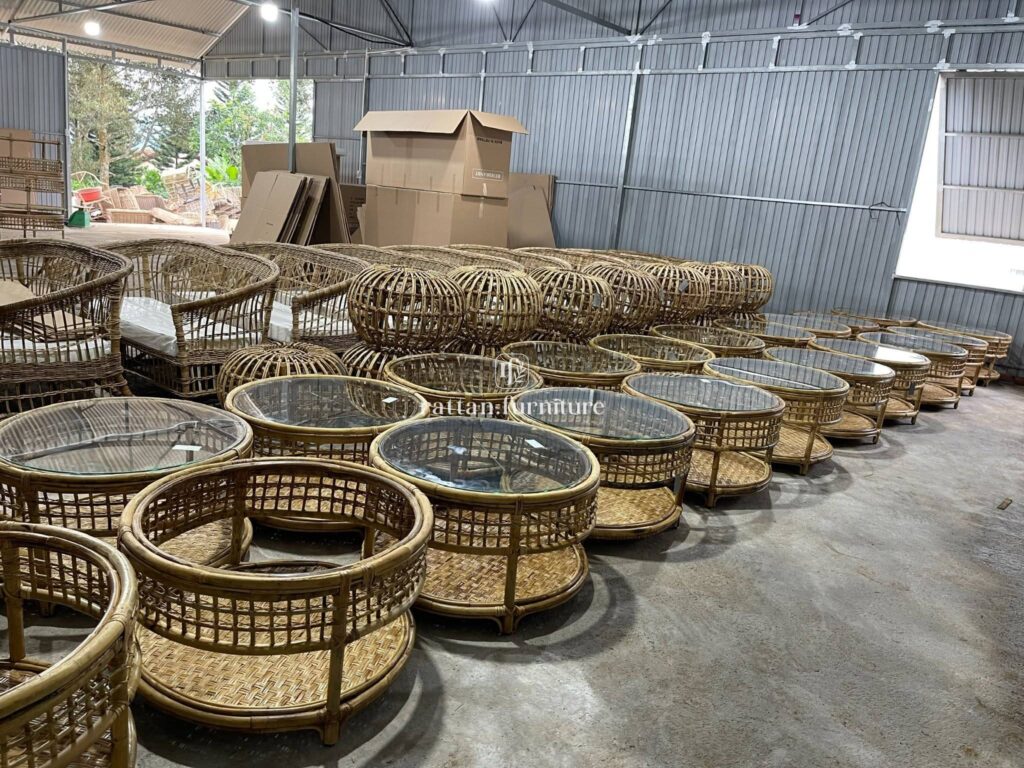
Vietnam has factories, trading companies and sourcing agents. For control over price and quality, you generally want a direct manufacturer you can audit. When vetting, verify:
- Are they the maker, or a middleman? Ask which items are made in-house versus bought in.
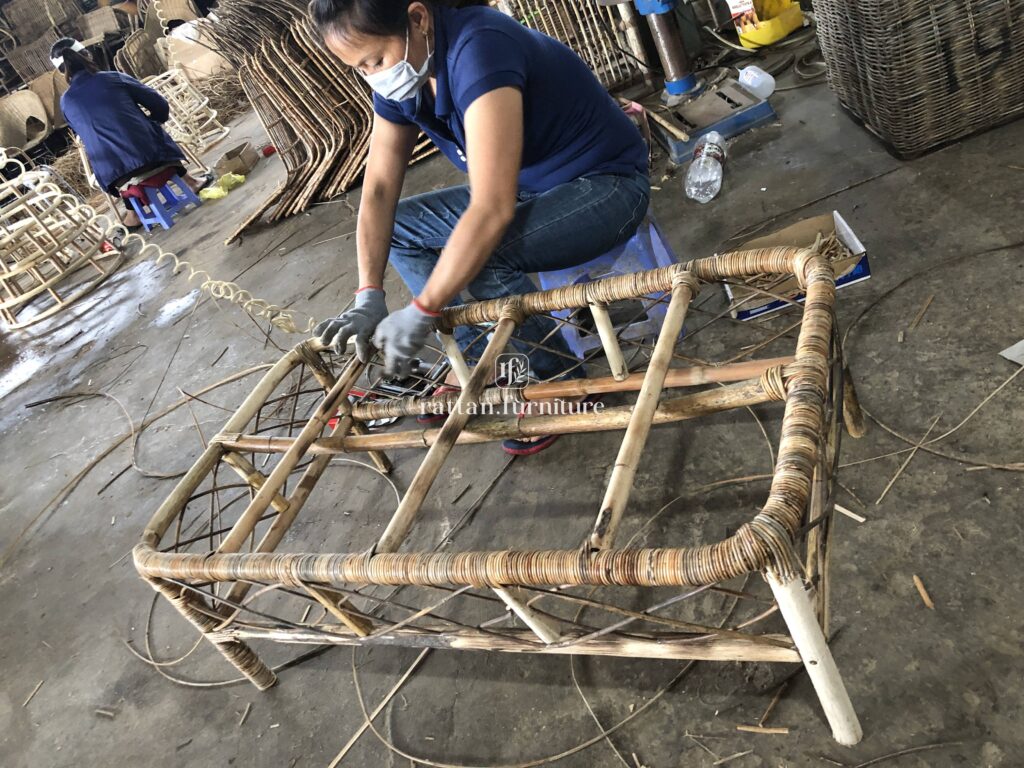
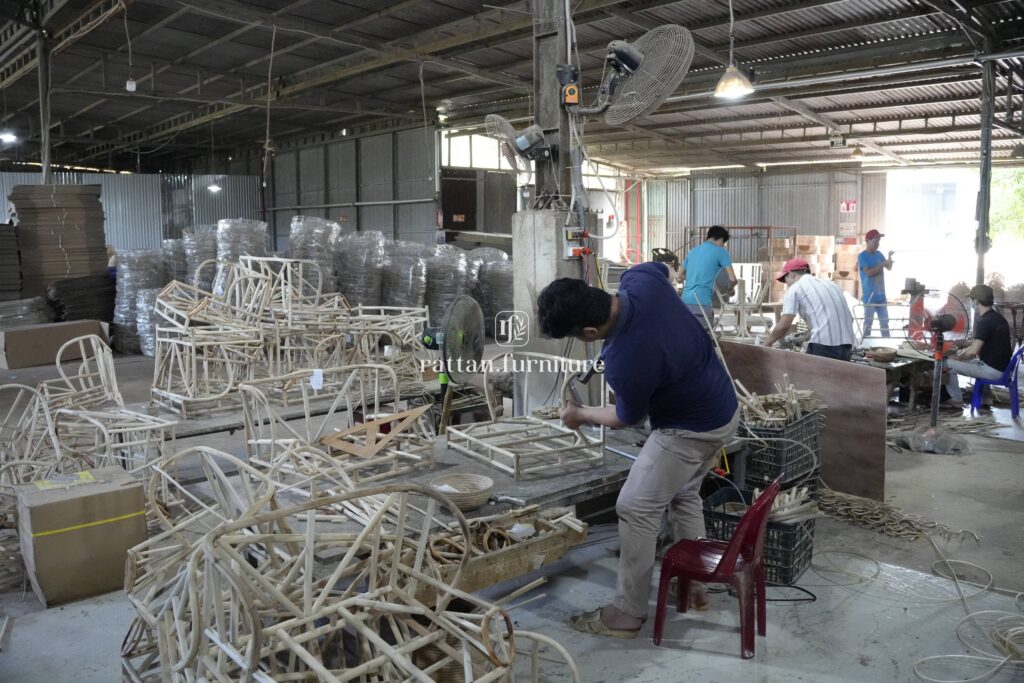
- A real, visitable factory address – and ideally factory-process footage, not just studio photos.
- Export experience to your market, and references or named projects you can check.
- Clear answers on MOQ, lead time, payment terms and Incoterms.
- Which certifications they genuinely hold (e.g. FSC, ISO, BSCI) – request the certificate, don’t take the claim.
Step 3 – Understand Incoterms, MOQ and payment
Incoterms: who pays for what
Incoterms define where the supplier’s responsibility ends and yours begins. The most common for Vietnamese furniture:
| Term | What it means | Best when |
| EXW | You collect from the factory; you handle everything | You have a strong local agent |
| FOB | Supplier delivers, cleared, onto the vessel at a Vietnamese port | Most common; you control freight |
| CIF | Supplier also pays sea freight + insurance to your port | You want a simpler quote |
| DDP | Supplier delivers to your door, duties paid | You want turnkey, at a premium |
Most Vietnamese rattan is sold FOB Ho Chi Minh City (Cat Lai Port). Under FOB you arrange and control the ocean freight, which usually gives better rates and visibility than CIF. Note a customs subtlety: the EU assesses duty on the CIF value (goods + freight + insurance), while the US assesses duty on the transaction (customs) value, generally based on the FOB price – so the same order can have a slightly different dutiable base in each market.
MOQ, lead time and payment
Minimum order quantity and lead time vary by product and customisation; confirm both in writing per item. Payment is typically by bank transfer (T/T) with a deposit and balance against shipping documents, or by Letter of Credit (L/C) for larger orders. A common structure is a deposit to start production and the balance before or against the bill of lading. Agree QC and acceptance terms before you pay the balance.
Step 4 – Duties and taxes, by market
This is where importers win or lose margin. Rates below are current as of mid-2026 and change often – treat them as a map, not a locked quote.
United States
Most rattan furniture carries a 0% base (MFN) duty rate in the US tariff schedule. The moving part is the surcharge layer, which has changed repeatedly in 2026. After the Supreme Court struck down the 2025 IEEPA ‘reciprocal’ tariffs in February 2026, a temporary 10% Section 122 surcharge applied from 24 February; it expired at 12:01 a.m. on 24 July 2026, and USTR’s Section 301 ‘forced-labour’ duties took effect at the same moment on roughly 60 economies – generally 10% or 12.5%, with furniture-exporting countries such as Vietnam at the higher end. Because the old and new rates are similar, the day-to-day change for most importers was small, but the legal basis is still being litigated.
Two things work in Vietnam’s favour. First, the China-specific Section 301 tariff (25% on furniture) does NOT apply to goods genuinely made in Vietnam. Second, that’s exactly why origin matters: US Customs applies a ‘substantial transformation’ test, and goods merely transshipped through Vietnam to disguise Chinese origin can face penalties reported as high as 40%. A proper Certificate of Origin and supply-chain documentation protect you.
European Union
For EU buyers, the EU-Vietnam Free Trade Agreement (EVFTA), in force since 1 August 2020, is the headline. It progressively removes duties on almost all Vietnamese goods; by 2026 the large majority of lines have already reached 0%. Qualifying rattan furniture that would otherwise pay the EU’s standard (MFN) furniture duty can enter at a 0% preferential rate – provided it meets the agreement’s Rules of Origin and travels with the correct origin documentation (an origin declaration; for larger shipments, made by an exporter registered in the REX system). Remember EU duty is charged on the CIF value, and each member state then adds its own VAT (roughly 17-27%).
United Kingdom, Japan, Australia, Canada
The UK-Vietnam FTA (UKVFTA) mirrors EVFTA, offering preferential (often 0%) duty on qualifying rattan furniture with the right origin proof. Japan, Australia, Canada and other CPTPP members can access preferential rates under the CPTPP with a CPTPP certificate/declaration of origin. In every case the principle is the same: preferential duty depends on proving Vietnamese origin.
Step 5 – Documentation and compliance
The core shipping documents
- Commercial invoice and packing list
- Bill of lading (ocean) or air waybill
- Certificate of Origin – the document that unlocks preferential duty (EVFTA/UKVFTA origin declaration; CPTPP certificate of origin)
- Fumigation / treatment certificate and, where required, a phytosanitary certificate
- Any product-safety documentation your market requires
Plant-health rules: the rattan-specific ones
Rattan is a plant material, so biosecurity matters. Solid-wood packaging (pallets, crates) must meet the international ISPM-15 standard – heat-treated or fumigated and stamped. Depending on the destination, the rattan goods themselves may need fumigation and a phytosanitary certificate to prevent pests and mould crossing borders; Australia’s biosecurity regime is especially strict. Confirm requirements with the destination’s plant-health authority (e.g. USDA APHIS, EU member-state authorities, Australia’s DAFF) before shipping.
EUDR: good news for natural rattan
The EU Deforestation Regulation (EUDR) applies from 30 December 2026 for large and medium operators (30 June 2027 for micro and small). It covers seven commodities – cattle, cocoa, coffee, palm oil, rubber, soy and wood – identified by CN codes in its Annex I. Natural rattan is not one of them. A 2026 draft delegated act went further, explicitly clarifying that products made solely from bamboo, rattan or similar materials are not ‘relevant products’ under the EUDR. For EU buyers building deforestation-free ranges, natural rattan is therefore a lighter-compliance choice – with one caveat: if a piece also contains wood components, that wood part can still bring the product into scope.
This is a genuine, sourced advantage for natural rattan – not marketing. Sources: Regulation (EU) 2023/1115; European Commission EUDR pages; 2026 draft delegated act (bamboo/rattan clarification).
Product safety & chemicals
If your rattan pieces include plywood or composite parts, US buyers should check CARB / TSCA Title VI formaldehyde limits; EU buyers should consider REACH restrictions on finishes and, for contract/hospitality, any flammability requirements for the destination. Ask your supplier which finishes and glues they use.
Step 6 – Quality control and the #1 rattan risk: moisture & mould
The most common complaint in rattan imports is mould, black spots or warping that appear after a humid ocean voyage. It’s preventable. Insist on:
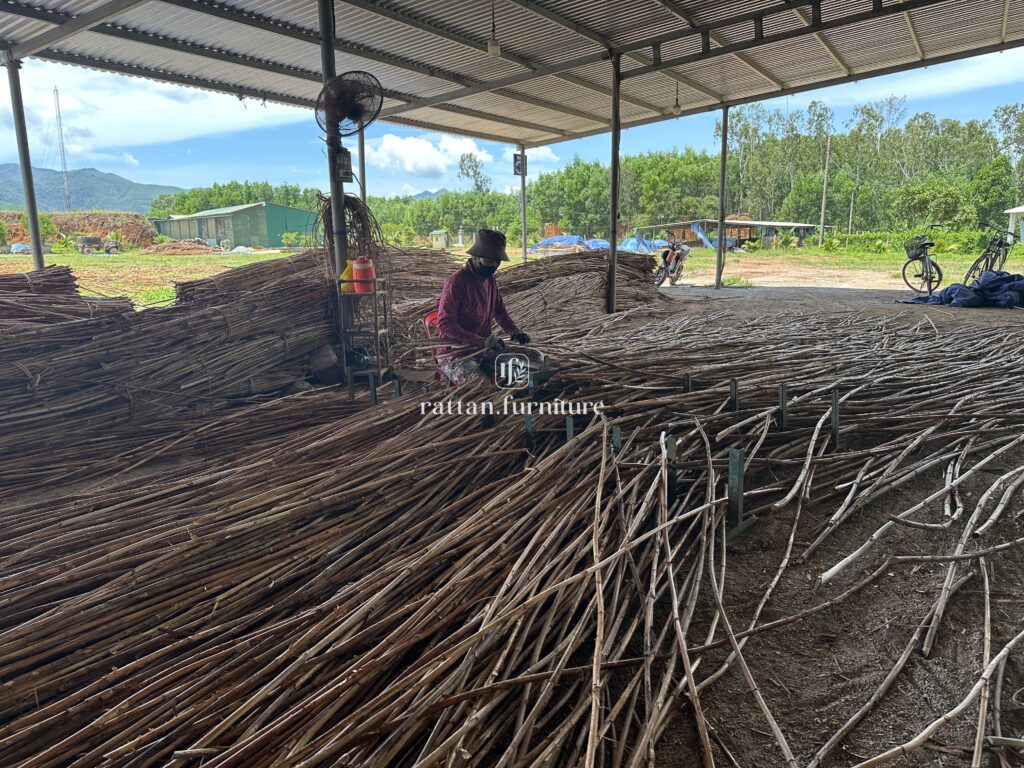
- Correct moisture content and proper curing/drying before packing (naturally sun-dried rattan retains strength well; over-dried or poorly cured cane fails).
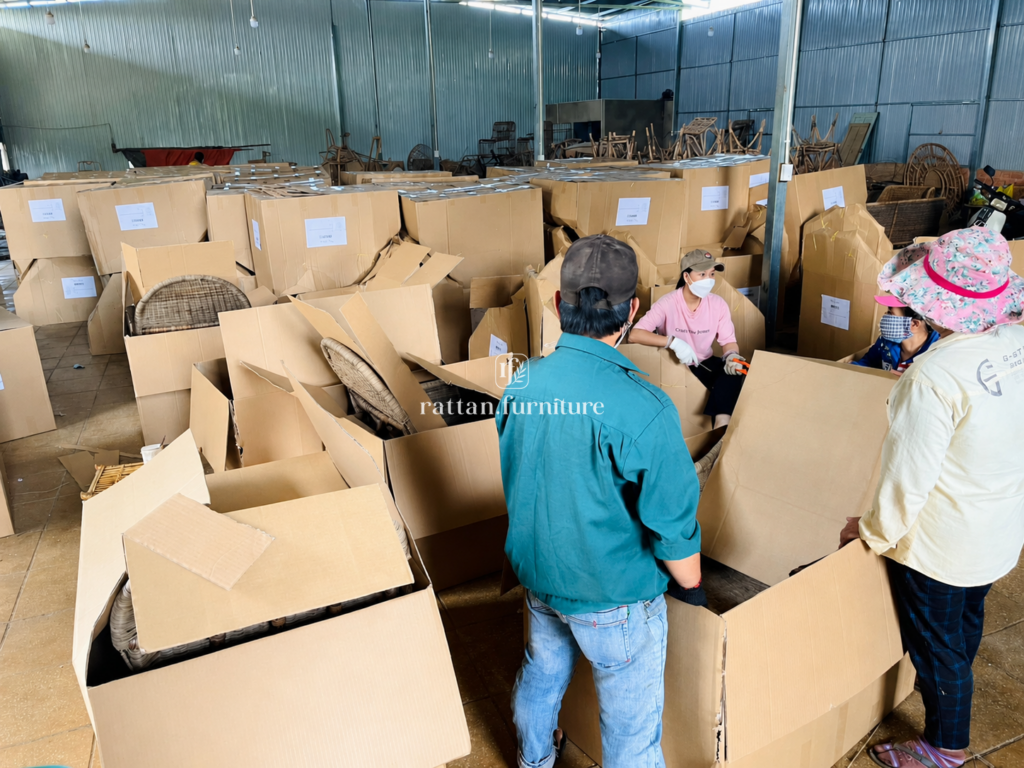
- A pre-shipment inspection (yours or a third-party agency) with an AQL standard agreed in advance.
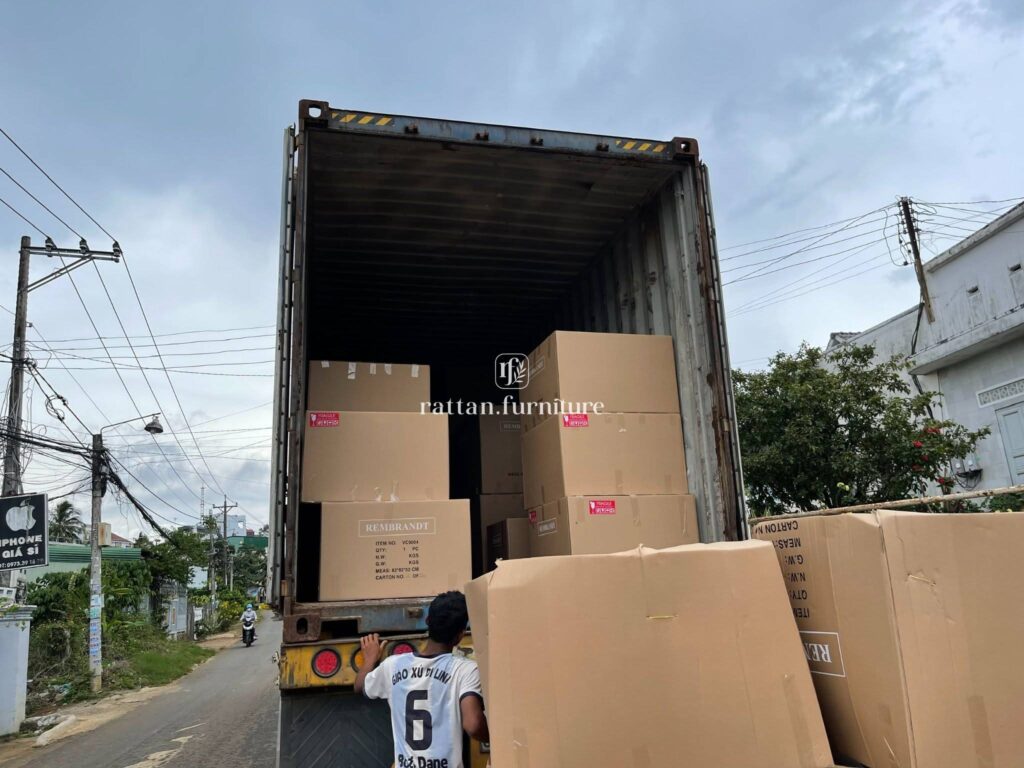
- Protective packing with desiccants and container liners for humidity control.
- Photos/video of the actual production run, not catalogue images.
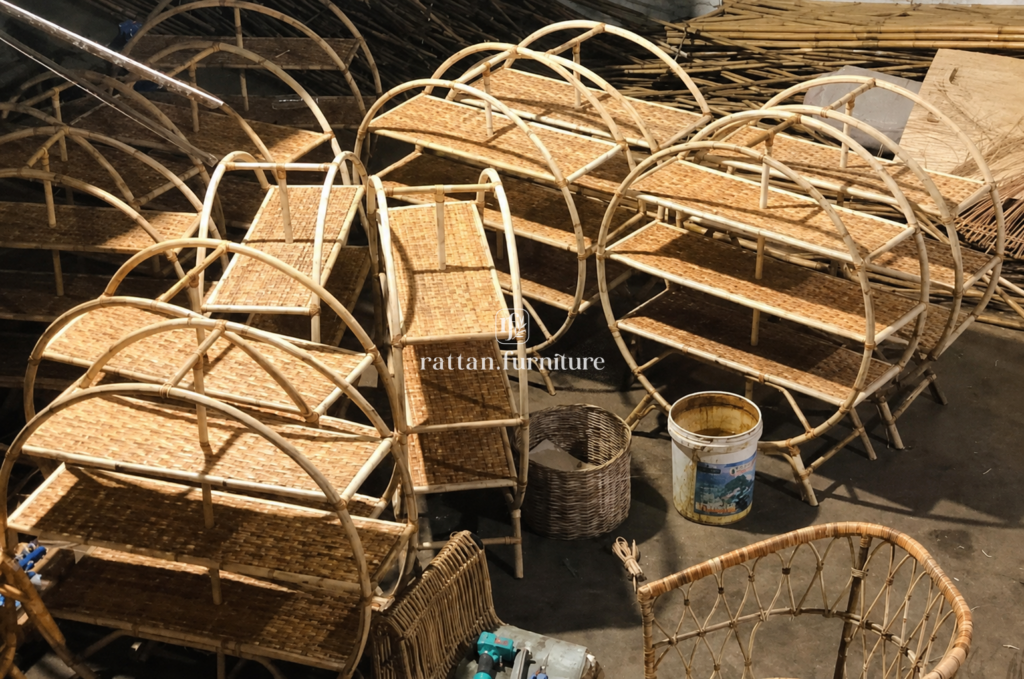
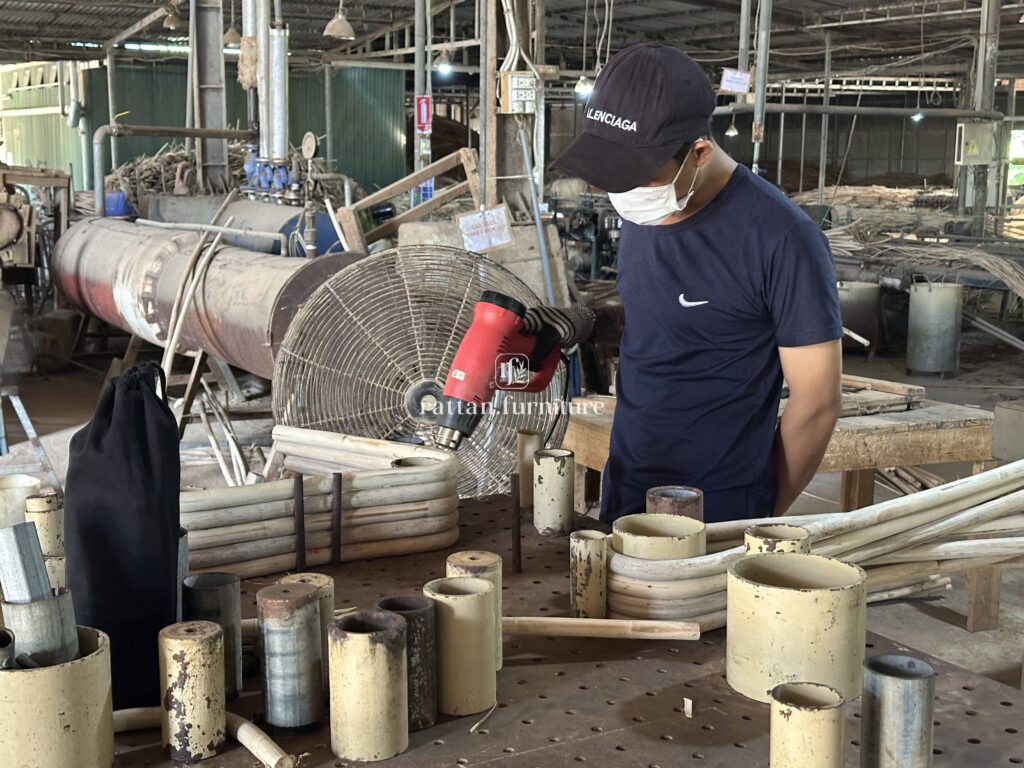
A maker who is transparent about treatment (flame bending, sun-drying, curing) and shows real footage is easier to trust here than one who only sends polished photos.
Step 7 – Shipping, lead time and a landed-cost example
Most rattan ships by sea in full containers (FCL) or as consolidated cargo (LCL) for smaller orders. As a rough guide, ocean freight from Ho Chi Minh City to the US West Coast was around US$2,400-3,800 per 40-foot container in 2026; lanes to Europe vary with fuel and capacity. Build in production lead time plus 3-6 weeks transit, and for the US remember the Importer Security Filing (ISF, ’10+2′) must be filed before the vessel loads.
A simplified landed-cost sketch for a US buyer (illustrative only):
| Line item | Example |
| Goods (FOB, 500 chairs @ $80) | $40,000 |
| Ocean freight (1x40ft) | ~$3,000 |
| Insurance | ~$150 |
| US duty (0% base + ~12.5% surcharge, on customs value) | ~$5,000 |
| Customs broker / fees | ~$250 |
| Approx. landed cost | ~$48,400 |
Quick import checklist
- Confirm natural vs synthetic, and the exact HS/HTS code
- Vet a direct manufacturer; verify factory, references and certifications
- Agree Incoterm (usually FOB Cat Lai), MOQ, lead time, payment and QC terms
- Check the live duty rate for your market and code with a broker
- Line up documents: invoice, packing list, B/L, Certificate of Origin, fumigation/phytosanitary
- Confirm EUDR position (natural rattan out of scope) and any wood-component caveat
- Book a pre-shipment inspection; specify moisture, packing and desiccants
- File ISF (US) and insure the cargo
Why buyers choose Rattan.Furniture
If you want genuine natural rattan, handled by people who understand export, Rattan.Furniture is built for it:
- A direct manufacturer – factory pricing and production you can audit, not an agent’s mark-up.
- 100% natural rattan, handwoven by 765 skilled artisans across 5.4 hectares of facilities in Bình Định and Gia Lai.
- Certificates of Origin under EVFTA, CPTPP and UKVFTA to lower your duties; ships FOB Quy Nhơn or Cat Lai.
- Natural rattan’s favourable EUDR position, explained honestly for EU buyers.
- Real hospitality projects and published factory footage – proof, not promises.
- OEM/ODM with custom designs, finishes and branded packaging.
Frequently asked questions
What is the import duty on rattan furniture from Vietnam?
It depends on your market and the live surcharge regime. Most rattan furniture has a low or zero base rate; the US added a ~10-12.5% surcharge in mid-2026, while EU/UK/CPTPP buyers can often reach 0% via preferential origin. Always confirm your exact code with a broker.
Do I need a Certificate of Origin?
To claim preferential (often 0%) duty under EVFTA, UKVFTA or CPTPP, yes – it’s the document that unlocks the saving. For the US it also supports your ‘made in Vietnam’ origin claim.
Is natural rattan affected by the EUDR?
No – rattan is not among the seven EUDR commodities, and a 2026 draft act explicitly excludes bamboo/rattan-only products. Watch for wood components, which can still fall in scope.
How do I stop rattan arriving mouldy?
Insist on proper drying/curing, a pre-shipment inspection, and packing with desiccants and container liners. Transparency about the treatment process is a good sign.