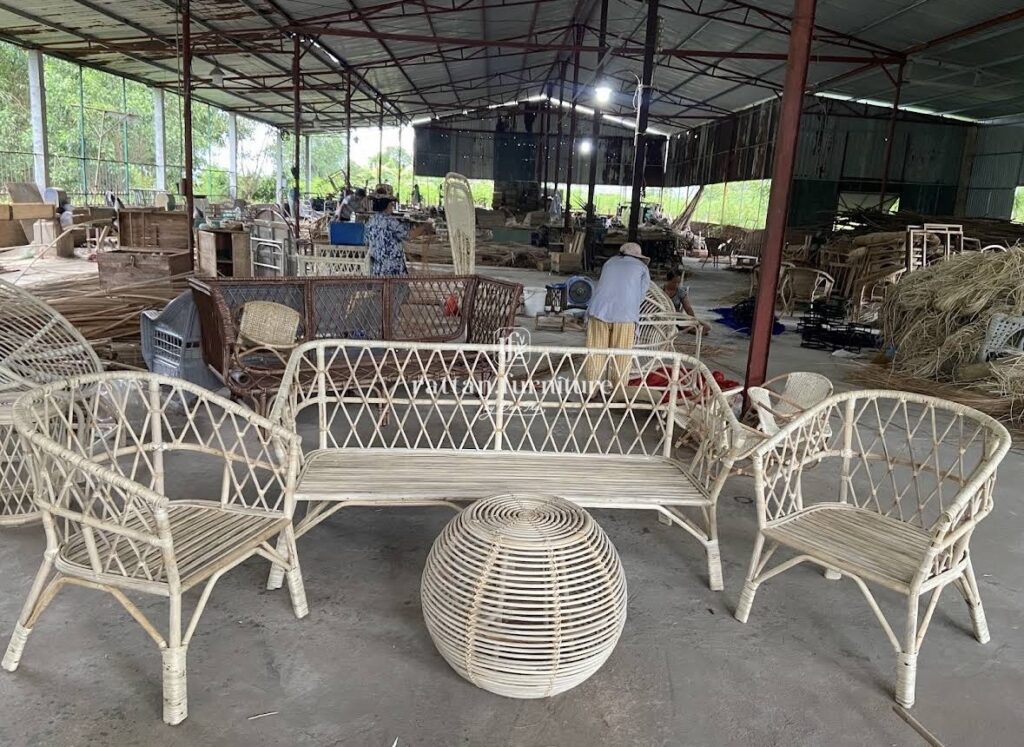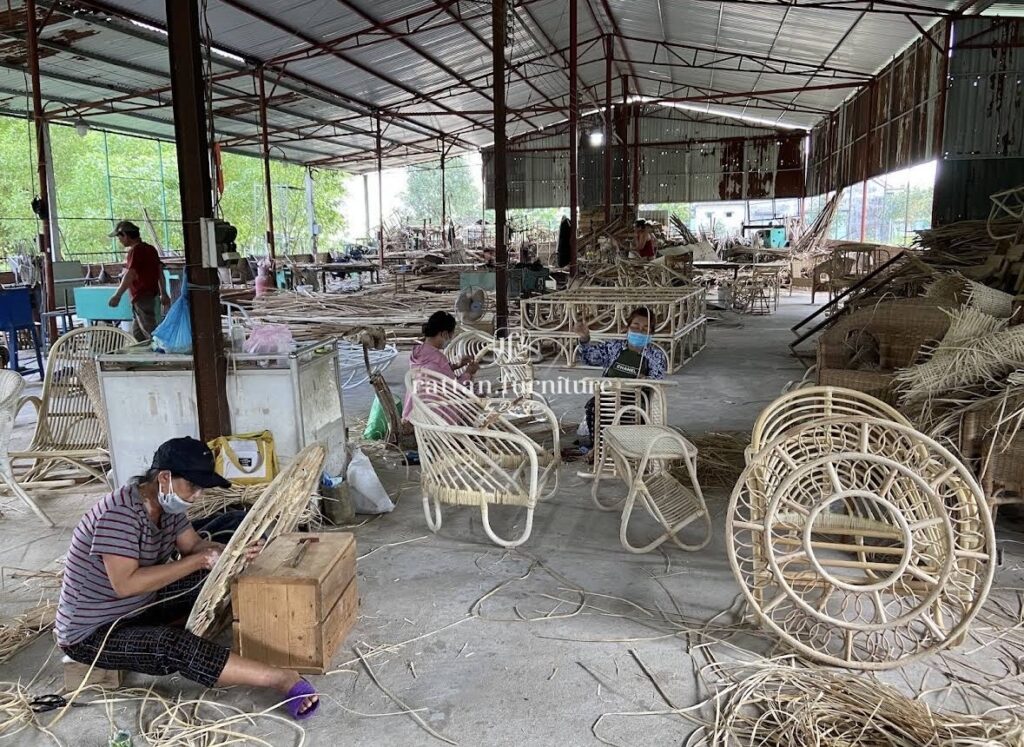
For European importers weighing Moroccan palm-leaf basketry against Vietnamese natural rattan, the choice is less a price contest than a question of category. Morocco sells cultural accessories with short lead times; Vietnam supplies load-bearing furniture, lighting and basketry at industrial scale. The two origins compete head-on only in baskets and small décor, and even there the cost structures diverge sharply.
Key takeaways for buyers
- Scale: Vietnam’s rattan, bamboo, sedge and carpet exports topped US$804 million in 2024, roughly six times Morocco’s entire handicraft export bill for 2025 (about US$130 million).
- Momentum: Moroccan basketry is a shrinking niche, at about 8% of handicraft exports and down 23% year on year in the first nine months of 2025.
- Material: Moroccan weavers work doum palm, date-palm leaf and raffia; Vietnamese factories work rattan cane, core and peel, plus bamboo, sedge and water hyacinth. Only rattan carries structural loads.
- Labour cost: Morocco’s 2026 statutory minimum wage is about US$342 a month, against roughly US$140–200 in Vietnam.
- Logistics: Morocco reaches Spain in about two days by sea; Vietnam ships in roughly four to six weeks but offers EVFTA preferential origin and mixed-category containers.
- Bottom line: dual-source. Keep Morocco for fast-turn summer accessories; anchor furniture, lighting and volume basketry in Vietnam.
Market size: a niche versus an industry
Vietnam ranks among the world’s five largest rattan and bamboo exporters; in Morocco, basketry is a minor line within a craft sector led by pottery and carpets.
| Indicator | Morocco | Vietnam |
| Latest annual exports | All handicrafts, 2025: MAD 1.232 billion (≈ US$130 million) | Rattan, bamboo, sedge and carpets, 2024: over US$804 million, up 9.66% |
| 2025 trend | Handicrafts +11%; basketry −23% (Jan–Sep) | US$574 million in Jan–Aug, +5.4% |
| Weight of woven goods | About 8% of handicraft exports (Jan–Jul 2025) | Highest export value among Vietnam’s non-timber forest products |
| Leading categories | Pottery and stone (36%), carpets, traditional clothing | Rattan furniture, baskets, décor, sedge, carpets |
| Main destinations | US (49%), France (≈11%), Turkey | US, Japan, EU (notably Spain), UK |
| Production base | Marrakech, Casablanca, Fès, Tangier | 1,000+ rattan and bamboo craft villages, 24% of all craft villages nationwide |
For a procurement team, the implication is straightforward. Morocco’s woven-goods supply base is small and contracting, while Vietnam’s is a state-backed export industry with factory capacity behind it.
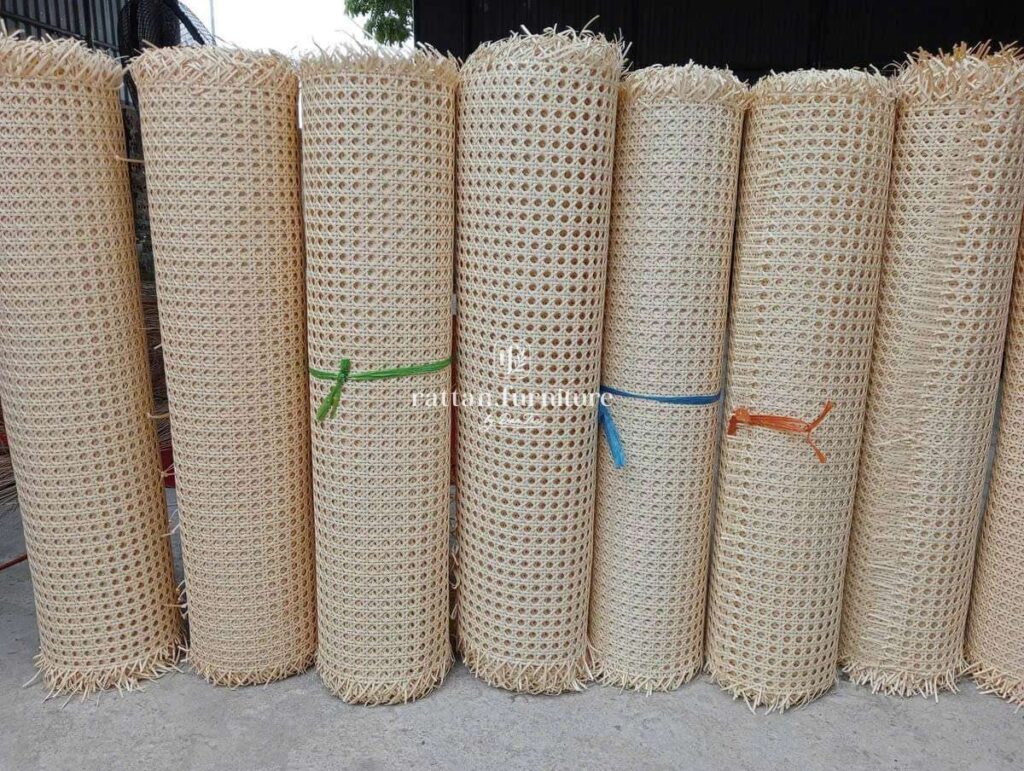
Fibres and raw-material supply
Morocco weaves leaves and grasses: soft, light and suited to carried goods. Vietnam weaves rattan stems and bamboo: rigid, heat-bendable and able to bear weight.
| Fibre | Origin | Source | Properties | Typical end use |
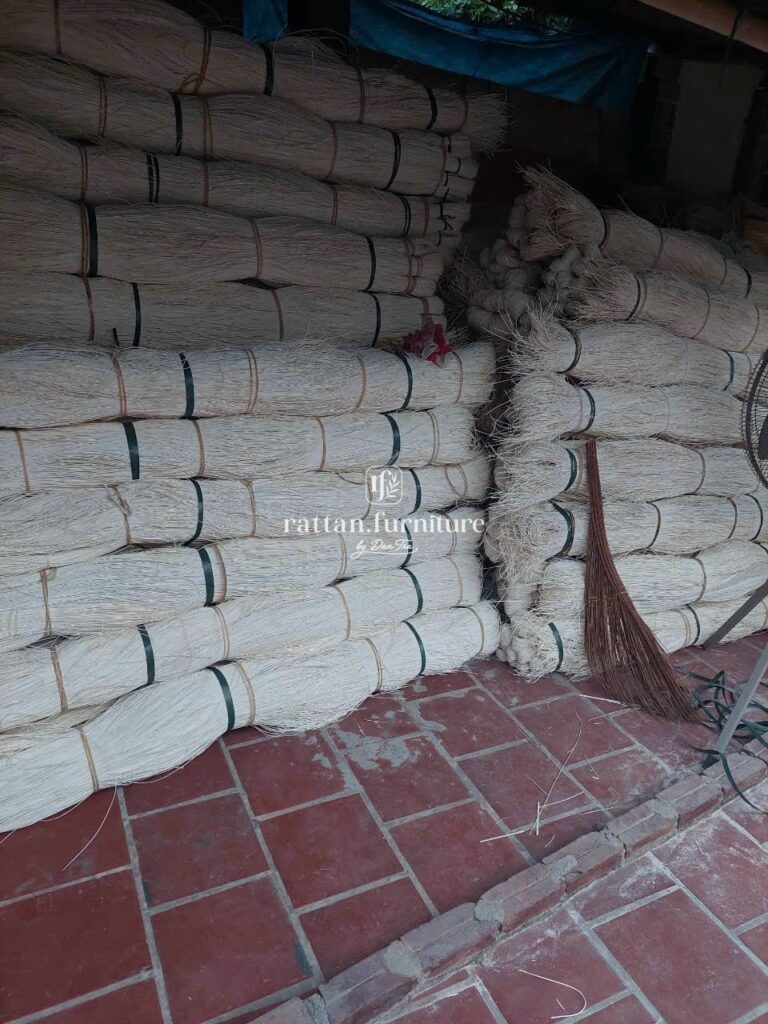
| Doum (dwarf palm) | Morocco | Wild stands around Fès and southern valleys, harvested dry | Braided into strips, coil-stitched; natural beige-grey-green tones | Market baskets, totes, lidded bread baskets |
| Date-palm leaf | Morocco | Palm groves around Essaouira and Marrakech | Sun-dried from green to gold | Shopping baskets, placemats, hats |
| Raffia | Morocco | Sun-dried, kept in fine strips | Soft, takes embroidery | Décor baskets, bags, fringing |
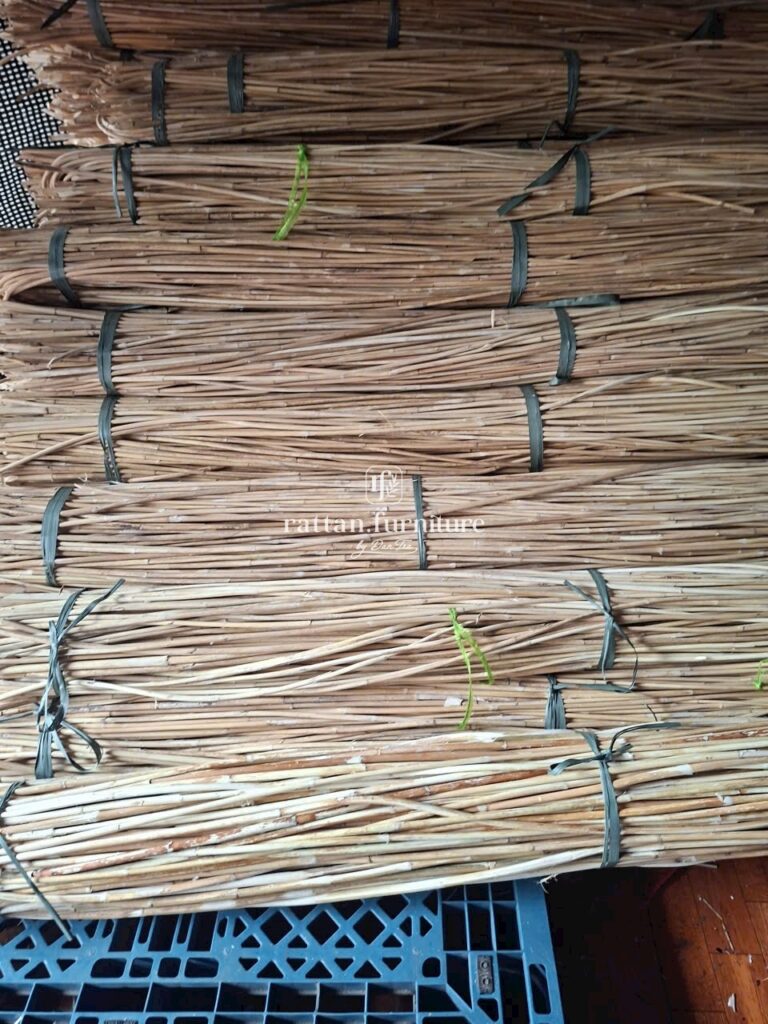
| Rattan (cane, core, peel, poles) | Vietnam | World’s third-largest rattan resource after Indonesia and Malaysia | Flexible when heated, high load-bearing | Sofas, chairs, tables, cabinets, swings, lighting, baskets, cane webbing |
| Bamboo | Vietnam | Plantations across much of the country | Rigid, fast-renewing | Frames, lighting, homeware |
| Sedge, water hyacinth | Vietnam | Coastal and delta regions | Soft, low cost | Baskets, rugs, storage |
Supply risk. Vietnam’s domestic rattan stock is estimated at only around 40,000 tonnes and supply is volatile; Indonesia and Laos restrict exports of raw rattan. Producers that control licensed harvesting areas therefore hold a material advantage over workshops buying through middlemen. Morocco’s doum is largely gathered wild and seasonally by rural households, which caps volume and consistency.
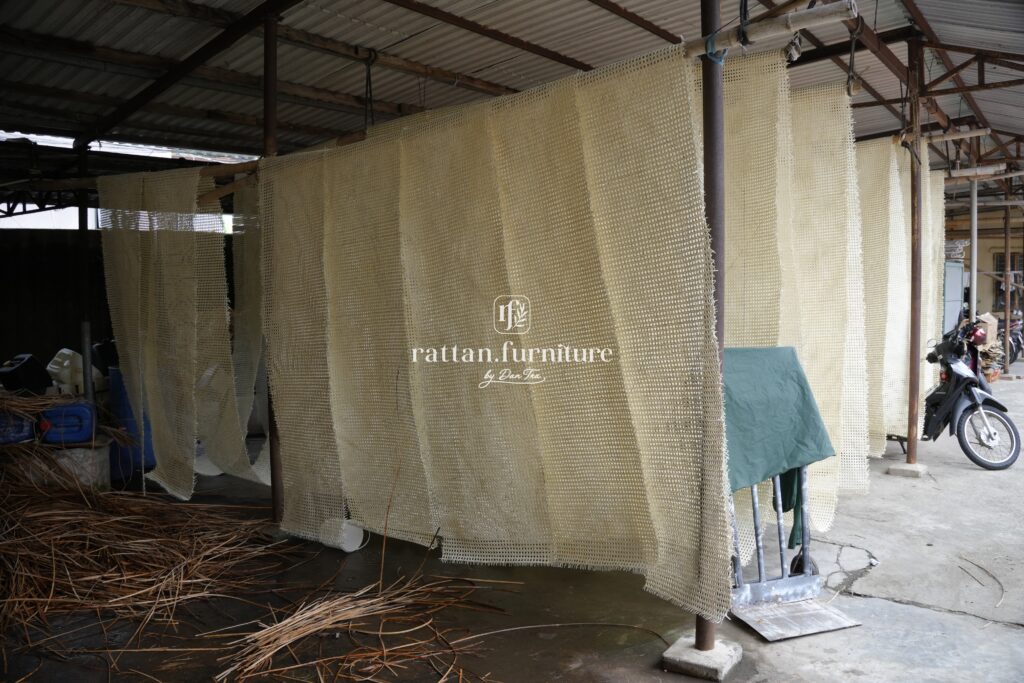
Flagship product lines
Morocco sells a cultural story on small items. Vietnam sells durability and volume across furniture and accessories alike.
Morocco
- Palm-leaf market baskets and beach totes, usually with leather handles: the signature product, heavily seasonal.
- Berber lidded bread baskets with coloured wool, typically finished by women working from home.
- Palm placemats with raffia fringe; nested raffia baskets.
- Premium tier: designer doum-and-leather bags, with some cooperatives holding ethical-trade audits such as Sedex.
Vietnam
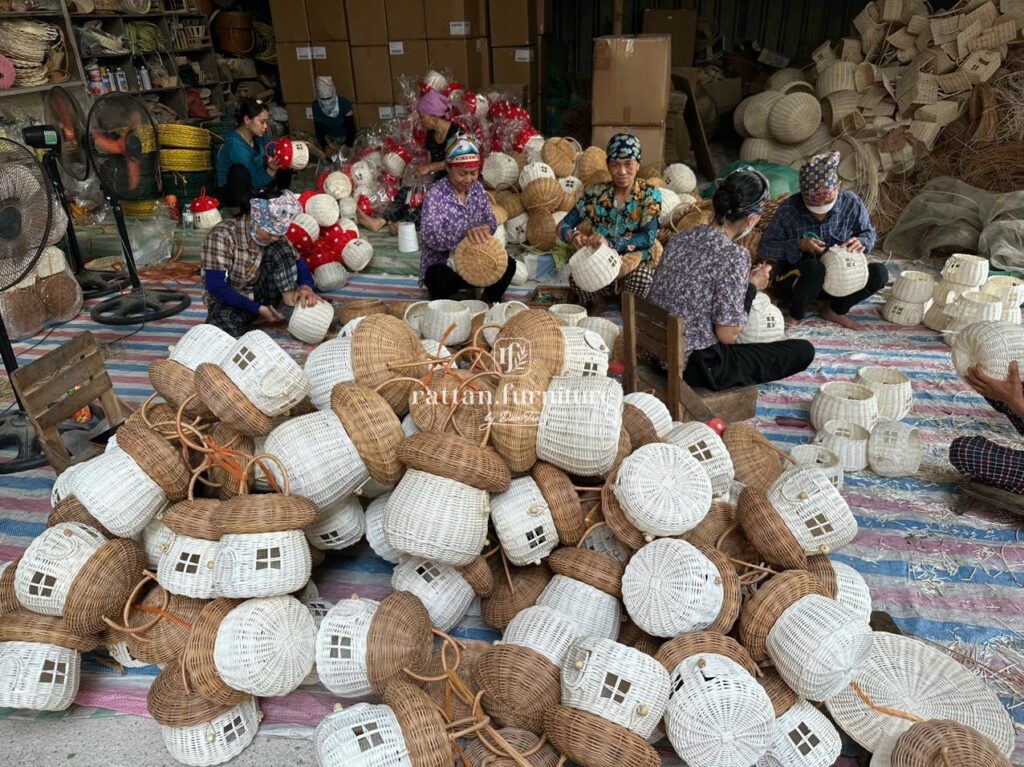
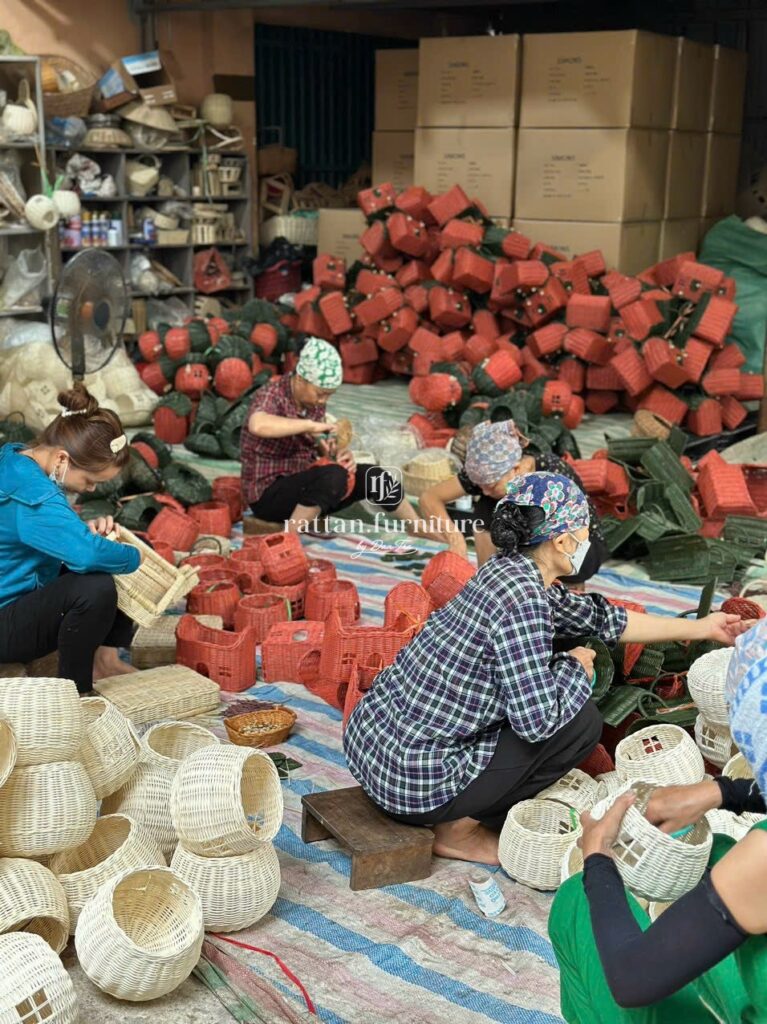
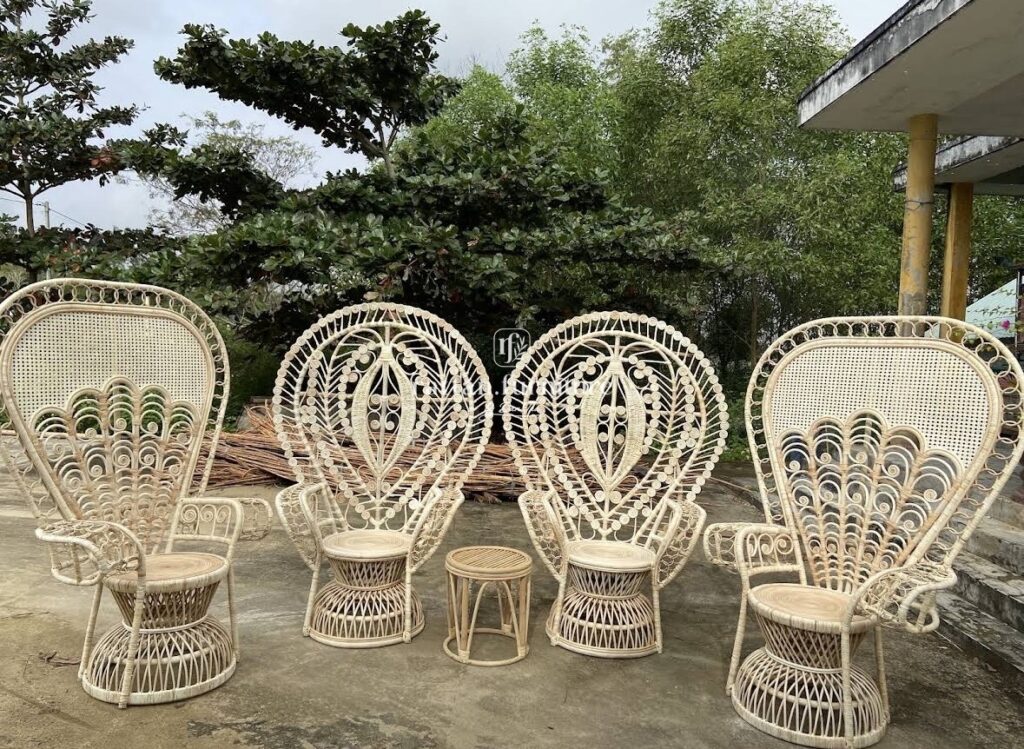
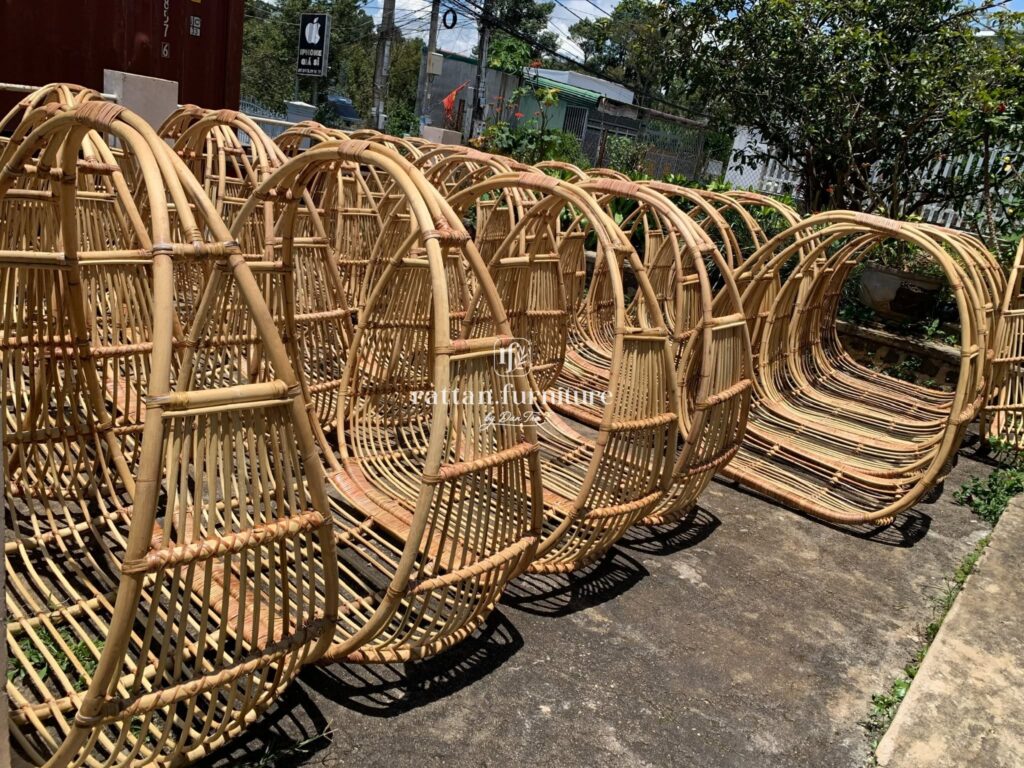
- Natural rattan furniture: sofa sets, café, rocking, papasan and peacock chairs, tables, stools, cabinets, swings.
- Rattan pendant lamps and shades, a high-value line for hotels and restaurants.
- Rattan, bamboo, sedge and water-hyacinth baskets, trays and storage: the direct competitor to Moroccan basketry.
- Semi-finished material: cane webbing, rattan poles, core and peel, a category Morocco does not supply.
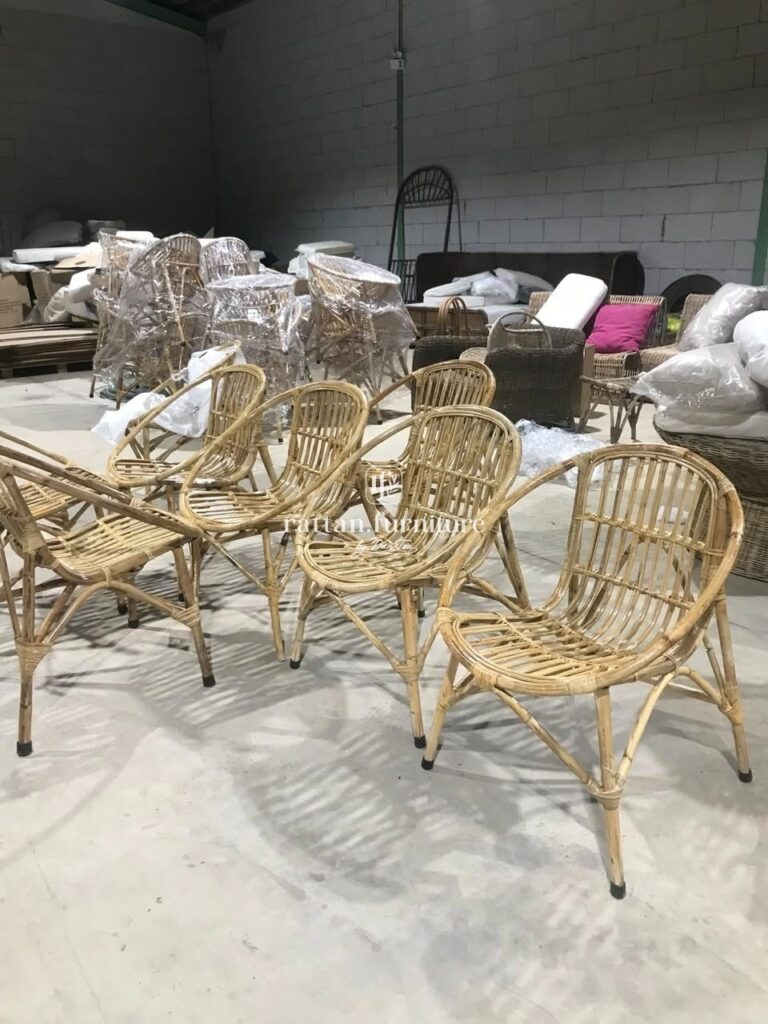
The overlap is narrow. In furniture, lighting and raw rattan, Vietnam faces effectively no Moroccan competition.
Head-to-head: comparable products and price points
In like-for-like basketry, Morocco’s entry price sits in plain palm baskets without leather trim; Vietnam competes on lower ex-works cost and the greater durability of rattan.
Directly comparable lines (Moroccan figures are retail or wholesale prices observed on international marketplaces)
| Product pair | Morocco: material, observed price | Vietnam: material | Edge |
| Market basket with handles | Palm leaf, leather handles; US$16–24 on promotion, US$46–72 list | Rattan or water hyacinth, rattan handles | Morocco on recognition; Vietnam on durability and shape retention |
| Lidded storage basket | Palm and wool Berber basket; US$34–40 retail | Lidded rattan basket | Vietnam on wholesale price and volume |
| Bread-basket set | Set of two palm baskets; US$50 suggested retail | Rattan tray and basket set | Even; Morocco’s coloured wool is distinctive |
| Premium tote | Doum and cowhide; €97–150 retail | Limited overlap | Morocco |
Cost structure
| Factor | Morocco | Vietnam |
| Statutory minimum wage, 2026 | MAD 3,422.72/month, ≈ US$342 | VND 3.70–5.31 million/month by region, ≈ US$140–200 (at ~VND 26,300/US$) |
| Raw material | Wild palm leaf, cheap but gathered piecemeal | Rattan costs more than palm leaf, offset by product value and lifespan |
| Production model | Cooperatives and households; leather finishing in city workshops | Factories and craft clusters, batch production |
| Sea transit to EU | ≈ 2 days to Spain | ≈ 4–6 weeks (estimate) |
Morocco wins on speed and short-haul freight. Vietnam wins on ex-works price, volume and range, and on seasonal programmes booked ahead the ex-works saving generally absorbs the longer transit.
Strengths and weaknesses
Morocco’s advantages are geography and cultural brand; Vietnam’s are scale, material and manufacturing depth.
| Morocco | Vietnam | |
| Strengths | Days from EU ports; EU–Morocco Association Agreement in force since 2000 Strong Berber storytelling High value-add from leather, wool and embroidery Women’s-cooperative narrative | Top-five global exporter Rattan bears loads, enabling furniture Lower labour cost Broad fibre and product range EVFTA and UKVFTA preferential origin OEM track record with major retailers |
| Weaknesses | Basketry ≈ 8% of craft exports and falling Small items, little furniture Fragmented output, uneven consistency at volume Rising minimum wage | Long sea transit Volatile rattan supply, import dependence Many small workshops lack certification and own brands Mould risk if drying is poorly controlled |
Vietnam’s weaknesses are manageable at company level through controlled raw-material sourcing, batch moisture testing and buying direct from the factory. Morocco’s limits on range and scale are structural.
Analysis: think in categories and landed cost, not origin
The most useful question for a European buyer is not “Morocco or Vietnam?” but “which origin for which line, on which calendar?”
1. Split the range by function. Products that must carry weight — seating, shelving, swings — belong with rattan, and therefore with Vietnam. Products sold on texture and story — summer totes, bread baskets — can stay Moroccan, where the cultural premium is real.
2. Match origin to the buying calendar. Morocco’s two-day crossing suits replenishment and late-season reorders. Vietnam suits planned programmes: spring and summer collections booked in autumn, hospitality fit-outs scheduled months ahead.
3. Compare landed cost, not unit price. A fair comparison adds freight, insurance, duty under the applicable preference (EVFTA for Vietnam, the Association Agreement for Morocco — verify rates by HS code), inspection and inventory carrying cost. Container consolidation narrows Vietnam’s freight disadvantage: furniture, lighting, baskets and raw cane can share one shipment.
4. Price the risk of inconsistency. Hand-gathered palm and household production deliver charm but variable sizing. For retailers running planograms, or hotels ordering 200 identical chairs, batch consistency has a monetary value that rarely appears in a unit quote.
5. Watch the compliance horizon. Retail buyers increasingly ask for social-audit and chain-of-custody documentation. Natural rattan currently falls outside the EUDR commodity scope (verify per your market), a practical advantage over timber furniture as due-diligence requirements tighten.
Our view: Moroccan basketry’s 2025 contraction is a signal for buyers who rely on it for core volume. A Vietnamese rattan supplier with factory capacity offers resilience, while Morocco remains a sensible complement for fast, story-led accessories.
Why European buyers source natural rattan from Vietnam
Vietnam lets an importer buy coordinated furniture and accessories in natural rattan, at competitive ex-works cost, with full preferential-origin paperwork, from a single supplier.
- A furniture-grade fibre. Heat-bent rattan supports sofas, chairs and cabinets — a category palm leaf cannot serve.
- Preferential origin. Goods shipped with an EVFTA Certificate of Origin (UKVFTA for the UK) qualify for tariff preferences; confirm the applicable rate for your HS code.
- EUDR positioning. Natural rattan sits outside the current EUDR commodity scope — verify per your market.
- Mixed-category containers. Baskets, lighting, seating and raw cane in one shipment lower the entry threshold for small and mid-sized retailers.
- Cost headroom. Minimum-wage levels roughly 40–60% below Morocco’s leave room to absorb longer freight on seasonal orders.
- Consumer fit. European demand favours natural, handmade products with traceable origin.
- Honest scope. Natural rattan is for indoor and covered spaces. Suppliers who state this up front spare buyers after-sales claims.
Why Rattan.Furniture by Dan Tra
Rattan.Furniture is a direct manufacturer of natural rattan products from its own factory, operating since 2014. It addresses the two risks buyers cite most often in Vietnamese rattan: unstable supply and inconsistent quality.
| Buyer concern | How Rattan.Furniture responds |
| Unstable rattan supply | Raw material drawn from multiple licensed harvesting zones in central Vietnam; supplies poles, core, peel and cane webbing |
| Trading-company opacity | Own factory of 5.4 ha (54,000 m²), 965 workers including 765 skilled rattan-weaving artisans |
| Capacity for large programmes | Publicly confirmed clients include IKEA and Walmart |
| Hospitality experience | Green Bay Phú Quốc Resort, The Signature Hotel Nha Trang, Calmette Hotel HCMC, Spa Bar Thảo Điền, Anmira Resort & Spa Hội An |
| Mould in long-haul shipping | Moisture-controlled drying plus per-batch moisture testing before packing; flame bending and sun-drying |
| High MOQs | Low, flexible MOQ: cane webbing from 20 rolls × 15 m; raw material and finished goods combinable in one order |
| Long production cycles | Lead time of 20 days |
| Preferential-origin paperwork | Phytosanitary certificate, HS classification, Certificate of Origin under EVFTA / UKVFTA, full export documentation |
| Commercial terms | FOB Cat Lai Port, Ho Chi Minh City Orders from US$5,000: 50% deposit, balance before shipment Below US$5,000 and samples: 100% in advance T/T or L/C |
Positioning against Moroccan supply. Rattan.Furniture does not replace the Berber palm basket. It supplies what Morocco cannot — furniture, lighting, raw rattan — and delivers basketry in consistent volume. Buyers can keep Morocco for quick-turn summer accessories and use Rattan.Furniture as the core source for indoor natural rattan.
Contact: +84 96 3333 776 (WhatsApp) · [email protected] · rattan.furniture
Importer checklist
- Classify each line by function: load-bearing furniture, lighting, or accessory.
- Request quotes and build landed cost to your warehouse, including duty under the applicable preference.
- Confirm Certificate of Origin type (EVFTA, UKVFTA or EUR.1 for Morocco) before the first shipment.
- Ask for moisture-control and pre-packing test procedures in writing.
- Order pre-production samples and agree size and colour tolerances for handmade goods.
- Check whether the supplier is a manufacturer or a trading company, and visit or video-audit the factory.