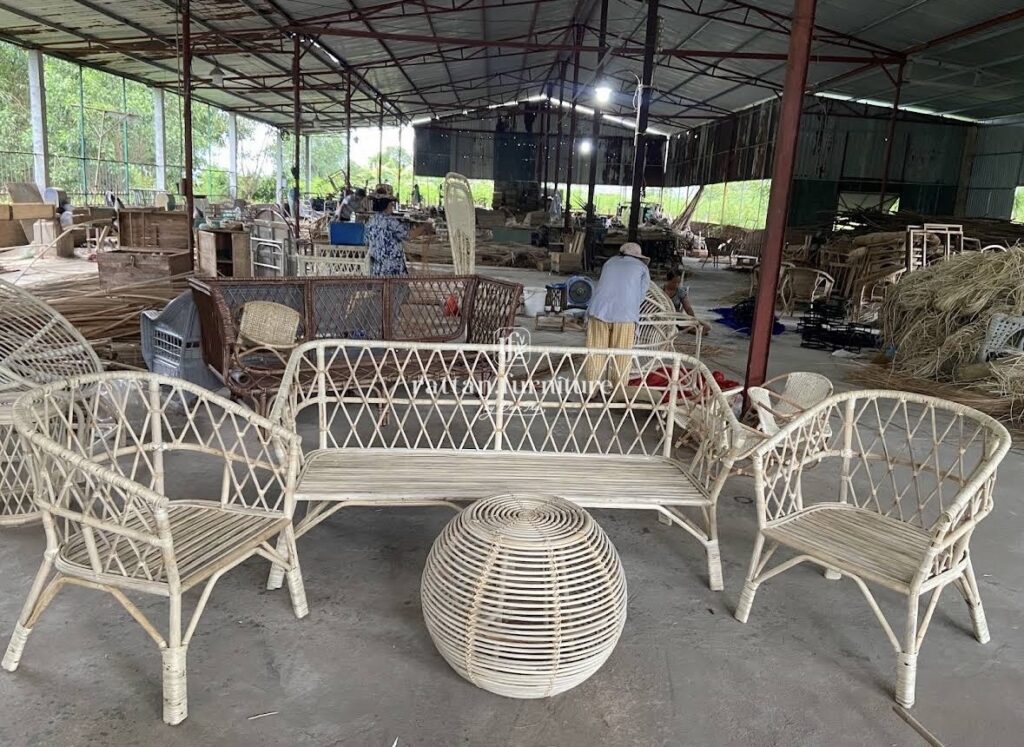
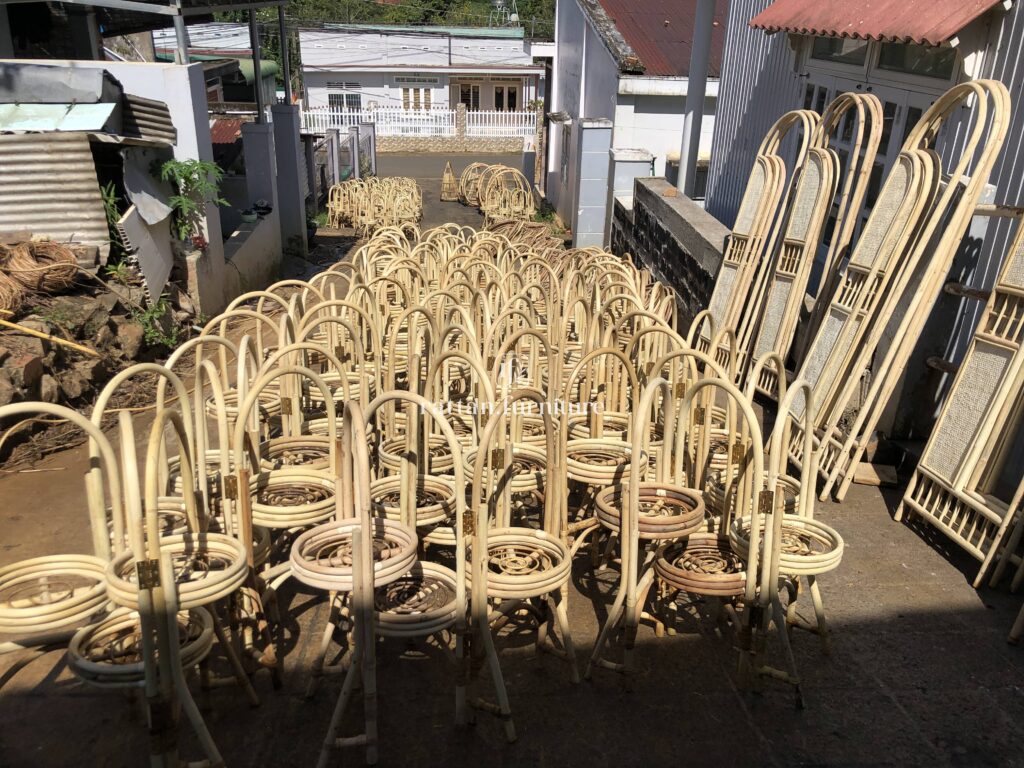
An objective overview for buyers who need natural rattan raw material, finished rattan products, or both — in a single, traceable supply chain.
Why buyers source rattan from Vietnam
Vietnam is one of the world’s primary origins for both raw rattan material and finished rattan goods. In the first nine months of 2024, the country’s exports of rattan, bamboo, sedge and carpet products reached about USD 594.8 million, up roughly 10% year-on-year, with the United States as the single largest destination (over USD 247 million, about 42% of the total), followed by Japan and the United Kingdom. Alongside China, Indonesia and the Philippines, Vietnam is one of the four largest global exporters in this category, shipping to more than 130 countries.
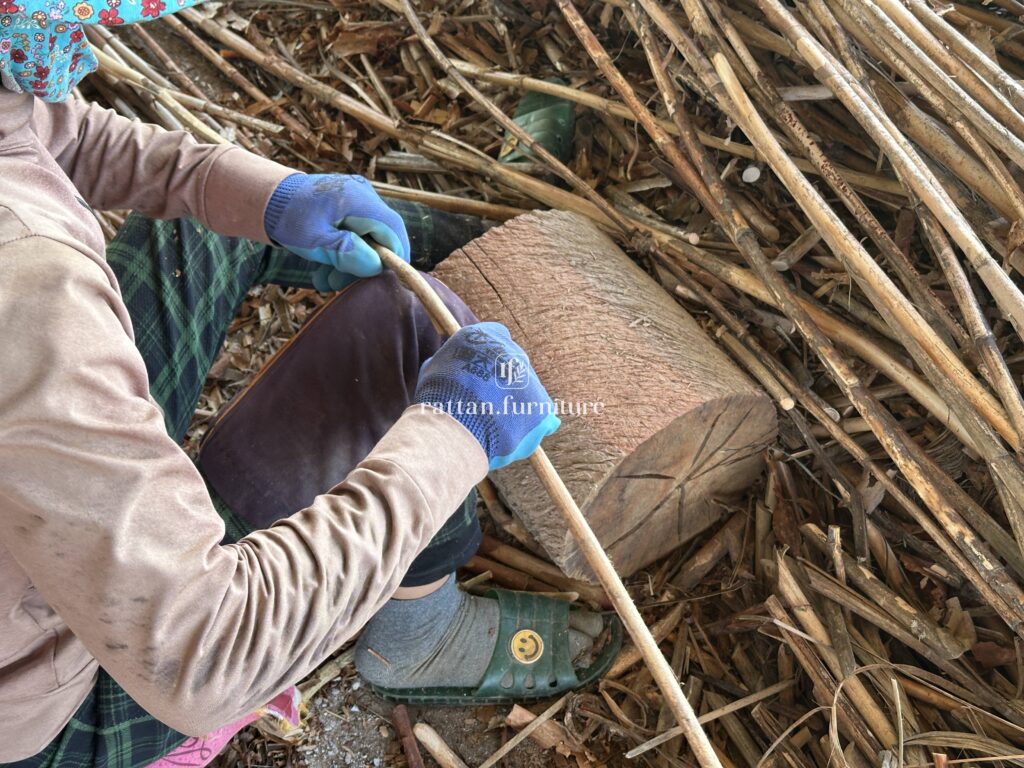
Two distinct buyer profiles drive this trade. The first needs raw or semi-finished material — rattan poles, rattan core (the flexible inner pith) and rattan cane webbing — to feed their own assembly lines or upholstery workshops. The second needs finished products: chairs, sofa sets, baskets, lampshades and décor ready to retail. A growing number of buyers need both, and a workshop that can consolidate material and finished goods into one FOB shipment removes duplicated freight, paperwork and supplier management. This guide profiles 5+ Vietnamese workshops — led by Rattan.Furniture — and sets out what to verify before issuing a purchase order.
From forest to finished piece: how a Vietnamese rattan factory actually works
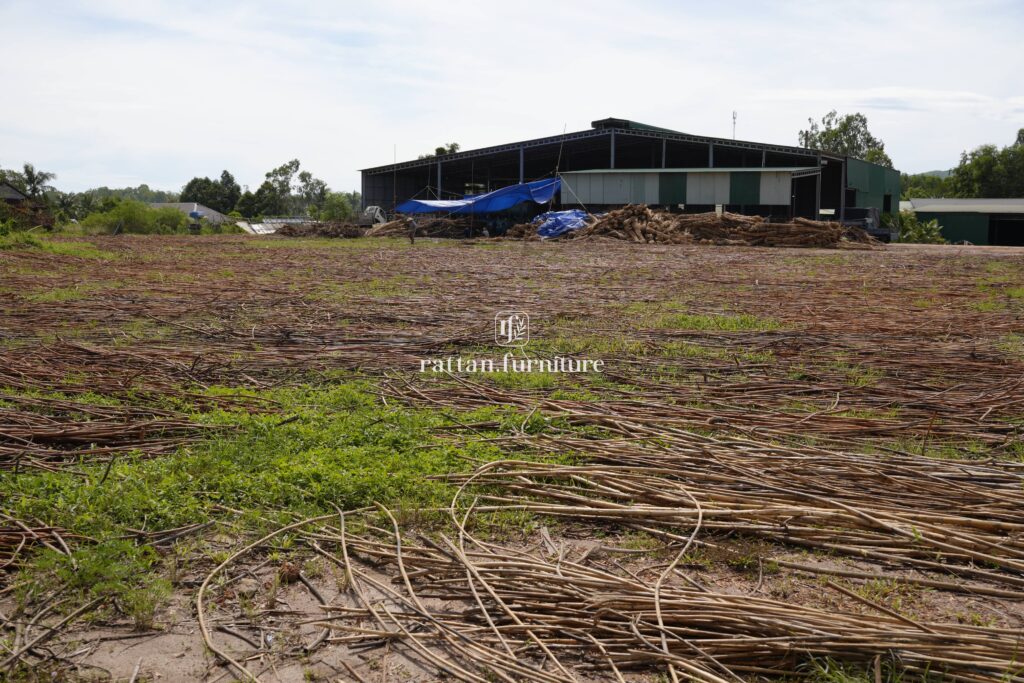
Understanding the processing chain helps buyers judge where a workshop adds value — and where raw material can be split off and sold as a stand-alone export line. Most natural-rattan operations move through the following stages:
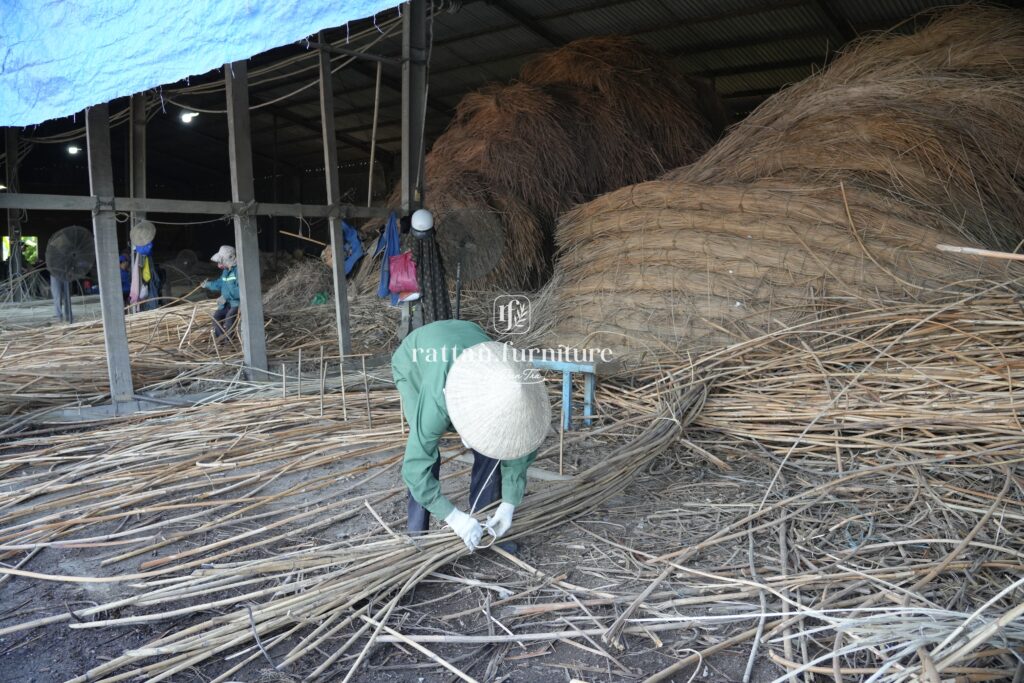
- Harvesting & field preparation. Canes are cut from rattan forest zones, then the thorny outer sheath and leaves are stripped and the poles are bundled for transport.
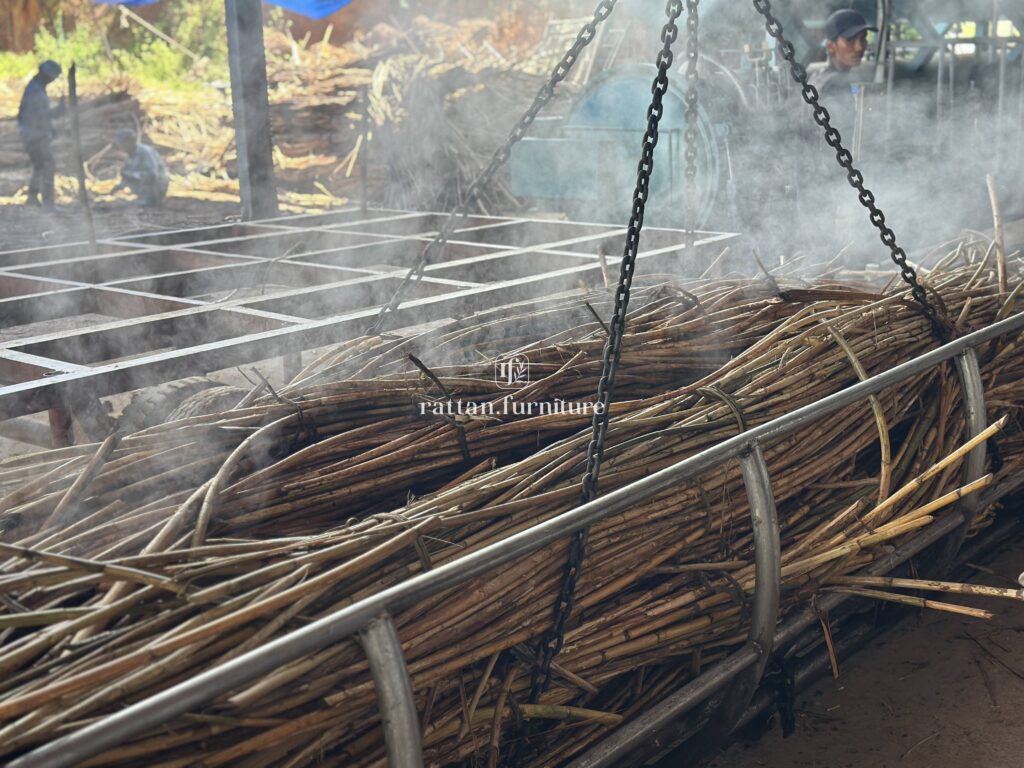
- Cleaning & curing. Canes are washed and cured to kill insects and larvae and to resist mould — traditional heat/oil curing can extend usable life from a few weeks to six months or more.
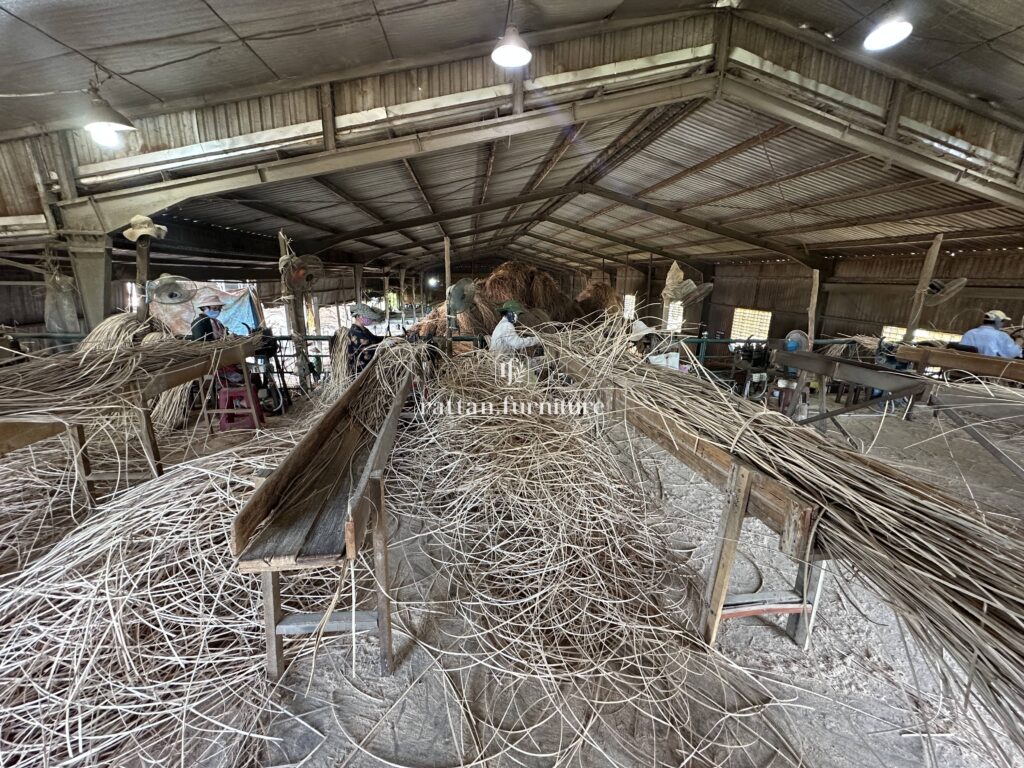
- Sorting & grading. Poles are graded by species, diameter and length, then separated into structural poles, core (inner pith) and peel (outer skin).
- Node scraping. Nodal bulges and the epidermal layer are scraped away for a smoother surface and faster, more even drying.
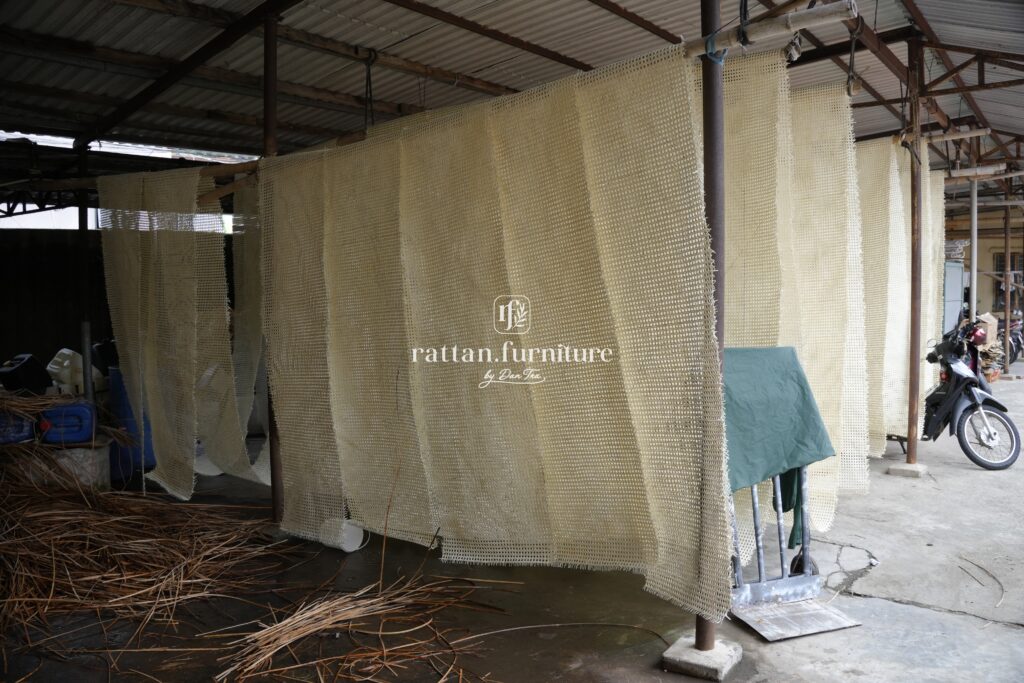
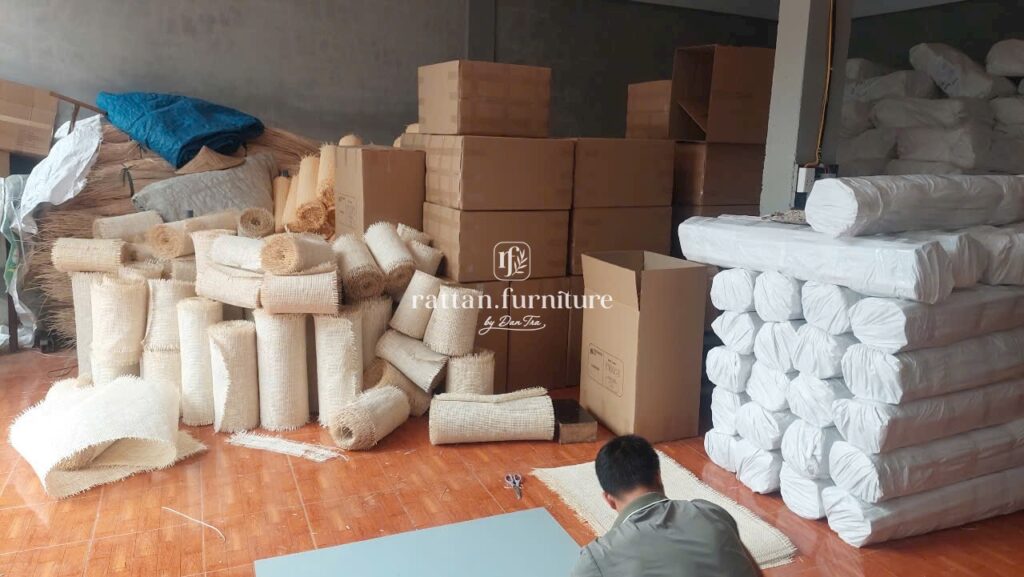
- Splitting. Splitter machines convert canes into peel (used to weave cane webbing) and core strands (used for weaving and binding). This is where a material-only export line — rattan core or webbing rolls — is created.
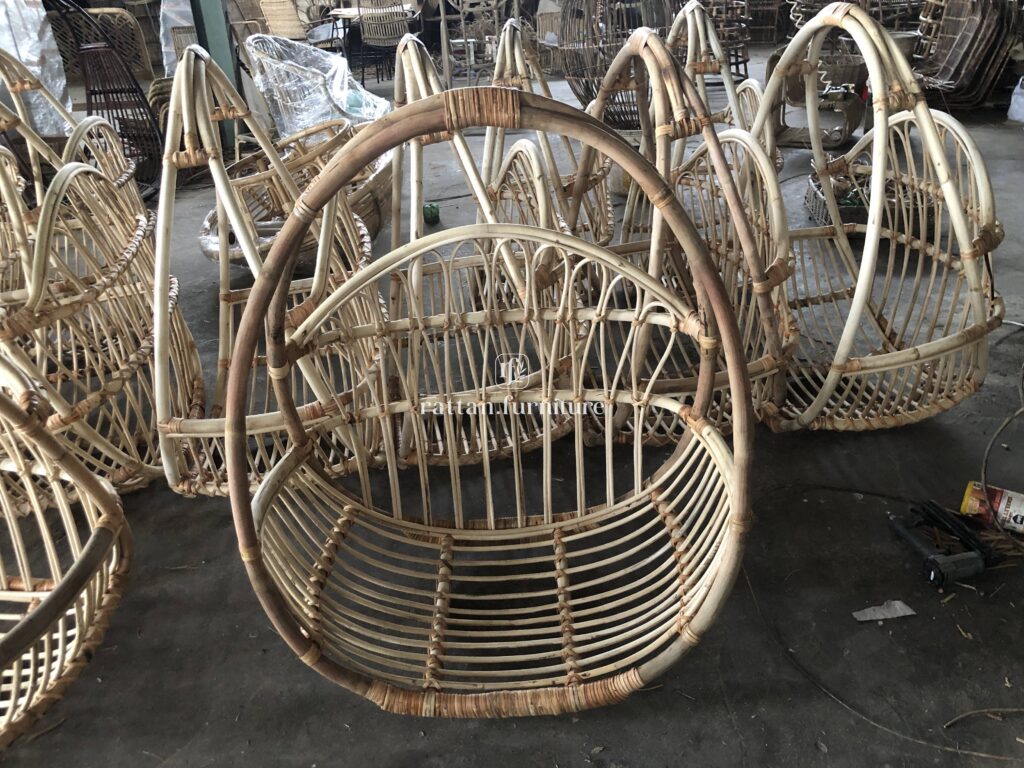
- Bending & framing. Poles are softened by open-flame heating or steaming, shaped on fixed moulds, then tied and cooled so they hold form without spring-back.
- Sun-drying. Components are dried under the sun, typically for two to three days, to stabilise moisture before weaving.
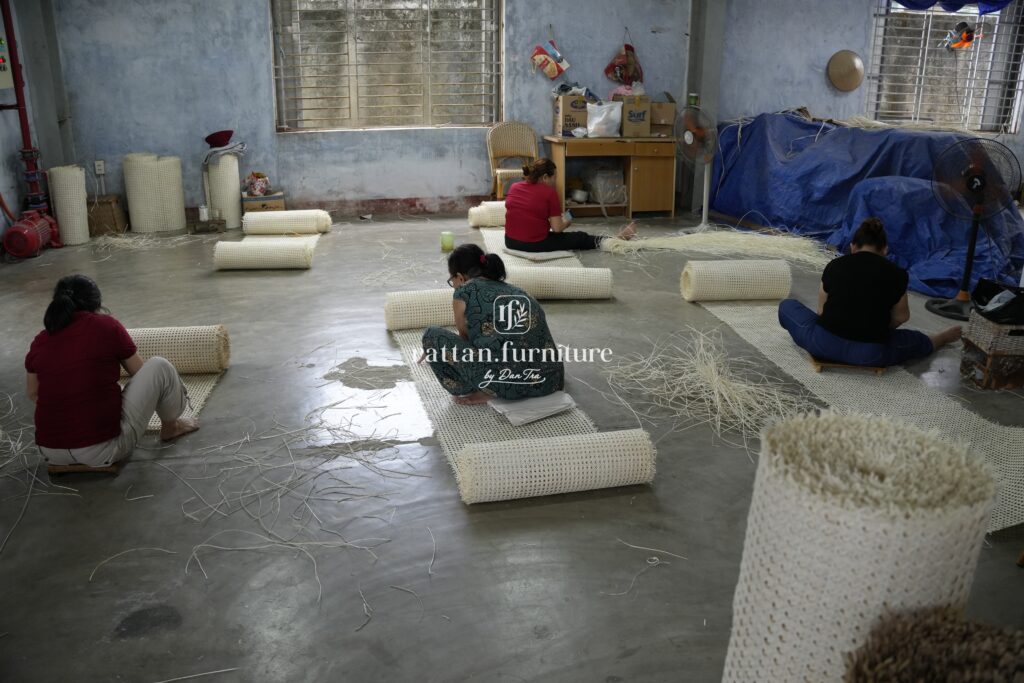
- Weaving & assembly. Skilled artisans weave peel and core over frames — peacock backs, shell (“ghế sò”) chairs, baskets, lampshades and more.
- Finishing & quality control. Sanding, colouring or varnishing, and inspection against the buyer’s spec sheet.
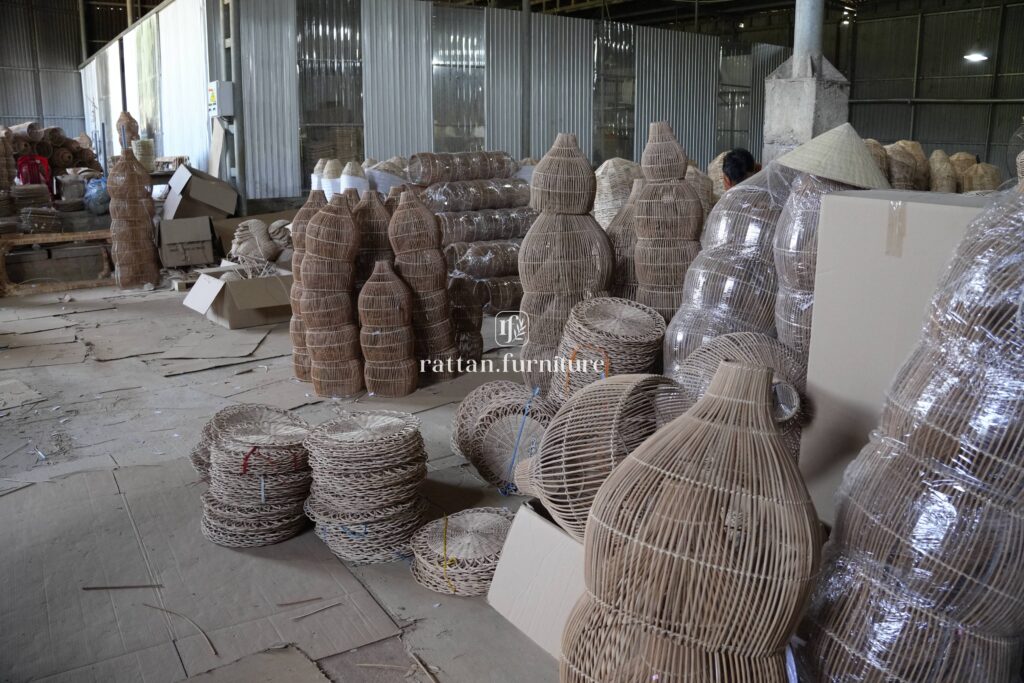
- Packing & export. Export-grade cartons, container loading, and dispatch on agreed Incoterms (typically FOB).
Because material can be diverted to sale at stages 3–5 (poles, core, webbing) or carried through to a finished piece, a fully integrated workshop can supply both from the same origin. That is the core reason a buyer can place a mixed material-plus-product order.
What to check before choosing a rattan factory
- Natural vs. synthetic. “Rattan” in a listing may mean natural plant cane or synthetic HDPE/PE “poly-rattan.” They are different material classes with different end-uses (indoor/covered vs. weatherproof outdoor). Confirm the material per item.
- Material + product capability. If you need cane, core or webbing as well as finished goods, confirm the workshop actually processes raw material in-house rather than buying finished pieces from third parties.
- Proximity to supply. Workshops near rattan forest zones tend to have shorter, more traceable input chains — useful for lead-time reliability and origin documentation.
- MOQ, lead time & payment terms. Ask for minimum order quantities per SKU, production lead time, and accepted terms (commonly T/T and L/C).
- Certifications & compliance. Where relevant, ask about social-compliance and chain-of-custody documentation. Note that natural rattan currently sits outside the EU Deforestation Regulation’s listed commodity scope (per the July 2026 delegated act) — a point worth confirming for EU-bound orders.
- Export terms & port. Clarify FOB port options, HS-code classification and any phytosanitary/fumigation treatment required by the destination market.
The Top 5+ rattan material & product factories in Vietnam
1. Rattan.Furniture — pure-natural material and finished products, in one Central-Vietnam source
Region: Central Highlands, close to licensed rattan forest zones. Established: 2018. Slogan: “Bring nature to your home.”
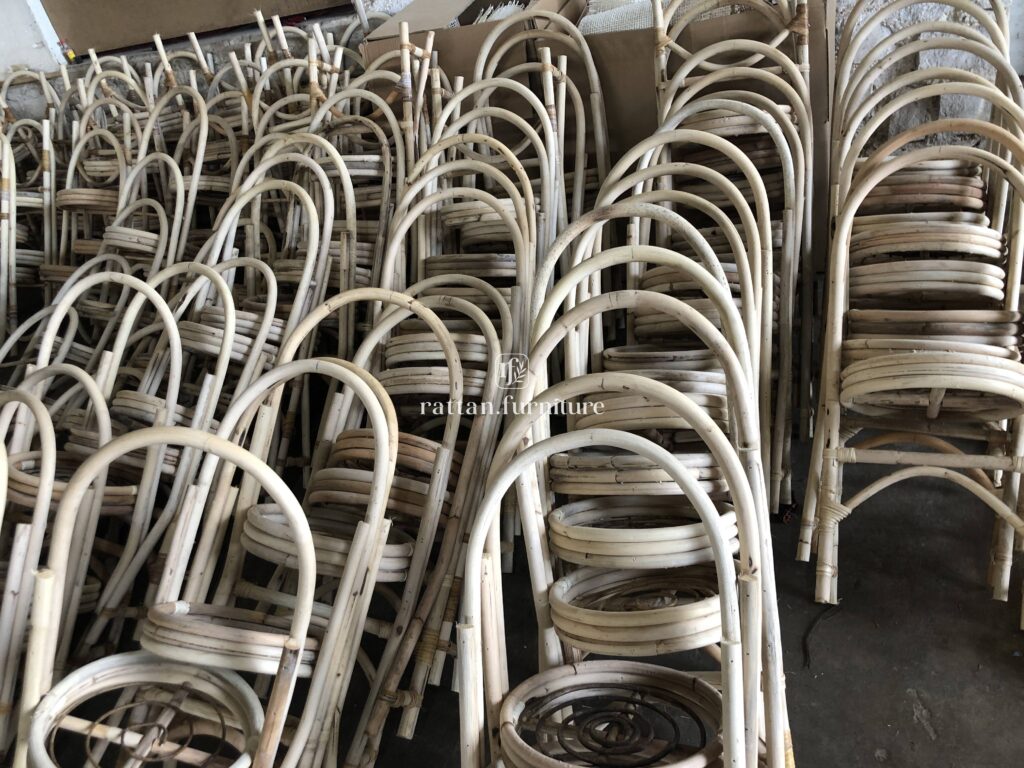
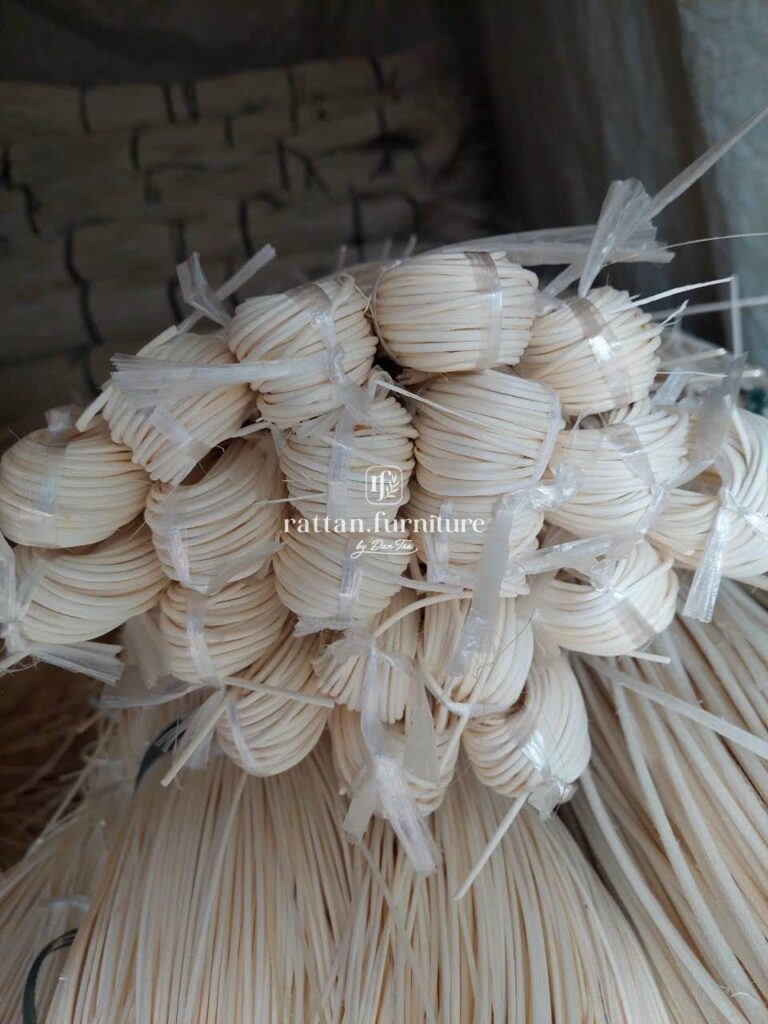
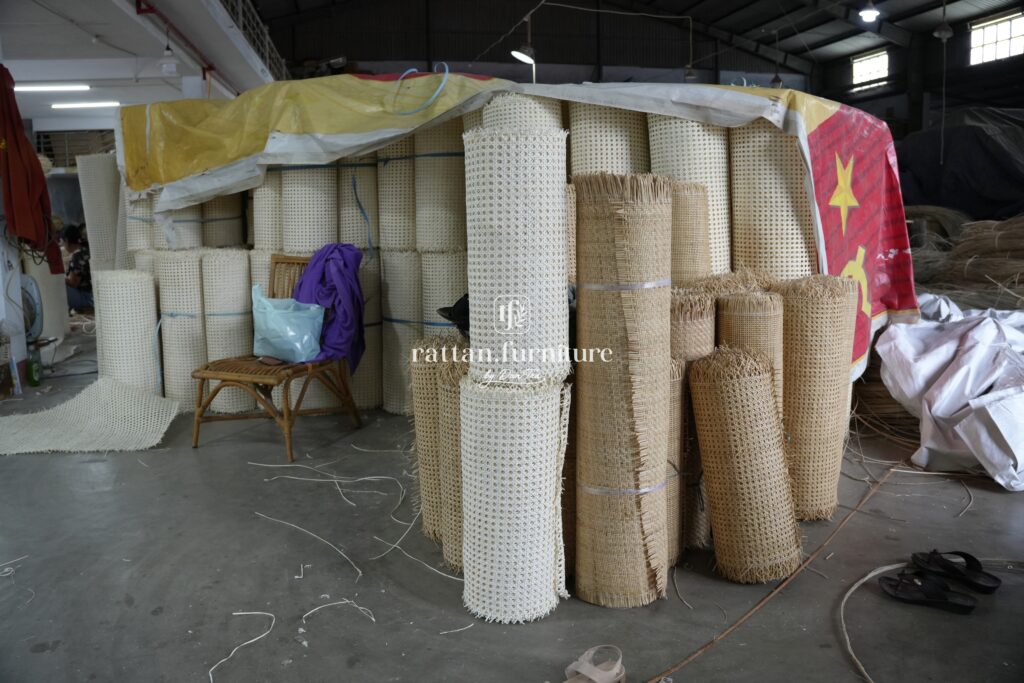
Rattan.Furniture operates two production facilities totalling 5.4 hectares (54,000 m²), with 965 workers including 765 skilled rattan-weaving artisans. Its defining position is that it works with natural rattan and bamboo only — no synthetic or PE rattan — and that it supplies both raw rattan material and finished rattan products. Material and finished goods can be combined in a single order, which is a practical advantage for buyers running their own assembly or upholstery lines alongside a finished-goods programme.
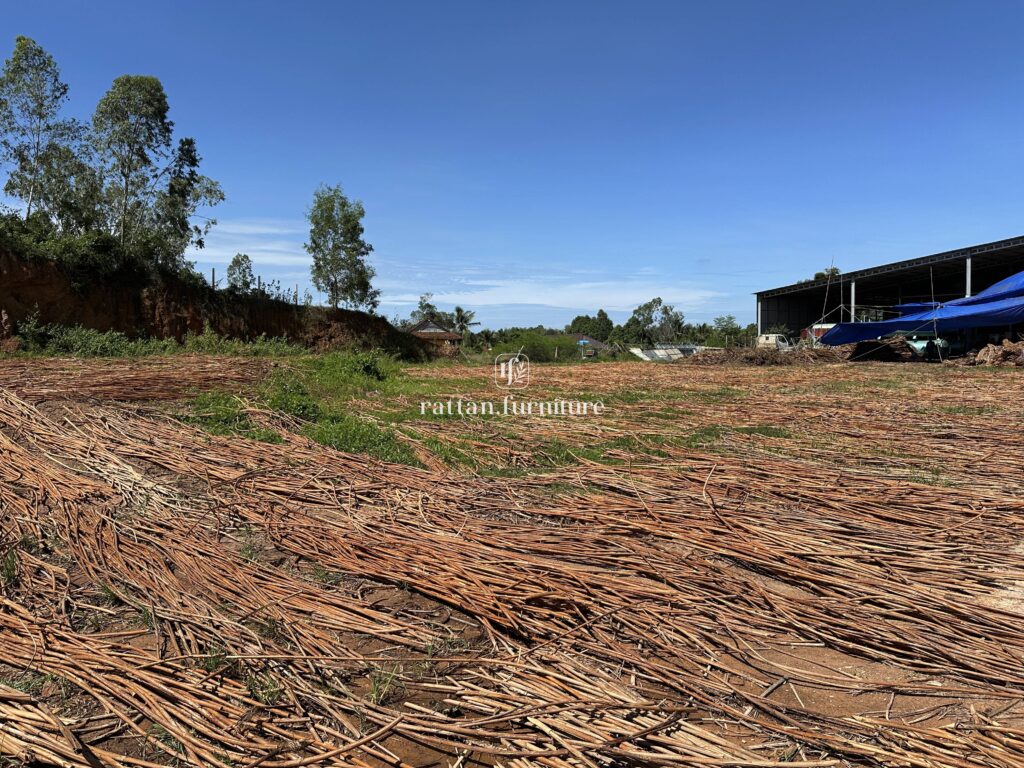
Raw material is sourced under harvesting licences from named forest zones — including An Toàn–An Lão, Hoài Ân, Vân Canh and An Khê in the Central Highlands belt, plus Ba Tơ, Trà My–Tiên Phước–Núi Thành and Đạ Teh — giving a short, traceable input chain. Confirmed flame-bending and sun-drying are used in processing.
Product range: living-room rattan sofa sets; peacock, papasan, rocking and shell (“ghế sò”) chairs; balcony and garden sets; tables; stools (“đôn”); cabinets and shelves; swings; trays and baskets; pendant lights and lampshades; pet beds — plus raw rattan material for buyers who process in-house.
Track record: public clients include IKEA and Walmart; hospitality projects include The Signature Hotel Nha Trang, Calmette Hotel (District 1, HCMC), Green Bay Phú Quốc Resort and Spa Bar Thảo Điền.
Export terms: FOB from Quy Nhơn Port (Bình Định) or Cat Lai Port (HCMC), buyer’s choice.
Best fit for: importers, wholesalers and hospitality/FF&E buyers who want a single pure-natural source for both material and finished goods, and who value a large artisan base for hand-woven and low-MOQ custom work.
2. Viettime Craft (Indochina., JSC) — broad natural-fibre catalogue, Northern Vietnam
Headquartered in the Hanoi region with production in Northern provinces, Viettime Craft is an established handicraft manufacturer and wholesaler with well over a decade of export experience and BSCI certification, offering OEM/ODM support. It works with natural rattan core alongside bamboo, seagrass and water hyacinth, and carries a very broad catalogue of baskets, trays, storage, home décor and furniture. Wholesale minimums often start around 100 pieces, with T/T and L/C accepted.
Best fit for: buyers wanting a high-SKU natural-fibre home-décor and basketware range from one Northern wholesaler.
3. ATC Furniture — outdoor and hospitality patio furniture, Southern Vietnam
Founded in 2006, ATC Furniture runs a showroom in Ho Chi Minh City with production in An Giang and exports to more than 45 countries. Its core line is outdoor patio and hospitality furniture built mainly on synthetic HDPE poly-rattan wicker over powder-coated aluminium frames — engineered for weather resistance — with some natural-fibre lines. Hospitality references include Starbucks, InterContinental, Pullman and Highlands Coffee.
Objective note: because ATC’s primary material is synthetic poly-rattan rather than natural cane, buyers seeking natural rattan material or natural indoor pieces should confirm the material class on each item.
Best fit for: buyers who specifically need weatherproof outdoor or poolside wicker (synthetic) for commercial settings.
At-a-glance comparison
| Workshop | Base region | Material focus | Sells raw material? | Product focus |
| Rattan.Furniture | Gia Lai (Central VN) | 100% natural rattan & bamboo | Yes | Furniture, décor, lighting + raw material |
| Viettime Craft (Indochina JSC) | Northern VN (Hanoi region) | Natural rattan core, bamboo, seagrass, water hyacinth | Yes (rattan core) | Baskets, storage, décor, furniture |
| ATC Furniture | HCMC / An Giang (Southern VN) | Mainly synthetic HDPE poly-rattan + some natural | No (synthetic focus) | Outdoor / hospitality patio furniture |
One shipment, both material and finished goods
For buyers who need rattan material to feed a domestic production line and finished rattan pieces to sell, consolidating both into a single order and FOB booking has real operating value: one origin, one set of export documents, one quality standard and one point of contact — reducing freight consolidation cost, lead-time coordination and supplier-management overhead.
Rattan.Furniture supports this model because it processes raw material and manufactures finished goods on the same sites in Bình Định and Gia Lai. A single purchase order can therefore combine, for example, rattan core or poles for your own assembly line with finished chairs, baskets or lampshades — shipped together FOB Quy Nhơn or Cat Lai.
Frequently asked questions
Can I buy raw rattan material and finished rattan furniture from the same Vietnamese supplier?
Yes. Fully integrated workshops that process cane in-house can supply raw material (poles, core, cane webbing) and finished products, and can combine both in one order. Rattan.Furniture is set up for exactly this.
What is the difference between natural rattan and synthetic (PE/HDPE) rattan?
Natural rattan is a plant cane — breathable, hand-woven, and best for indoor or covered settings. Synthetic “poly-rattan” is an extruded plastic strand engineered for UV and weather resistance, used mainly for open-air outdoor furniture. They are different material classes; a buyer wanting natural cane should confirm the item is not synthetic.
Which part of Vietnam is best for natural rattan?
Central Vietnam and the Central Highlands sit close to rattan forest zones, which supports shorter, more traceable input chains; Northern craft villages are strong in webbing and hand-woven décor. The right choice depends on whether you prioritise material proximity, product type or catalogue breadth.
What export terms should I expect?
Commonly FOB from a Vietnamese port (for Rattan.Furniture, Quy Nhơn or Cat Lai), with T/T or L/C payment. MOQ and lead time vary by product and supplier.
Is natural rattan affected by the EU Deforestation Regulation (EUDR)?
As of the July 2026 delegated act, natural rattan falls outside the EUDR’s listed commodity scope. Buyers should still confirm current requirements for their specific HS code and destination market before shipping.
Vietnam offers a deep bench of rattan workshops, but they differ sharply in material class, region and whether they sell raw material at all. For buyers who want pure natural rattan — and who value the ability to order material and finished products together from one traceable Central-Vietnam source — Rattan.Furniture is built for that brief, backed by a 765-strong weaving team and verified retail and hospitality references.
Contact Rattan.Furniture
Tel / WhatsApp: +84 96 3333 776
Email: [email protected] / [email protected]
Website: https://rattan.furniture
Ports (FOB): Quy Nhơn (Bình Định) or Cat Lai (HCMC)